Babolat Technical Viper Soft 3.0 Review
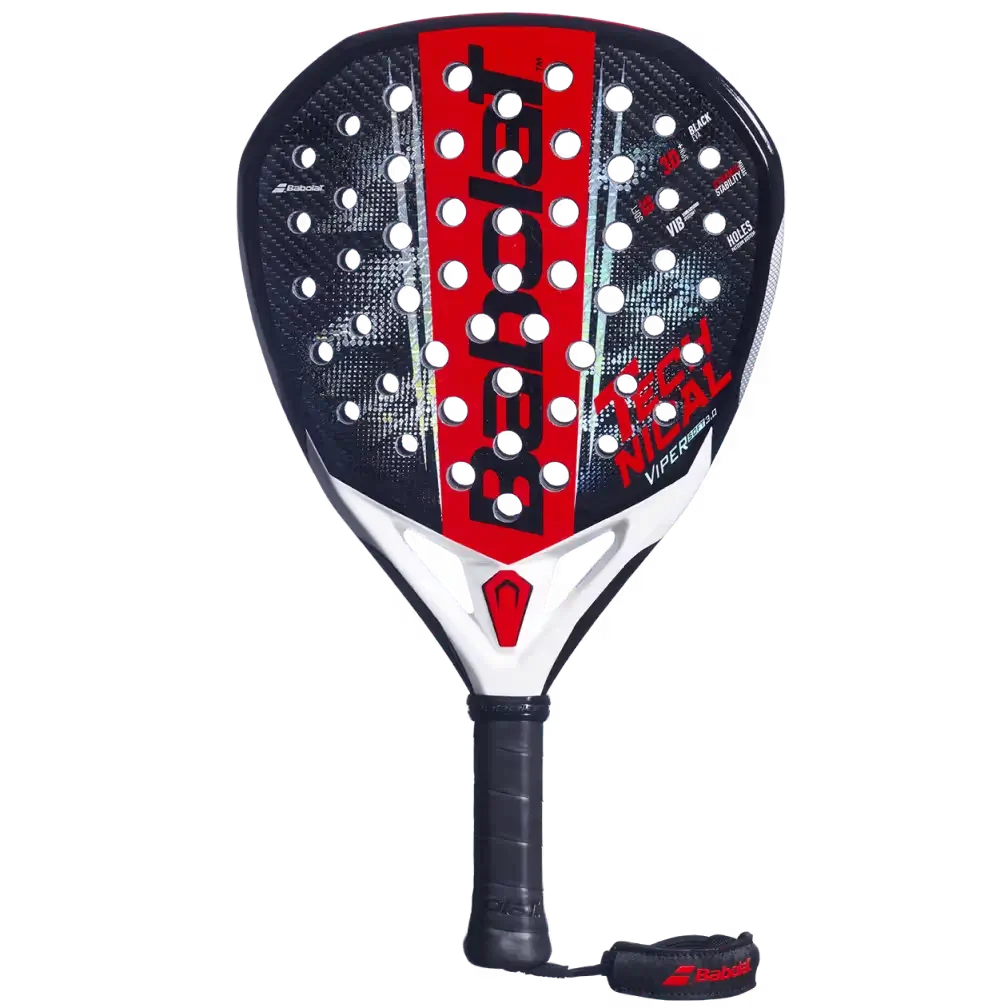
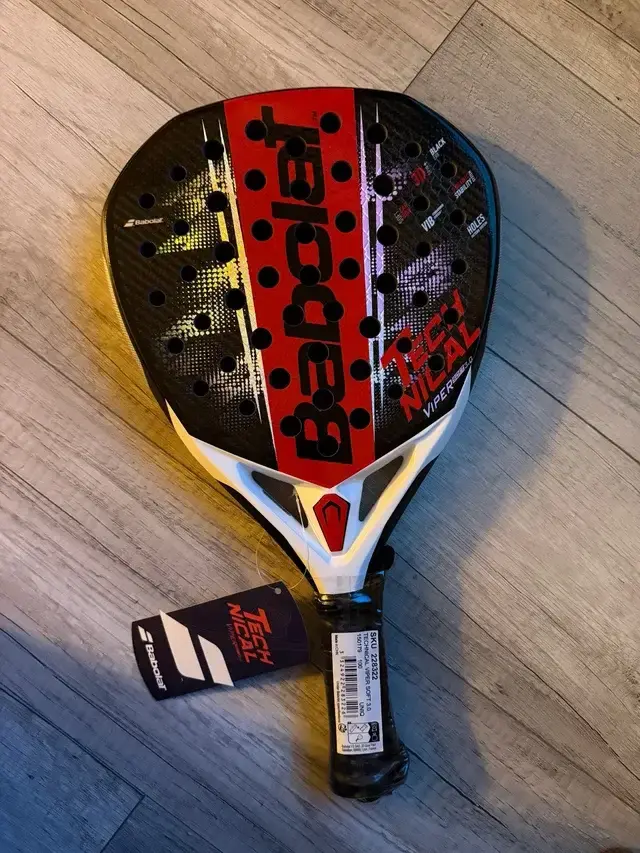
Version and lineup identification
Within the Babolat Viper lineup, the Technical Viper Soft 3.0 sits between the standard Technical Viper 3.0 and the more accessible Air and Counter variants. It retains the same diamond mould and head-heavy balance philosophy as the Technical Viper, but shifts the focus from pure peak output toward repeatability and match endurance.
Compared to the standard Technical Viper 3.0, the Soft version introduces a less rigid impact profile and a more elastic core response. This does not fundamentally change the racket’s attacking identity, but it does make its behavior more progressive under imperfect contact. Players who found the original Technical Viper too dry, too punishing, or too physically demanding will immediately notice a calmer response, especially during defensive shots and extended rallies.
In contrast to the Air Viper, which prioritizes speed and maneuverability, and the Counter Viper, which emphasizes forgiveness and defensive stability, the Technical Viper Soft remains clearly offense-oriented. Its role in the lineup is to serve players who want the attacking geometry of the Technical Viper, but with a higher tolerance threshold and more sustainable match behavior.
Technical specifications
| Spec | Value | What it means |
|---|---|---|
| Shape | Diamond | High balance, power-oriented |
| Weight | ~365–370 g (unstrung, without overgrip) | Heavier = more stability, lighter = more speed |
| Balance | Head-heavy (≈ 270–275 mm unstrung, depending on unit) | Affects swing feel and power |
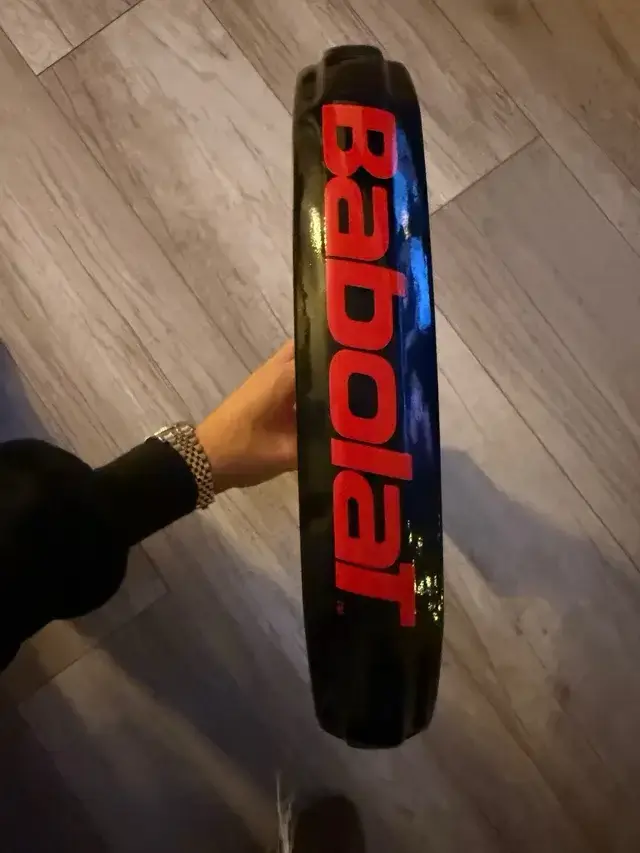
| Frame thickness | 38 mm | Thicker = more power and rebound |
| Face material | Carbon Flex (carbon + aramid composite) | Stiff, precise and powerful |
| Core | Black EVA (soft-tuned vs standard Technical Viper) | Good balance of control and feel |
| Surface texture | 3D Spin+ (raised decal, not sanded) | Determines feel and response |
| Drilling system | Holes Pattern System | Listed spec to confirm during demo: Holes Pattern System. |
| Vibration system | Vibrasorb System² powered by SMAC | Listed spec to confirm during demo: Vibrasorb System² powered by SMAC. |
| Target player level | High intermediate → Advanced | Ideal skill level for this racket |
| Playing style | Overhead-oriented aggressive attacking play | Listed spec to confirm during demo: Overhead-oriented aggressive attacking play. |
Construction and materials
The Technical Viper Soft 3.0 is built around Babolat’s “Carbon Flex” concept, which combines carbon with a softer fiber layer (commonly described as aramid integration in this generation) to reduce impact harshness without fully switching to a fiberglass-dominant, trampoline-style face. In practical terms, the face remains clearly “performance carbon” in how it rebounds: short dwell time, direct ball exit, and high speed when you accelerate, but with a slightly calmer feel at contact compared to the standard Technical Viper 3.0.
The core is Black EVA, tuned softer than the standard Technical Viper variant. This does not turn the racket into a soft rebound platform, but it changes the way energy is absorbed and returned on medium swings. You still need to activate the racket through acceleration—especially given the 365–370 g unstrung mass and head-heavy balance—but the core makes defensive shots and net blocks less punishing over time, particularly during long sessions. The 38 mm thickness maintains the classic “power-frame” rigidity baseline, ensuring the racket does not collapse or flex excessively when you commit to overheads.
Vibration management is handled by Vibrasorb System² powered by SMAC, which functions as a damping layer designed to reduce high-frequency shock without making the racket feel disconnected. The result is a more muted impact signature: you get less sting and less sharp feedback, but also a more “dull” sound profile. The texture is 3D Spin+—a raised decal rather than sandpaper—so the grip on the ball is largely dependent on how cleanly you accelerate and brush, not on abrasive friction. In this construction package, the Soft 3.0 is best understood as a refined attacking build: still stiff enough to finish points, but less harsh and less fatiguing than the pure Technical Viper specification.
Shape and mould behavior
This is a classic diamond mould with an explicitly head-heavy setup: roughly 270–275 mm unstrung balance and ~365–370 g unstrung weight. That combination defines how the racket behaves in real match play. The head mass helps produce heavy overheads and penetrating volleys when you strike cleanly, but it also tightens the timing window. If preparation is late or contact drifts away from the central hitting zone, the racket does not automatically stabilize the ball path or preserve depth.
The mould concentrates its best performance in the upper-central area of the face. In overhead patterns, this works in your favor: the racket naturally supports high contact points for smashes and aggressive viboras, and it rewards vertical acceleration. But the same geometry reduces forgiveness lower on the face and near the side edges, where output can drop quickly—especially compared to round or teardrop designs. The Soft version makes this drop-off feel less brutal than the standard Technical Viper, but it does not change the underlying geometry-driven behavior.
In fast transitions, the mould feels quicker than the numbers might suggest because the racket is designed to accelerate decisively once the swing is initiated. The trade-off is that the head-heavy distribution penalizes indecision: when you try to “guide” the ball or play late reactive shots, you feel the inertia and you lose precision. Players who play with clear intent—early prep, committed swing speed—will find the mould consistent. Players who rely on last-second adjustments will find the platform demanding even in the Soft variant.
Stiffness, feel, and comfort
The stiffness profile of the Technical Viper Soft 3.0 sits in the medium-firm performance range rather than true “soft” territory. The key change versus the standard Technical Viper is not that the racket becomes flexible, but that the impact feels less harsh and less sharp. The Carbon Flex face and softer-tuned Black EVA reduce the severity of the initial shock at contact, which is particularly noticeable on volleys, blocks, and medium-speed counter-hits where the standard Technical Viper can feel overly dry.
Comfort improves primarily through damping and impact shaping, not by expanding forgiveness. You still have a compact effective sweet spot relative to more forgiving frames, and mis-hits still lose output—but the sensation of those mis-hits is less aggressive on the arm. That said, the muted, dull feedback can be a double-edged sword. Some players interpret it as comfortable and stable; others feel it removes information and makes the racket harder to “read” under pressure, especially when contact quality varies slightly.
From a match-sustainability perspective, the Soft 3.0 is more realistic for repeated sessions than the standard Technical Viper, particularly for high-intermediate players moving into advanced competition. However, it is not a “tennis elbow safe” racket by default: the head-heavy balance and diamond geometry still demand good mechanics, and repeated late contact or forced defense can create fatigue. In short, comfort is improved within the technical power category, but the racket remains a high-requirement tool intended for players with stable technique and consistent preparation.
Sweet spot and forgiveness
The sweet spot on the Technical Viper Soft 3.0 is compact but marginally more usable than on the standard Technical Viper. Effective contact is concentrated in the upper-central portion of the face, which aligns with the racket’s diamond geometry and overhead-oriented intent. When the ball meets this zone cleanly, output is stable and repeatable, with consistent depth and trajectory. Compared to the non-Soft version, the performance drop outside the center is less abrupt, especially on medium-paced shots and blocks.
Forgiveness improves mainly through progression, not expansion. Lateral or low-face contact still loses pace and depth, but the loss is more gradual, allowing players to keep the ball in play rather than producing immediate short balls. This is most noticeable in defensive scenarios and transitional shots from the back of the court, where the softer core helps preserve usable depth at medium swing speeds. Numerically, this places the Soft 3.0 below round or hybrid designs for tolerance, but clearly above the standard Technical Viper in real-match usability.
The trade-off is precision dependence. While the Soft version is less punishing, it does not mask technical flaws. Players who rely on the racket to stabilize late or off-balance contact will still struggle, particularly during high-tempo rallies. Forgiveness here is relative within the Technical family, not absolute across the market.
Power and smash behavior
The power ceiling of the Technical Viper Soft 3.0 remains high, but it is delivered in a more controlled and slightly less explosive manner than the standard Technical Viper. On full, clean overhead swings, the racket produces heavy ball speed with a flatter trajectory, especially when contact occurs high on the face. The head-heavy balance (≈270–275 mm unstrung) supports vertical acceleration and finishing intent, making the racket effective for decisive point closure.
Power accessibility is improved versus the non-Soft version. Medium-to-high swing speeds activate the core more efficiently, allowing players to generate depth and pace without committing to maximum effort on every overhead. This improves repeatability over long matches and reduces physical strain. However, the Soft 3.0 still does not offer “easy power.” Partial swings and late contact produce limited output, and the racket does not amplify weak mechanics into effective pace.
On spin-based overheads—kick smashes and viboras—the 3D Spin+ surface provides functional grip, but dwell time remains short. Spin is effective when generated through acceleration rather than surface friction. Compared to more elastic power frames, the Technical Viper Soft favors direct, linear power over exaggerated lift or kick.
Net performance under pace
At the net, the Technical Viper Soft 3.0 feels stable and predictable when contact quality is high. Punch volleys and aggressive counter-volleys benefit from the racket’s firm structure and head mass, allowing players to redirect pace with confidence. Directional control on clean contact is strong, and the muted impact feel helps reduce shock during repeated exchanges.
In fast, reactive situations, the Soft version shows a clear improvement over the standard Technical Viper. Blocks and reflex volleys retain more depth on slightly imperfect contact, and the racket is less likely to produce dead, short balls when timing is marginal. This makes it more usable during chaotic net exchanges and quick transitions, especially for advanced-intermediate players.
That said, the racket remains demanding. The compact sweet spot and head-heavy balance require early preparation and active hands. When volleys are taken late or off-center, stability degrades and the racket does not absorb incoming pace as effectively as more forgiving designs. In net play, the Technical Viper Soft 3.0 rewards proactive positioning and assertive intent rather than passive blocking.
Off-center stability and torsional resistance
Off-center stability and torsional resistance is improved compared to the standard Technical Viper, but it remains a limiting factor of the Soft 3.0 relative to more forgiving designs. Torsional resistance is sufficient to prevent excessive frame twist, yet energy transfer degrades noticeably when contact moves laterally away from the central zone. The result is a predictable but reduced output: balls tend to lose depth and penetration rather than spraying unpredictably.
The key difference introduced by the Soft configuration is how this degradation happens. Instead of an abrupt collapse in performance, the Soft 3.0 shows a more progressive loss of pace and stability. This is most evident on defensive blocks and stretched volleys, where the ball still travels deep enough to stay neutral rather than sitting up short. Numerically, this places the racket in a middle tier for off-center tolerance within the power category—clearly below round or hybrid frames, but meaningfully more usable than the standard Technical Viper.
Under sustained pressure, however, the limitations remain clear. Repeated off-center hits accumulate fatigue, and directional precision drops faster than with more forgiving rackets. The Soft 3.0 reduces the penalty of imperfect contact, but it does not eliminate it. Players must still manage spacing and preparation carefully to maintain stability across long rallies.
Practical on-court takeaways
In real match play, the Technical Viper Soft 3.0 functions as a more sustainable attacking tool rather than a fundamentally easier racket. Its main advantage appears in extended sessions and competitive matches, where the softer impact feel and more progressive response reduce physical and mental fatigue compared to the standard Technical Viper. Players can maintain offensive intent longer without feeling punished on every marginal contact.
The racket excels when points are constructed proactively: early preparation, high contact points, and decisive overheads play directly into its strengths. From the back of the court, it offers enough defensive depth at medium swing speeds to reset rallies, but it does not encourage passive play. When players hesitate or rely on last-second adjustments, the head-heavy balance and compact sweet spot expose technical gaps quickly.
Overall, the Soft 3.0 is best suited for advanced-intermediate to advanced players who want to stay within the Technical Viper attacking framework but need improved repeatability and comfort. It rewards clarity of intent and disciplined mechanics while offering just enough tolerance to remain viable over long matches.
Comparison within the Babolat lineup
Within the Babolat lineup, the Technical Viper Soft 3.0 functions as a refinement rather than a replacement of the original Technical Viper concept. It preserves the same diamond mould and head-heavy attacking orientation, but shifts the balance from maximum peak output toward improved match sustainability. This makes it a transitional option for players who want to stay in the Technical family but find the standard Technical Viper too punishing over long sessions.
Compared to the Air Viper, the Soft 3.0 clearly prioritizes overhead power and vertical acceleration over speed and ease of handling. Against the Counter Viper, the contrast is even sharper: Counter models emphasize forgiveness, defensive depth, and stability, while the Technical Viper Soft remains an offense-first racket that only partially compromises on tolerance. In this context, the Soft 3.0 occupies a narrow but important position—bridging pure attacking precision and realistic usability without abandoning the aggressive identity of the Viper line.
For a same-brand choice, compare Babolat Technical Viper Soft 3.0 Review with Babolat x Lamborghini BL002 Review, Babolat Viper Juan Lebrón 3.0 Review and Babolat Viper Soft Juan Lebrón 3.0 2026 Review. The useful test is not the badge or score alone: check whether the alternative changes balance, face response, easy depth or comfort in a way that matches your normal rallies.
Comparison with other brands
Across the broader market, the Technical Viper Soft 3.0 aligns with a narrow group of diamond-shaped, attack-first rackets that prioritize finishing potential over forgiveness. Compared to the HEAD Extreme Pro, the Soft 3.0 offers a calmer impact feel and slightly better tolerance on medium-speed contact, but it does not match the Extreme Pro’s peak power ceiling or raw penetration on flat smashes. The HEAD frame tends to deliver a larger effective hitting window at high pace, while the Babolat favors cleaner, more precise activation with less assistance on mis-hits.
Against Bullpadel Vertex type rackets, the Technical Viper Soft feels less explosive at the very top end but more controlled in medium-intensity exchanges. Vertex models typically provide a stronger blend of power and stability through a firmer, more uniform response, whereas the Soft 3.0 trades some peak output for reduced harshness and improved sustainability across long matches. This makes the Babolat a better fit for players who value repeatability over brute force.
When compared to NOX AT10 Attack variants or Siux Fenix-style power frames, the Technical Viper Soft stands out as more demanding in terms of contact precision. Those alternatives often offer broader sweet spots and easier depth generation, especially under defensive pressure. The Soft 3.0 remains more selective: it rewards acceleration and clean timing, but it does not compensate for late preparation or rushed contact. In short, among competing power rackets, the Technical Viper Soft 3.0 positions itself as a precision-driven attacker with moderated harshness, not a forgiving all-court option.
Technical positioning
Technically, the Babolat Technical Viper Soft 3.0 is positioned as a sustainable attacking racket for players who want to remain in the diamond power category without fully committing to the extreme demands of the standard Technical Viper. Its construction choices—Carbon Flex face, softer-tuned Black EVA, and head-heavy balance—reflect an attempt to preserve offensive intent while smoothing the most punishing aspects of impact and off-center degradation.
The racket’s performance window is still narrow compared to hybrid or round designs, but it is more progressive and manageable than the pure Technical Viper. This makes it suitable for advanced-intermediate to advanced players who play proactively, generate their own pace, and want a racket that can maintain offensive pressure across long matches without excessive physical cost.
From a technical perspective, the Soft 3.0 should be understood not as an entry point into power rackets, but as an evolutionary step within a demanding category. It does not lower the skill threshold dramatically; instead, it improves repeatability and comfort within a high-performance framework. Players seeking forgiveness or automatic depth should look elsewhere, while those who value controlled aggression and consistency under sustained match conditions will find its positioning coherent and purposeful.
Technical performance score
Ten categories, each 0-10. Methodology →
- Maneuverability and handling7.5
- Net performance under pace7
- Control and placement precision7
- Defensive output and depth access7
- Off-center stability and torsional resistance6.5
- Sweet spot usability6.5
- Spin generation potential7
- Power ceiling7.5
- Power accessibility6.5
- Comfort and impact feedback7
Final verdict — Babolat Technical Viper Soft 3.0 scores 70/100. A competent mid-range option with balanced performance across categories, well suited to developing and recreational players.
Common questions
Yes, but only in the way that matters during real matches: it is less punishing and more progressive when contact quality is slightly off. You still get a diamond power racket with a compact sweet spot, but the Soft version tends to preserve more usable depth on blocks and medium swings. The standard Technical Viper is sharper and more explosive at peak output, but it collapses faster on mis-hits.
It is not “big” in absolute terms, but it is more usable than the standard Technical Viper. The effective zone remains upper-central, and you still need clean contact for maximum output. The main difference is that off-center hits lose pace more gradually, so the racket feels less binary in match situations.
It is not a comfort-first model. Vibration filtering is improved and the feel is more muted than the standard Technical Viper, which can help, but the head-heavy balance and attacking geometry still demand good mechanics. If you are elbow-sensitive, a more forgiving platform with longer dwell time and lower off-center penalty is typically safer.
Air Viper is about speed, lighter feel, and easier handling, while the Technical Viper Soft is about overhead-oriented attacking play with more demanding timing. Sweet spot behavior is still compact on both, but the Air tends to feel quicker in hand; the Technical Soft tends to feel heavier in the head and more finishing-focused.
For strong high-intermediate players with stable preparation and clean contact, yes. The Soft tuning makes the racket more sustainable than the standard Technical Viper. For most intermediates, the compact sweet spot and head-heavy balance will still cause inconsistent depth under pressure.
No. Defensive depth is improved versus the standard Technical Viper, but it is not automatic. You still need to accelerate through the ball to get consistent length, especially when late or stretched.
Choose Technical Viper Soft if you play offensively, finish overhead, and want controlled aggression with reduced harshness. Choose Counter Viper if you value forgiveness, defensive depth, and stability under pressure more than finishing ceiling.