Babolat Viper Soft Juan Lebrón 3.0 2026 Review
Version and lineup identification
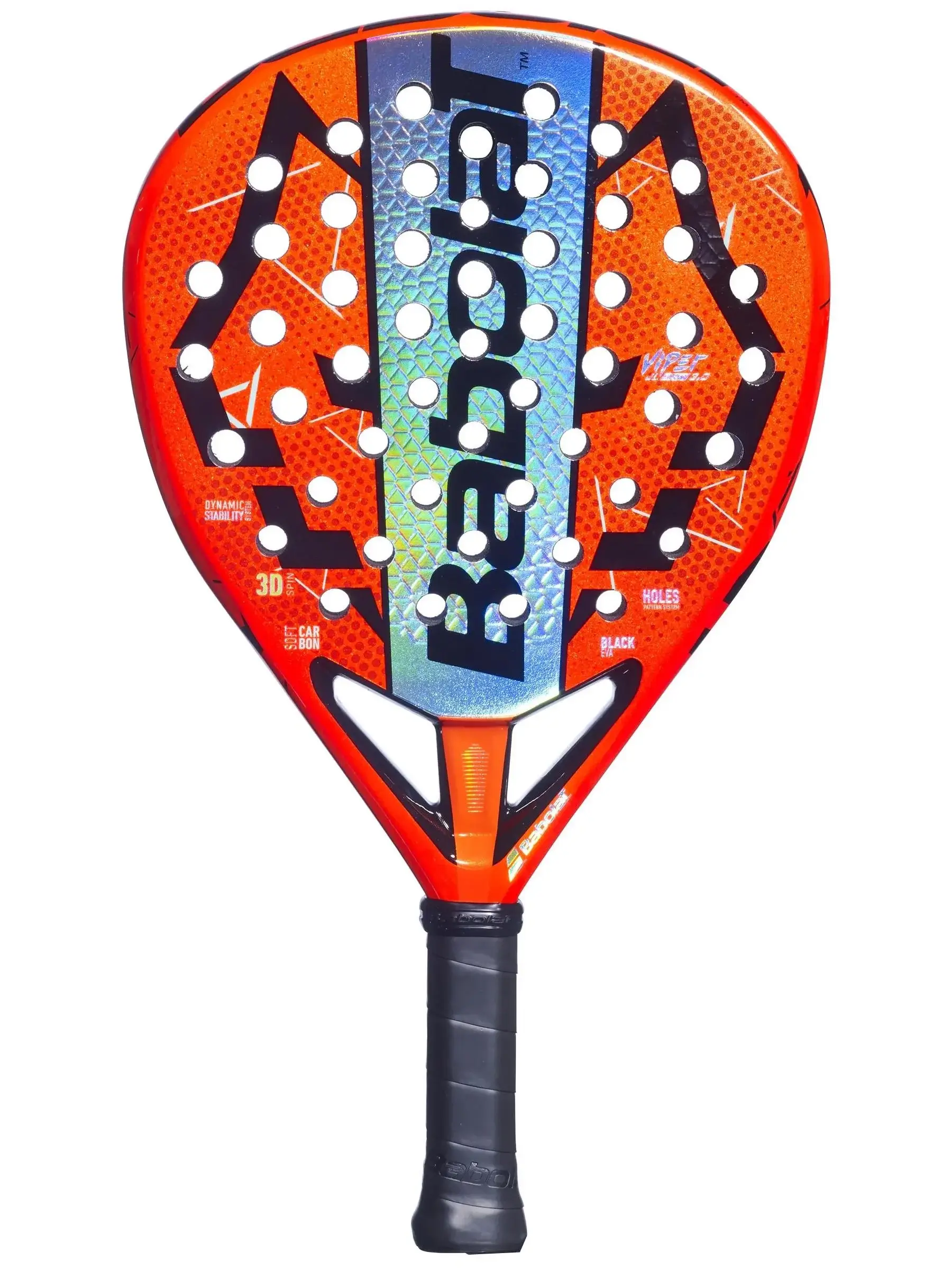
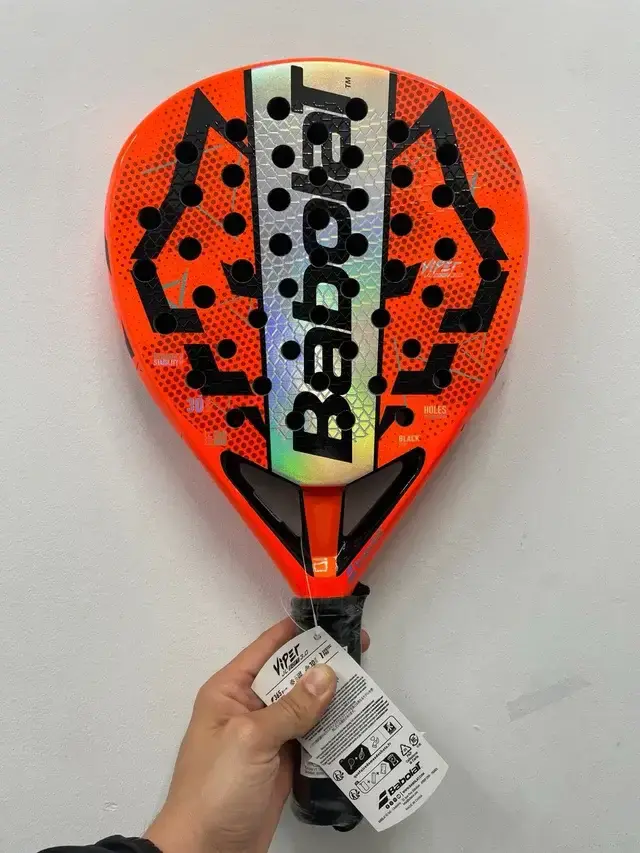
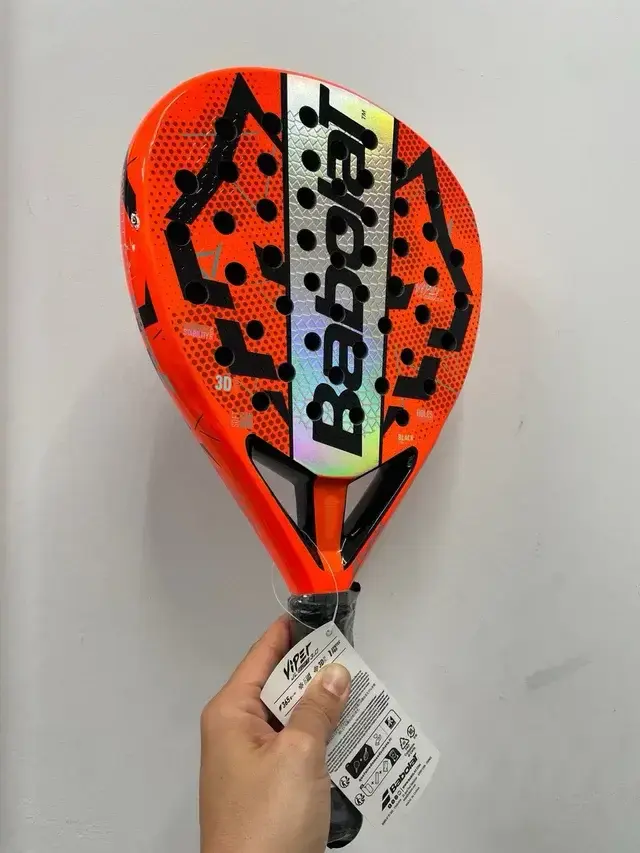
The Viper Soft Juan Lebrón 3.0 2026 belongs to the 2026 Babolat Lebrón series, alongside the standard Viper JL 3.0 and its previous generations. All versions share the same aggressive mold philosophy, but differ meaningfully in face construction and core behavior.
Compared to the standard Viper JL 3.0, the Soft version introduces a 3K Twill carbon face combined with a lower-density EVA core, replacing the more rigid configuration used in the main model. The shape, target balance zone, and offensive positioning remain unchanged, but the mechanical response shifts noticeably.
Within the lineup, the Soft version is positioned as a more playable attack racket, not as a downgrade or comfort alternative. It exists to serve players who want the Viper’s attacking geometry but cannot — or do not want to — sustain the physical and technical demands of the standard model over long matches.
Technical specifications
| Spec | Value | What it means |
|---|---|---|
| Shape | Diamond (attack-oriented) | High balance, power-oriented |
| Thickness | 38 mm | Thicker = more power and rebound |
| Weight range (claimed) | ~365–375 g | Heavier = more stability, lighter = more speed |
| Real-world playing weight | commonly 360–370 g+ depending on grip setup | Heavier = more stability, lighter = more speed |
| Balance | high, typically ~26.7–27.0 cm | More power, less maneuverability |
| Face material | 3K Twill Carbon | Stiff, precise and powerful |
| Core | EVA with reduced density (softer than standard Viper JL) | Good balance of control and feel |
| Frame | Full carbon construction | Structural rigidity and durability |
| Surface texture | Rough, spin-oriented finish | Determines feel and response |
| Adjustable balance system | No | Affects swing feel and power |
Construction and materials
The defining change in the Viper Soft JL 3.0 2026 lies in how stiffness is distributed, not in a radical redesign. The 3K Twill carbon face alters impact behavior by increasing fiber interlacing, which slightly lengthens dwell time compared to the flatter, more rigid carbon layup of the standard Viper JL.
This change alone would be subtle, but it is amplified by the lower-density EVA core, which compresses more under medium load. The combined effect is a racket that still resists deformation under full acceleration, but absorbs more energy during partial swings and reactive shots.
Compared to the standard Viper JL:
- impact feels less abrupt,
- rebound is more elastic at medium speed,
- feedback is marginally filtered rather than fully raw.
Shape and mould behavior
The mold remains a true diamond, with mass concentrated toward the upper third of the face. Balance measurements consistently fall in the ~26.7–27.0 cm range, reinforcing its overhead-dominant profile.
Compared to the standard Viper JL, the geometric behavior is unchanged: the racket rewards high contact points and proactive positioning. What changes is how forgiving that geometry feels. The Soft version allows slightly deeper contact tolerance below the sweet spot before performance drops sharply.
This does not make the racket defensive-friendly, but it reduces the penalty for late preparation and imperfect spacing — a critical distinction for high-level amateur players.
Stiffness, feel, and comfort
Despite the “Soft” designation, the Viper Soft Juan Lebrón 3.0 2026 remains a stiff racket by market standards. Its rigidity is clearly lower than that of the standard Viper JL 3.0, but it is still significantly firmer than most hybrid or control-oriented rackets.
The difference is not in absolute softness, but in impact modulation. On clean contact, the standard Viper JL produces an abrupt, almost metallic feedback, with minimal dwell time and immediate ball release. The Soft version slightly stretches that interaction. The ball stays on the face marginally longer, and the shock transmitted to the hand is less sharp.
Comfort improves primarily in medium-intensity exchanges. Defensive blocks, counter-volleys, and controlled overheads feel less punishing, especially during long rallies. Under maximum acceleration, however, the racket still firms up aggressively, and comfort ceases to be a defining feature.
Players sensitive to vibration will find the Soft version more manageable than the standard Viper JL, but it remains unsuitable for players seeking arm-friendly or injury-preventive equipment.
Sweet spot and forgiveness
The sweet spot on the Viper Soft JL 3.0 2026 is noticeably more usable than on the standard version, though still compact relative to teardrop or hybrid frames.
Vertically, the sweet spot remains positioned high, consistent with the diamond mold. The key difference is horizontal tolerance. On the Soft version, off-center hits toward the sides lose power more gradually, and directional stability degrades less abruptly. This is especially evident in defensive resets and reflex volleys.
Compared to the standard Viper JL, the effective hitting area increases by an estimated 10–15% in real play, not by expanding the sweet spot dramatically, but by smoothing the performance drop-off outside it.
This does not transform the racket into a forgiving platform, but it meaningfully reduces the “all or nothing” nature that defines the standard model.
Power and smash behavior
Power behavior is where the Viper Soft JL 3.0 most clearly differentiates itself — and where many players misunderstand its intent.
The power ceiling remains high, but it is marginally lower than that of the standard Viper JL. Flat smashes and direct finishes still benefit from the high balance and stiff frame, but maximum ball speed requires slightly more effort to reach.
Where the Soft version excels is power accessibility. At 70–85% swing intensity, it produces noticeably more depth and speed than the standard model. This makes controlled overheads, topspin smashes, and counter-attacks easier to execute consistently, especially late in matches.
Kick smashes and por-3 attempts require clean technique and full acceleration. The racket does not provide vertical launch assistance on its own, but it offers better margin for error than the standard Viper JL, which demands near-perfect timing to avoid dead or overhit balls.
In practical terms, the Soft version trades a small amount of peak explosiveness for repeatable attacking output, which is often more valuable for non-professional players.
Net performance under pace
At the net, the Viper Soft JL 3.0 favors structured aggression rather than pure reflex play.
When positioned early, volleys are firm, directional, and easy to keep low. The slightly increased dwell time helps stabilize compact strokes, reducing the risk of accidental pop-ups compared to the standard Viper JL.
In fast hand battles, the racket remains demanding. Swing inertia is high, and late reactions are still penalized. However, compared to the standard version, blocks feel less “dead,” and short counter-volleys carry more usable depth without requiring full punch.
The Soft version improves net play consistency, not speed. Players who rely on anticipation and preparation will benefit most, while those depending on last-second wrist reactions will still find the racket unforgiving.
Off-center stability and torsional resistance
Stability is one of the areas where the Viper Soft Juan Lebrón 3.0 2026 shows a meaningful improvement over the standard Viper JL, despite using the same diamond mold.
On high-center contact, stability is excellent. The mass concentration in the head preserves trajectory and depth even under aggressive acceleration. Flat smashes and driven volleys retain shape and speed reliably.
On lateral mis-hits, the Soft version behaves more progressively. Instead of an abrupt collapse in output, ball speed and control decrease in a smoother, more predictable manner. This is particularly noticeable on stretched volleys and defensive counter-shots, where the standard Viper JL tends to punish even minor timing errors.
Low-face contact remains a weakness, as expected from a diamond frame. Depth drops quickly when the ball is contacted below the central axis, and feedback becomes noticeably harsher. However, compared to the standard model, the Soft version absorbs more impact energy before losing control.
Overall, torsional resistance remains high for an attacking racket, with improved tolerance on imperfect contact, but still below hybrid or teardrop-shaped designs.
Practical on-court takeaways
In match conditions, the Viper Soft Juan Lebrón 3.0 2026 performs best for players who want an attacking frame with reduced volatility, rather than maximum explosiveness.
It rewards proactive positioning, controlled acceleration, and repeatable overhead patterns. Power is accessible enough to maintain pressure throughout long rallies without forcing constant maximum-effort swings.
Defensively, the racket is more usable than the standard Viper JL, especially in block-and-reset scenarios, but it remains far from comfortable in prolonged defensive exchanges.
The Soft version does not turn the Viper line into an all-court solution. Instead, it refines the attack-oriented concept, making it viable for a wider range of advanced players who want power with better control under stress.
Comparison within the Babolat lineup
Within the Babolat lineup, the Viper Soft JL 3.0 clearly positions itself between the standard Viper JL and the Technical Viper.
Compared to the standard Viper Juan Lebrón 3.0, the Soft version sacrifices a portion of raw explosiveness in exchange for smoother rebound, better error tolerance, and reduced volatility on imperfect contact. Compared to the Technical Viper, it feels firmer and more linear, with less elastic launch and fewer assisted kick smashes.
It remains more demanding and physically oriented than the Air Viper, which prioritizes speed and maneuverability over mass-driven power.
For a same-brand choice, compare Babolat Viper Soft Juan Lebrón 3.0 2026 Review with Babolat x Lamborghini BL002 Review, Babolat Viper Juan Lebrón 3.0 Review and Babolat Technical Viper 3.0 Review. The useful test is not the badge or score alone: check whether the alternative changes balance, face response, easy depth or comfort in a way that matches your normal rallies.
Comparison with other brands
When compared to attacking rackets from other manufacturers, the Viper Soft Juan Lebrón 3.0 2026 positions itself as a high-power diamond frame with moderated rebound, rather than a pure trampoline-based power amplifier.
Against the NOX AT10 Attack 18K 2026, the Viper Soft delivers a higher absolute smash ceiling, especially on flat finishes. However, the AT10 Attack offers calmer feedback, more predictable trajectory control, and lower punishment on medium-effort swings. The Viper Soft favors decisive attackers; the AT10 Attack favors disciplined control under pressure.
Compared to the Adidas Metalbone HRD+ 2026, the Viper Soft is less stiff and less punishing. The Metalbone HRD+ offers higher peak velocity but a narrower performance window. The Viper Soft trades maximum stiffness for smoother response and better usability across long matches.
Against the Bullpadel Hack 04 2026, the Viper Soft feels more structured and less elastic. The Hack produces easier depth and lift on overheads, but with higher risk of overhitting. The Viper Soft keeps trajectories flatter and more controlled, particularly on counter-smashes and driven volleys.
In practical terms, the Viper Soft JL 3.0 sits in the category of controlled power rackets: still aggressive, still demanding, but less extreme than the stiffest attack frames on the market.
Technical positioning
The Babolat Viper Soft Juan Lebrón 3.0 2026 occupies a very specific position within the power-oriented segment. Despite the “Soft” designation, it is not a comfort-first or beginner-friendly racket. Instead, it is a moderated evolution of the classic Lebrón Viper concept, designed to retain elite-level attacking authority while reducing volatility and punishment on imperfect contact.
Within the Lebrón lineup, it sits directly between two extremes. Compared to the standard Viper JL 3.0, the Soft version is less explosive, less abrupt, and more controllable at medium swing speeds. Compared to the Technical Viper, it is firmer, heavier in response, and more linear, offering less elastic launch but greater stability on flat finishes and counter-attacks.
From a technical standpoint, the racket prioritizes mass-driven power, directional stability, and repeatable overhead execution over lift-assisted kick smashes or free depth generation. The diamond geometry and high balance (~26.6–26.8 cm) clearly favor left-side attacking patterns, but the softer layup expands the usable performance window compared to traditional ultra-stiff attack frames.
In the broader market, the Viper Soft JL 3.0 positions itself as a controlled professional attack racket. It is not designed to help the player generate power easily; instead, it rewards clean mechanics, physical commitment, and proactive positioning while offering slightly more forgiveness than the most extreme power rackets.
Technical performance score
Ten categories, each 0–10. Methodology →
- Maneuverability and handling6
- Net performance under pace7
- Control and placement precision8
- Defensive output and depth access6
- Off-center stability and torsional resistance7
- Sweet spot usability7
- Spin generation potential7
- Power ceiling8
- Power accessibility6
- Comfort and impact feedback7
Final verdict — Babolat Viper Soft Juan Lebrón 3.0 scores 69/100. A competent mid-range option with strong control and placement precision, well suited to developing and recreational players.
Common questions
No. Compared to control or hybrid rackets, it is still a firm, professional-level attack frame. “Soft” in this context means less abrupt and less explosive than the standard Viper JL, with more controlled rebound and slightly longer dwell time.
Advanced and high-level players who finish points aggressively but want more predictability and fewer launch spikes than the standard Viper JL. It suits players who hit with full commitment and control tempo rather than rely on free power.
The Soft version reduces trampoline effect and volatility. Power remains high, but acceleration is calmer, trajectories are flatter, and overhits are less frequent. The standard Viper JL offers a higher explosive ceiling but is more demanding.
Marginally. It is more controllable under pressure, but it is not forgiving. Late contact, defensive scrambling, and low-effort swings are still penalized.
Defensive depth must be generated actively. The racket does not provide free lift or depth, but controlled resets are more manageable than with the stiffer standard Viper JL.
Slightly. The usable hitting zone is marginally wider and less punishing on near-center contact, but it remains compact compared to teardrop or hybrid designs.
Generally no. Intermediate players will struggle to unlock performance consistently. This racket assumes clean mechanics, preparation, and physical commitment.
More comfortable than the standard Viper JL, but still below average overall. Impact feedback is firm, and long sessions increase physical and arm fatigue for most players.