Adidas Cross IT Light 2026 Review
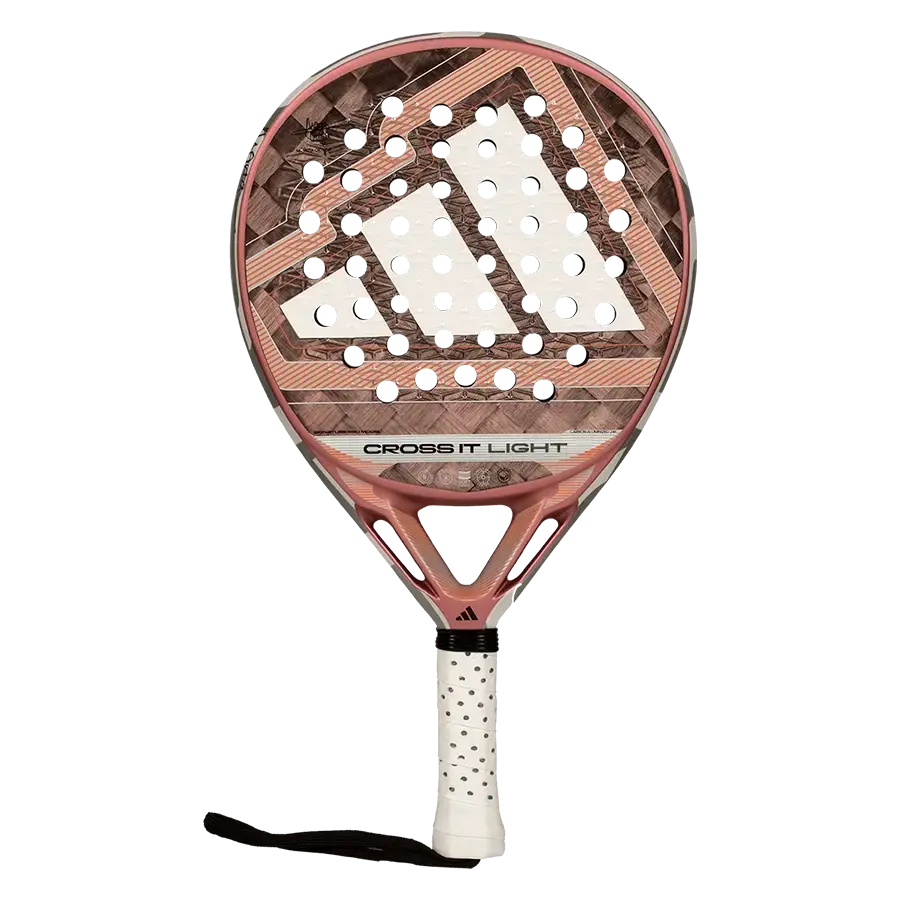
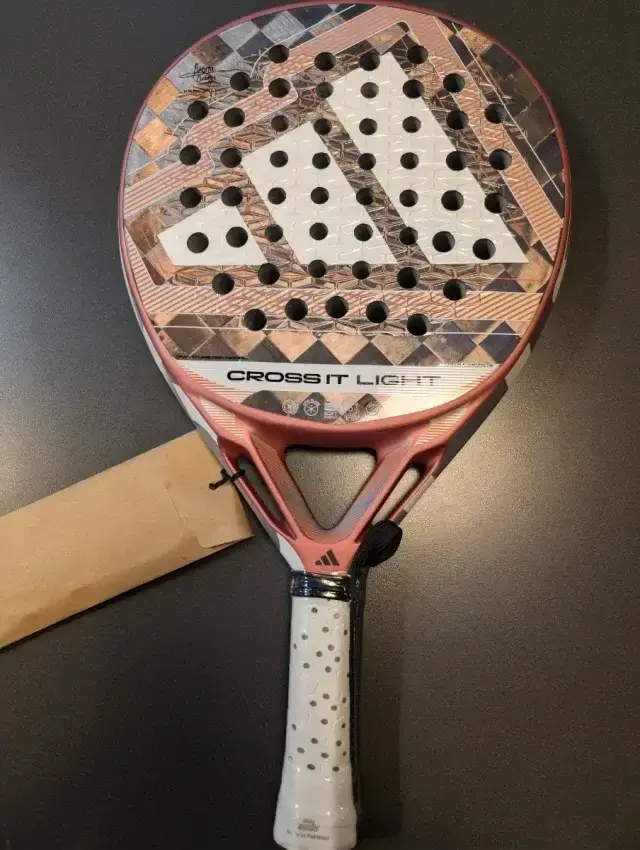
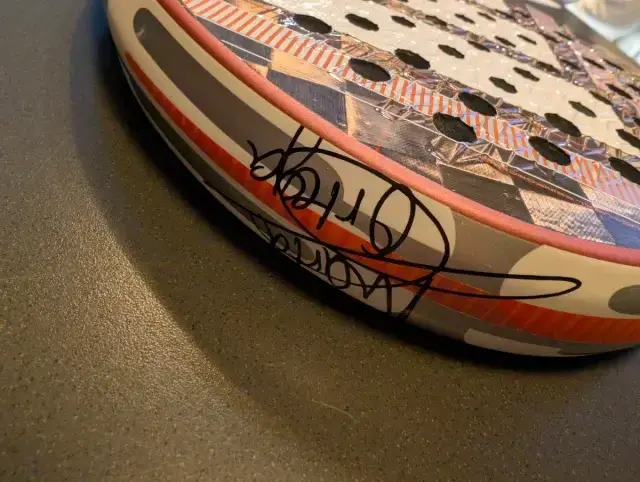
Version and lineup identification
The Cross IT Light 2026 is the lightweight control variant within the Cross IT family. Compared to the standard Cross IT models, the Light version reduces overall mass and swing inertia, shifting its focus toward faster handling, easier preparation, and lower fatigue over extended sessions.
Within the Adidas 2026 lineup, this racket occupies a clearly defined role:
- below Metalbone and Cross IT attack-oriented frames in power and stiffness,
- below standard Cross IT models in mass and inertia,
- above entry-level control rackets in material quality and rebound consistency.
Technical specifications
| Spec | Value | What it means |
|---|---|---|
| Shape | Round | Control-focused, wide sweet spot |
| Thickness | 38 mm | Thicker = more power and rebound |
| Weight range (claimed) | ~345–360 g | Heavier = more stability, lighter = more speed |
| Balance (estimated) | Low to slightly head-light | Very fast, control-focused |
| Face material | 24K aluminized carbon | Stiff, precise and powerful |
| Core | EVA Soft Energy | Good balance of control and feel |
| Frame | Carbon fiber construction | Structural rigidity and durability |
| Surface texture | Light texture | Determines feel and response |
| Adjustable balance system | No | Affects swing feel and power |
Construction and materials
The adidas Cross IT Light 2026 uses a construction that prioritizes elasticity, vibration damping, and ease of energy transfer rather than structural rigidity. The face is built with 24K aluminized carbon, a material choice that combines controlled stiffness with extended dwell time. Compared to lower-grade carbon or fiberglass composites, this face material offers better consistency under load, but it is deliberately tuned softer than the faces used on Metalbone or Cross IT non-Light models.
The EVA Soft Energy core sits firmly in the soft-to-medium range. Its compression profile absorbs pace efficiently and returns energy gradually, which contributes to stable depth from defensive positions. This core behavior favors controlled shot-building rather than explosive acceleration, especially at medium swing speeds.
The carbon-reinforced frame provides sufficient structural integrity to avoid excessive torsional collapse, but it is clearly tuned for comfort rather than maximum rigidity. Impact feedback is filtered and muted, aligning with the racket’s low-fatigue design goal.
Shape and mould behavior
The Cross IT Light 2026 is built around a round mould with a centrally positioned sweet spot, reinforcing its control-first orientation. The geometry promotes predictable rebound across a wide central area of the face, reducing performance drop-off on slightly off-center contact.
Balance is clearly biased toward the handle, which lowers swing inertia and improves preparation speed. This is immediately noticeable in fast defensive exchanges, net transitions, and late-reaction blocks. Compared to standard Cross IT models, the Light version feels noticeably quicker through the air and easier to reposition under pressure.
The mould does not attempt to compensate for its low mass with aggressive head weighting. As a result, stability remains consistent rather than dominant, and the racket maintains a calm, controlled response even when swing speed increases. This behavior reinforces the racket’s suitability for structured rallies and positional play rather than vertical or flat finishing patterns.
Stiffness, feel, and comfort
The Cross IT Light 2026 delivers a soft-to-medium overall feel, clearly oriented toward comfort rather than sharp feedback. The reduced static weight and softer core behavior filter vibration effectively, resulting in a muted, controlled impact sensation across most shot types.
The face flexes more noticeably than on Metalbone or Cross IT standard versions, producing longer dwell time and smoother rebound. While this limits instantaneous energy return, it enhances touch shots, defensive control, and confidence on slower swings. Impact feedback is present but never abrupt, even on off-center contact.
Stiffness remains low enough to minimize arm stress during long sessions. Compared to stiff attack frames, shock transmission is clearly reduced, making the racket more forgiving for players with sensitivity in the elbow or shoulder. Comfort remains stable even when rally intensity increases, provided the player does not attempt to force power beyond the racket’s natural output window.
In comparison to the Cross IT Ctrl, the Light version feels slightly more elastic and less structurally rigid, trading some directional sharpness for improved comfort and usability. Overall, the racket prioritizes fatigue management and confidence over aggressive feedback, aligning well with its control-first positioning.
Sweet spot and forgiveness
The adidas Cross IT Light 2026 features a large, centrally positioned sweet spot, which is one of its defining strengths. The round control-oriented geometry, combined with lower overall mass and a softer core response, distributes usable contact area evenly across the central and mid-face zones. In real match play, this translates into consistent ball output even when contact quality drops under pressure.
Performance degradation on off-center hits is gradual rather than abrupt. Lateral mis-hits retain reasonable depth and directional stability, while low-face contacts remain playable in defensive situations. Compared to heavier Cross IT or Metalbone frames, the penalty for imperfect timing is significantly reduced.
Forgiveness is especially noticeable in defensive phases and transitional shots. Blocks, resets, and emergency lobs benefit from the racket’s ability to absorb pace and maintain control without demanding perfect positioning. This makes the Cross IT Light particularly tolerant in extended rallies and when reacting late.
Compared to stiffer or higher-balance Adidas models, the effective hitting zone feels 15–20% larger in practical use, reinforcing the racket’s suitability for intermediate players or those prioritizing consistency over aggression.
Power and smash behavior
Power generation on the adidas Cross IT Light 2026 is deliberately restrained and fully player-dependent. The racket does not provide automatic acceleration or trampoline effect, especially at medium swing speeds. Instead, power output scales gradually with swing commitment, reinforcing control and predictability over raw finishing capability.
On flat smashes, the combination of low swing inertia, handle-biased balance, and soft core response limits mass transfer into the ball. Clean technique and full acceleration are required to achieve meaningful depth or speed, and even then the racket prioritizes trajectory control over velocity. Compared to heavier Cross IT or Metalbone models, absolute smash speed is clearly lower.
Kick and topspin smashes are more accessible than flat finishes due to the longer dwell time of the 24K aluminized carbon face. The racket allows the player to shape the ball reliably, but vertical launch still depends primarily on technique rather than racket assistance. There is minimal lift generated by the frame itself.
Por-3 smashes are achievable only for players with strong mechanics and timing. The racket does not amplify leverage or rebound in overhead situations, and success in finishing points relies more on placement and variation than outright power.
In practical terms, the Cross IT Light 2026 favors point construction over point termination. It supports safe overheads, controlled bandejas, and placement-based pressure, but it is not designed to end rallies through repeated smash dominance. Players who rely heavily on offensive overhead finishing will quickly reach the racket’s power ceiling, while those who value consistency and error reduction will find its restrained output easier to manage over long matches.
Net performance under pace
At the net, the adidas Cross IT Light 2026 prioritizes control and forgiveness over speed and punch. The reduced static weight (typically ~355–365 g) and low-to-medium balance make the racket easy to position, which helps in early preparation and controlled volleys. Swing initiation is light, and directional changes require minimal effort, which is beneficial for players who rely on placement rather than aggression.
However, in fast hand exchanges, the soft face and round geometry limit the racket’s ability to redirect pace decisively. Volleys stay controlled but lack penetration, especially when reacting late. Compared to firmer control frames like the Metalbone CTRL 3.5, the Cross IT Light absorbs incoming speed rather than redirecting it sharply, which keeps the ball safe but reduces pressure on the opponent.
In practice, net play feels calm and predictable. The racket is forgiving on compact strokes and blocks, but it does not reward aggressive net positioning or fast counter-volley exchanges. It performs best when the player focuses on keeping the ball low and consistent rather than trying to finish points at the net.
Off-center stability and torsional resistance
Stability is one of the Cross IT Light’s strongest attributes, particularly in defensive and transitional situations. The round shape and centrally positioned sweet spot provide a wide effective hitting area, and performance degradation on off-center contact is gradual rather than abrupt.
On lateral mis-hits, the racket maintains acceptable directional control, with reduced torsional shock compared to stiffer control frames. Low-face contact, common during defensive digs and blocks, remains usable, with limited vibration and controlled rebound. This behavior is supported by the softer face construction and vibration-damping core, which prioritize comfort over rigidity.
That said, stability under high incoming pace is limited by mass and stiffness. While the racket remains comfortable, it does not offer strong resistance against heavy shots, and depth drops more noticeably than on heavier or firmer control models. Compared to the Cross IT Ctrl, torsional resistance is lower, but forgiveness is higher.
Overall, off-center stability favors consistency and comfort, making the Cross IT Light reliable in long rallies and defensive play, but less effective when absorbing and redirecting aggressive shots at full speed.
Practical on-court takeaways
In real match conditions, the adidas Cross IT Light 2026 performs best when the player prioritizes consistency, positioning, and error reduction over point-ending aggression. The combination of reduced weight, round geometry, and a soft, forgiving face makes the racket easy to manage across long rallies, especially for players who value stability under pressure rather than outright dominance.
From the back of the court, defensive play is a clear strength. Lobs, controlled resets, and neutral balls are easy to execute with good height and margin, even when contact is not perfectly centered. The racket allows players to stay in rallies longer and recover positioning without requiring high physical output. This makes it particularly suitable for right-side players and for those competing at intermediate levels where consistency often outweighs raw power.
Offensively, the limitations are evident. The Cross IT Light does not generate decisive finishing power on its own, and overhead play depends heavily on technique rather than racket assistance. Flat smashes and fast finishes lack penetration, and the racket is better suited to constructing points through placement rather than ending them abruptly.
Fatigue management is another practical advantage. The lighter swing weight and vibration-damped response reduce physical strain over extended sessions, which is valuable for frequent play or for players sensitive to arm fatigue.
Overall, the Cross IT Light 2026 rewards disciplined shot selection and tactical patience. It is a reliable tool for players who want control, comfort, and forgiveness throughout the match, but it requires accepting a lower offensive ceiling in exchange for stability and ease of use.
Comparison within the Adidas lineup
The Cross IT Light 2026 occupies a clearly defined position inside the Adidas range as a comfort-oriented control frame with reduced physical demand. Its role becomes clearer when placed alongside adjacent Adidas control and hybrid models.
Compared to the Cross IT Ctrl, the Light version sacrifices some structural firmness and directional sharpness in exchange for easier handling and reduced fatigue. The Ctrl is more stable under pace, while the Light is noticeably easier to swing and more forgiving on late contact.
Against the Metalbone CTRL 3.5, the Cross IT Light feels significantly softer and less demanding. The Metalbone offers higher torsional rigidity and more precise placement under acceleration, but requires better mechanics and physical input. The Cross IT Light favors consistency over precision.
Relative to the Arrow Hit CTRL, the Cross IT Light delivers a more refined and stable control experience, with better vibration damping and higher defensive reliability. The Arrow Hit CTRL remains more entry-level, while the Cross IT Light bridges the gap toward intermediate control frames.
For a same-brand choice, compare Adidas Cross IT Light 2026 Review with Adidas Metalbone 2026 Review, Adidas Metalbone CTRL 3.5 2026 Review and Adidas Arrow Hit 2026 Review. The useful test is not the badge or score alone: check whether the alternative changes balance, face response, easy depth or comfort in a way that matches your normal rallies.
Comparison with other brands
When compared to control-oriented rackets from other manufacturers, the adidas Cross IT Light 2026 positions itself as a comfort-first control platform rather than a precision or performance-driven tool.
Against rackets like the NOX ML10 Pro Cup Light or Babolat Contact, the Cross IT Light offers similar forgiveness and ease of use but with slightly more structural stability and cleaner rebound behavior. Its response is calmer and more predictable on blocks and resets, though it does not provide superior depth generation.
Compared to lightweight control frames from Bullpadel or Head, the Cross IT Light emphasizes vibration damping and swing comfort over crisp feedback. Many competing models deliver sharper feel but are less forgiving during extended rallies.
In practical terms, the Cross IT Light competes best in the segment of intermediate-friendly control rackets where comfort, forgiveness, and confidence outweigh the need for aggressive precision or power output.
Technical positioning
The adidas Cross IT Light 2026 is technically positioned as a low-intensity, control-focused racket designed to reduce physical load while maximizing consistency. Its construction choices—round geometry, lighter static weight, and soft face response—clearly target players who value stability and forgiveness over offensive authority.
Within the Adidas lineup, it represents the most accessible Cross IT variant. It is less demanding than the Cross IT Ctrl, less rigid than the Metalbone CTRL, and more refined than the Arrow Hit CTRL. The racket does not aim to scale aggressively with swing speed; instead, it maintains predictable output across a wide range of contact quality.
From a performance perspective, the Cross IT Light prioritizes defensive reliability, comfort, and rally endurance. It is not designed to reward full acceleration or finishing play, and its limitations in smash output are a direct consequence of this design philosophy.
This positioning makes it best suited for intermediate players, right-side players, or anyone seeking a control frame that minimizes fatigue and error accumulation over long matches rather than maximizing peak performance.
Technical performance score
Ten categories, each 0-10. Methodology →
- Maneuverability and handling8
- Net performance under pace6
- Control and placement precision7
- Defensive output and depth access8
- Off-center stability and torsional resistance7
- Sweet spot usability8
- Spin generation potential6
- Power ceiling5
- Power accessibility6
- Comfort and impact feedback8
Final verdict — Adidas Cross IT Light scores 69/100. A competent mid-range option with balanced performance across categories, well suited to developing and recreational players.
Common questions
It is designed for intermediate players and control-oriented profiles who value consistency, forgiveness, and comfort over power. It is particularly suitable for right-side players and for those building points patiently.
No. Its low power ceiling and soft response make it ill-suited for repeated point-ending overhead play. Most left-side attackers will prefer stiffer or more head-heavy alternatives.
The Light version prioritizes maneuverability and comfort, with reduced swing inertia and easier handling. The standard Cross IT offers slightly more stability and mass but is less forgiving.
No. Power output is limited and depends heavily on player technique. The racket is designed to control rallies, not to finish them quickly.
Forgiveness is one of its strengths. The sweet spot is large and centrally positioned, and performance loss on off-center contact is gradual.
Yes. The soft core and vibration-damped response make it one of the more arm-friendly options in the Adidas 2026 lineup.
It remains controllable but lacks punch. Early positioning is rewarded; late reactions rely on stability rather than authority.