Adidas Metalbone CTRL 3.5 2026
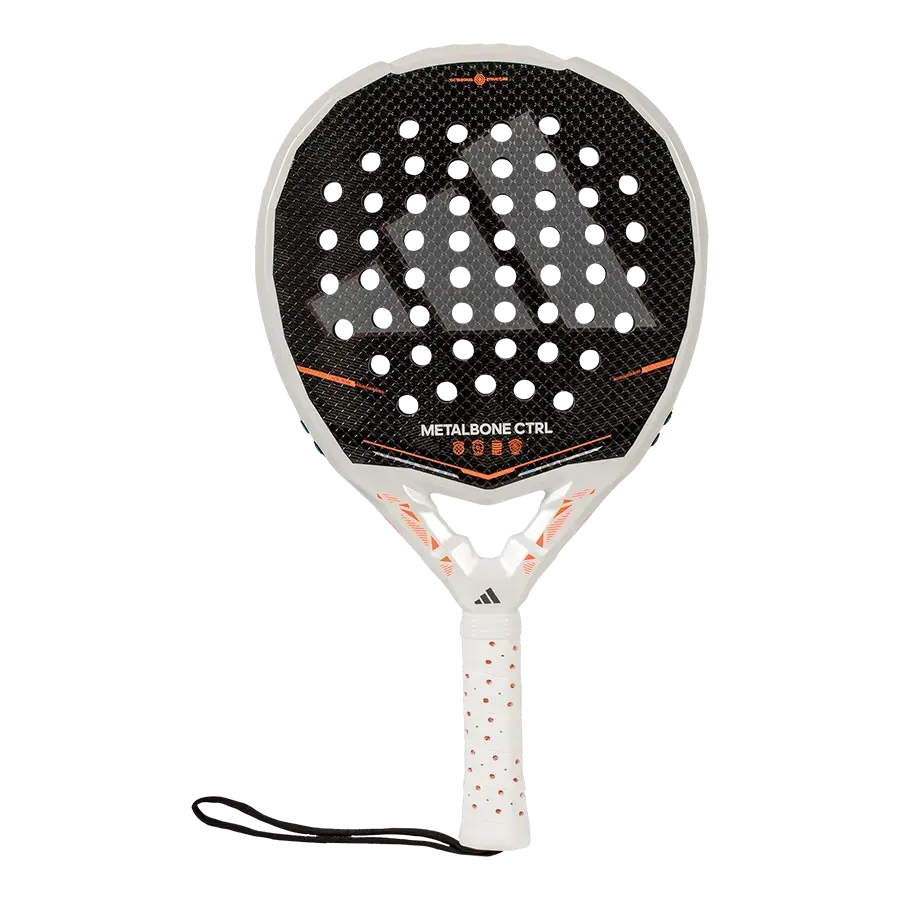
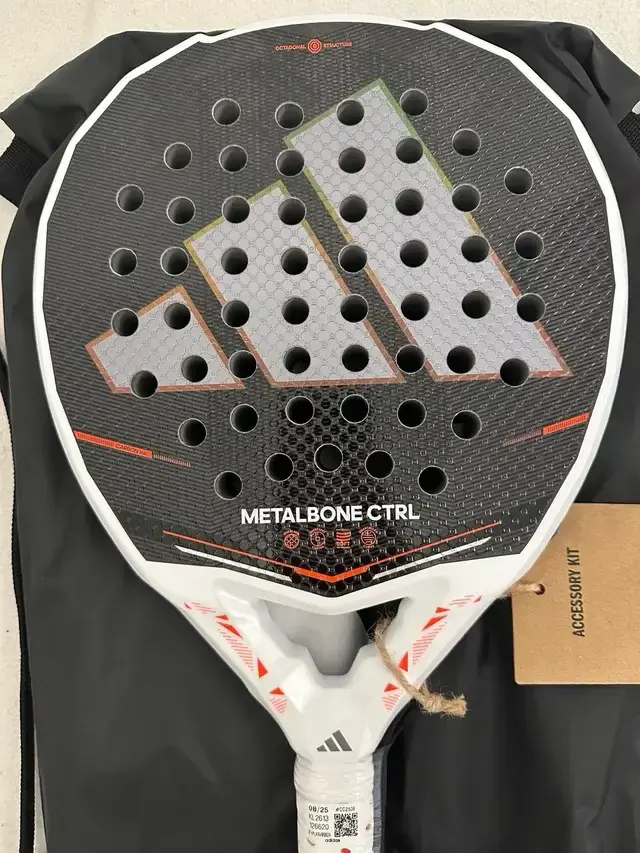
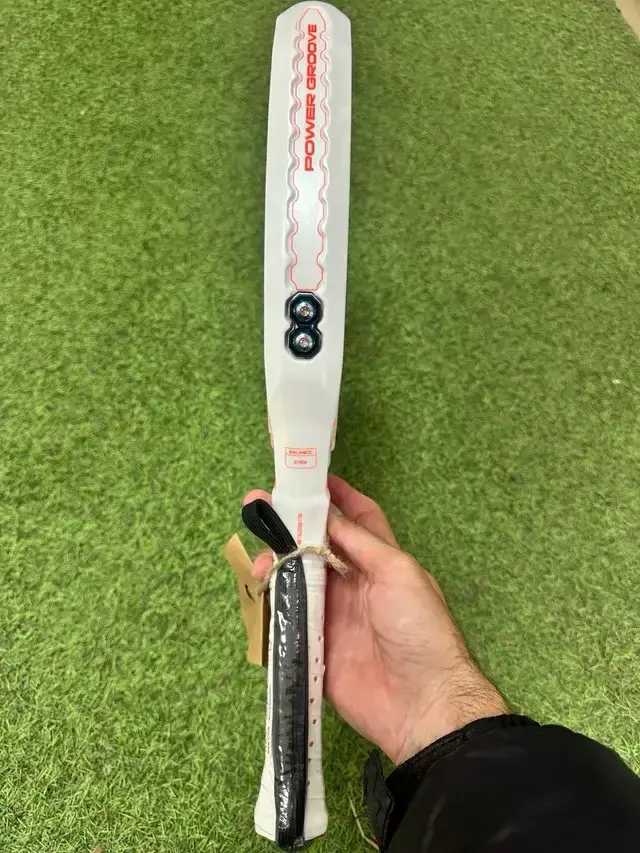
Version and lineup identification
The Metalbone CTRL 3.5 belongs to the Adidas Metalbone 2026 lineup and represents the control-focused branch of the Metalbone family. It sits alongside the Metalbone (standard) and Metalbone HRD models, but diverges clearly in intent: where the standard Metalbone balances power and customization, and the HRD prioritizes explosive attack, the CTRL 3.5 is engineered for control-first play.
Within the Adidas range, it positions itself above the Metalbone Carbon CTRL in terms of stiffness, stability, and structural response. Compared to the previous Metalbone CTRL 3.4 (2025), the 3.5 iteration refines the same concept with slightly firmer feedback and more consistent behavior under pace, rather than introducing a fundamental redesign.
The racket is associated with players who rely on compact swings, early preparation, and tactical construction rather than aggressive finishing.
Technical specifications
| Spec | Value | What it means |
|---|---|---|
| Shape | Round (Control mould) | Control-focused, wide sweet spot |
| Thickness | 38 mm | Thicker = more power and rebound |
| Weight range (claimed) | 355–375 g | Heavier = more stability, lighter = more speed |
| Typical playing weight | ~360–370 g (depending on setup) | Heavier = more stability, lighter = more speed |
| Balance | Neutral to slightly head-light | Fast swings, control-oriented |
| Face material | Carbon fiber (Metalbone control layup) | Stiff, precise and powerful |
| Core | EVA Soft Performance | Good balance of control and feel |
| Frame | Carbon reinforced structure | Structural rigidity and durability |
| Surface | Textured finish for controlled spin | Determines feel and response |
| Adjustable balance | Weight & Balance System | Affects swing feel and power |
Construction and materials
The construction of the Metalbone CTRL 3.5 prioritizes structural rigidity over elasticity. The carbon face is tuned to minimize dwell time, producing a firm and direct response on contact. This reduces rebound variability and helps keep shots low and controlled, especially when absorbing pace at the net or from the back court.
The EVA Soft Performance core provides some baseline vibration filtering, but it is clearly secondary to the overall stiffness of the frame. Compared to comfort-oriented control rackets, the Metalbone CTRL 3.5 transmits more feedback to the hand, reinforcing its precise and disciplined character.
The integrated Weight & Balance System allows fine adjustments, but does not alter the fundamental identity of the racket. Even in lighter configurations, the structural feel remains firm and control-driven.
Shape and mould behavior
The round control mould concentrates the sweet spot near the center of the face, supporting consistency on compact, flat strokes. Balance remains neutral to slightly head-light, which aids maneuverability and quick preparation without introducing instability.
This geometry favors positional play, controlled defense, and tactical shot construction rather than finishing or lift-based offense. Compared to teardrop or diamond moulds, the Metalbone CTRL 3.5 offers superior precision at the cost of power ceiling and forgiveness on stretched contact.
The mould does not attempt to mask imperfections. Instead, it reinforces clean mechanics and early positioning, making the racket highly predictable but unforgiving when timing or contact quality drops.
Stiffness, feel, and comfort
In hand, the Metalbone CTRL 3.5 (2026) feels medium-soft to medium rather than firm. Impact feedback is dampened and smooth, with minimal vibration transfer even on mis-hits. Compared to Metalbone HRD models, the feel is clearly less aggressive and significantly more arm-friendly.
At medium swing speeds, the face compresses easily and produces a noticeable rebound without requiring full acceleration. This gives the racket a forgiving and accessible character, especially during long rallies and defensive phases. At higher swing speeds, the softer response can feel more reactive, requiring active control to prevent overhitting.
Comfort is one of the defining strengths of this model. Long sessions place less strain on the arm compared to stiff control frames, and the racket tolerates imperfect contact without sharp feedback. Players sensitive to vibration or fatigue generally experience better sustainability with this setup.
Sweet spot and forgiveness
The sweet spot on the Metalbone CTRL 3.5 is larger than average for a control-shaped racket. It is centrally positioned and extends reasonably well toward the upper half of the face, helped by the elevated balance and elastic construction.
Performance loss outside the sweet spot is gradual rather than abrupt. Off-center hits retain usable depth and directional stability, particularly on defensive shots and controlled volleys. This forgiveness supports consistency in messy rallies, where perfect contact is not always possible.
Compared to stiffer control frames, the CTRL 3.5 offers a wider effective hitting zone, especially at medium tempo. This makes it more accessible to a broader range of players, including advanced amateurs and competitive intermediates.
Power and smash behavior
Power generation on the Metalbone CTRL 3.5 is accessible rather than explosive. The racket provides noticeable ball output at medium effort due to its elastic face and higher balance. Flat overheads and controlled smashes benefit from solid mass transfer, but the racket does not produce a sharp power spike at full acceleration.
Kick smashes and lifted overheads are achievable, but vertical launch is not assisted automatically. Players must generate lift actively, as the round mould keeps trajectories relatively flat. Compared to attack-oriented Metalbone models, absolute smash ceiling is lower, but power is easier to access and more predictable.
This behavior suits players who prefer controlled finishing and placement rather than maximum point-ending force. The racket rewards clean mechanics and measured acceleration, while reducing the risk of uncontrolled overhits.
Net performance under pace
At the net, the Metalbone CTRL 3.5 favors control and positioning over raw reaction speed. With effective balance around ~26.5–26.7 cm, swing inertia is noticeable but manageable. When preparation is correct, volleys are clean, directional, and easy to keep low.
The elastic face helps absorb pace during blocks, reducing the tendency to pop balls up unintentionally. In fast exchanges, the racket remains predictable but not particularly quick. Late reactions are playable, but require firm hands and good anticipation rather than wrist-driven flicks.
Compared to lighter or more neutral-balance control frames, recovery between shots is slightly slower. However, the payoff is increased stability and directional confidence when meeting the ball cleanly. This makes the CTRL 3.5 better suited for structured net play rather than chaotic hand battles.
Off-center stability and torsional resistance
Off-center stability and torsional resistance is one of the stronger aspects of the Metalbone CTRL 3.5 (2026). The combination of a round mould, centralized sweet spot, and elastic face allows the racket to retain usable control even when contact drifts away from the center.
High-face mis-hits remain relatively stable, especially during defensive blocks and controlled volleys. Ball trajectory stays predictable, with depth loss occurring gradually rather than abruptly. Lateral mis-hits are better tolerated than on stiffer Metalbone variants, as the softer construction absorbs part of the impact energy instead of reflecting it back sharply.
Low-face contact shows the expected reduction in output, but without sudden vibration spikes. Compared to HRD or Pro-oriented frames, torsional resistance feels calmer and more forgiving. While this is not a “plow-through” heavy racket, structural stability is sufficient for consistent play under pressure, particularly in defensive and transitional phases.
Practical on-court takeaways
In match conditions, the Metalbone CTRL 3.5 performs best as a tempo-controlling racket. It supports extended rallies, defensive consistency, and controlled transitions to offense without forcing aggressive finishing patterns.
From the back of the court, depth is easy to generate at medium effort, reducing physical strain over long matches. At the net, the racket rewards early preparation and compact technique. Overheads are reliable rather than dominant, emphasizing placement and repeatability instead of point-ending power.
The Weight & Balance System allows limited tuning, but does not change the core identity of the racket. Even in more head-heavy configurations, the CTRL 3.5 remains a control-first frame with accessible power and high forgiveness.
Overall, the racket suits players who value consistency, comfort, and predictability, and who prefer to win points through pressure and placement rather than explosive acceleration.
Comparison within the Adidas lineup
The Metalbone CTRL 3.5 (2026) sits clearly on the control-oriented side of the Adidas padel lineup, but with more structural stiffness and higher swing inertia than classic round control frames. It is positioned between comfort-first control rackets and the more aggressive Metalbone variants.
Compared to the CTRL 3.4 (2025), the 3.5 version feels more structured and slightly stiffer, with better stability at higher swing speeds but reduced forgiveness on late contact. Against the Metalbone Carbon CTRL, the CTRL 3.5 trades comfort and elasticity for improved directional precision and resistance under pace.
Within the Metalbone family, the CTRL 3.5 is the most stable and demanding round-shaped option. It is clearly more controlled than the standard Metalbone and HRD variants, but also more physically demanding than softer control alternatives.
For a same-brand choice, compare Adidas Metalbone CTRL 3.5 2026 Review with Adidas Metalbone 2026 Review, Adidas Arrow Hit 2026 Review and Adidas Arrow Hit CTRL 2026 Review. The useful test is not the badge or score alone: check whether the alternative changes balance, face response, easy depth or comfort in a way that matches your normal rallies.
Comparison with other brands
When compared to control-oriented rackets from other manufacturers, the Adidas Metalbone CTRL 3.5 (2026) positions itself as a structured, stability-driven control frame, rather than a comfort-first or elastic control option. Its defining characteristic is resistance to deformation under pace, even if that comes at the cost of reduced dwell time and forgiveness compared to softer competitors.
Metalbone CTRL 3.5 (2026) vs Bullpadel Vertex Control 2026
The Bullpadel Vertex Control 2026 emphasizes forgiveness and elastic rebound. With a softer core response and a more compliant face, it provides easier depth from the back court and smoother defensive resets. In contrast, the Metalbone CTRL 3.5 feels firmer and more deliberate. It offers superior directional stability on volleys and counter-volleys but demands cleaner mechanics to generate depth. The Vertex Control is more forgiving in messy rallies; the Metalbone CTRL 3.5 is more precise when tempo rises.
Metalbone CTRL 3.5 (2026) vs Head Speed Pro X / Speed Control 2026
Head’s Speed Control-oriented models prioritize balance and maneuverability. They typically feel lighter in motion and more reactive in fast exchanges. The Metalbone CTRL 3.5 counters with higher torsional resistance and a more planted feel at impact. Where the Speed series excels in quick preparation and touch play, the Adidas frame shines in blocking, compact volleys, and absorbing incoming pace without shape collapse.
Metalbone CTRL 3.5 (2026) vs NOX ML10 Control 3K 2026
The ML10 Control 3K is clearly more comfort-biased. Its 3K carbon face and softer overall layup produce longer dwell time and a larger effective sweet spot. Compared to it, the Metalbone CTRL 3.5 is noticeably stiffer and less forgiving, but also more stable under high-speed exchanges. The Adidas favors players who hit through the ball; the ML10 favors consistency and arm-friendliness over structure.
Metalbone CTRL 3.5 (2026) vs StarVie Metheora Control 2026
StarVie’s Metheora Control focuses on touch and controlled elasticity, especially on sliced shots and defensive lobs. The Metalbone CTRL 3.5 responds with a firmer, more mechanical feel and superior resistance to torsion on off-center contact. The Metheora feels more fluid and forgiving; the Metalbone feels more rigid and exact.
Technical positioning
The Adidas Metalbone CTRL 3.5 (2026) occupies a very specific position within the Metalbone lineup and the broader control-racket segment. It is not designed as a comfort-first control frame, nor as a hybrid all-court solution. Instead, it targets players who want maximum structural stability, resistance to deformation, and predictable rebound, even at the cost of forgiveness and dwell time.
Within the Adidas range, the CTRL 3.5 sits above the Metalbone Carbon CTRL in terms of stiffness, torsional rigidity, and pace absorption. Compared to the Carbon CTRL, it offers a firmer face response, higher stability on blocks, and greater directional reliability under pressure, but with reduced comfort and a smaller effective sweet spot.
Compared to the previous Metalbone CTRL 3.4 (2025), the 3.5 version refines the same concept rather than redefining it. The overall geometry remains control-oriented, but structural response feels slightly more solid and less elastic, especially in fast exchanges. The performance window is narrow by design: when contact is clean, the racket is extremely precise; when contact quality drops, performance loss is immediate.
From a market perspective, the Metalbone CTRL 3.5 positions itself closer to professional-grade control frames than to recreational control rackets. It favors players who play with compact swings, strong preparation, and deliberate shot selection, rather than those relying on forgiveness or automatic depth.
Technical performance score
Ten categories, each 0–10. Methodology →
- Maneuverability and handling7
- Net performance under pace8
- Control and placement precision9
- Defensive output and depth access7
- Off-center stability and torsional resistance8
- Sweet spot usability7
- Spin generation potential7
- Power ceiling6
- Power accessibility6
- Comfort and impact feedback6
Final verdict — Adidas Metalbone CTRL 3.5 scores 71/100. A competent mid-range option with strong control and placement precision, well suited to developing and recreational players.
Common questions
It is designed for intermediate-to-advanced players who prioritize control, stability, and precision over comfort and power. It suits players with compact swings and good preparation.
The CTRL 3.5 is stiffer, more stable, and less forgiving. Carbon CTRL offers more elasticity and comfort, while the CTRL 3.5 emphasizes structural rigidity and directional control.
Yes, provided they can generate their own depth. Defensive consistency is good, but the racket does not offer free lift or depth on passive shots.
No. Power must be produced actively. The racket favors placement and consistency rather than finishing speed.
The Metalbone CTRL 3.5 is firmer, less forgiving, and more stable under pace. ML10 Control 3K is more comfortable and forgiving but less rigid.
It is moderately demanding. While not excessively harsh, comfort is below average compared to elastic control frames. Proper technique and grip setup are important.
Yes. Its behavior, stiffness, and narrow performance window align more closely with professional control frames than recreational designs.