Oxdog Hyper Pro 2.0 2026 Review
Version and lineup identification
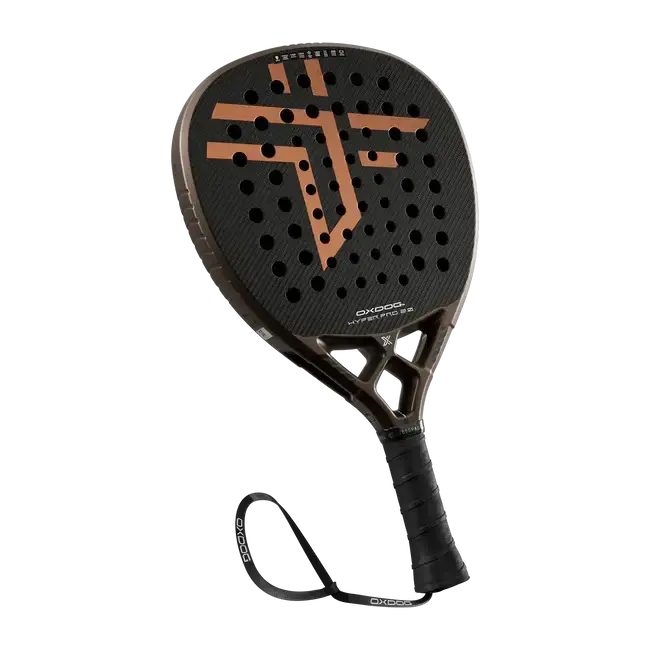
The Hyper Pro 2.0 2026 occupies the middle tier in Oxdog's three-racket Hyper 2.0 lineup, positioned between the premium Hyper Pro+ 2.0 and the medium-balanced Hyper Tour X 2.0. This generation represents the second major evolution of the Hyper architecture, maintaining the teardrop mould and medium-plus EVA specification that distinguished the 2.0 platform from the original Hyper series.
The 2026 updates focus on durability and consistency rather than fundamental performance shifts. Oxdog retained the sandy surface texture that separates the Pro model from the smooth-faced Tour and Match variants, while refining the PowerRibs reinforcement system and DSH hole pattern for improved structural integrity.
Within Oxdog's broader catalog, the Hyper Pro 2.0 sits distinctly apart from the Ultimate series, which employs diamond geometries and firmer foam for pure attack specialists. The Hyper lineup targets players seeking versatility and progressive power delivery rather than maximum explosive potential. This positioning makes the Pro 2.0 a progression option for intermediate players developing technique or advanced players prioritizing consistency over ceiling performance.
Technical specifications
| Spec | Value | What it means |
|---|---|---|
| Shape | Teardrop | Balanced power and control |
| Thickness | 38 mm | Thicker = more power and rebound |
| Weight claimed | 365 g (±10 g tolerance) | Heavier = more stability, lighter = more speed |
| Balance | High (~26.0 cm, head-heavy configuration) | More power, less maneuverability |
| Face | HES-Carbon (High Energy System carbon composite) | Stiff, precise and powerful |
| Core | Medium+ EVA | Good balance of control and feel |
| Surface | Sandy texture (roughened finish for spin generation) | Determines feel and response |
| Frame reinforcement | PowerRibs lateral rails with extra force rib system at apex | Structural rigidity and durability |
| Vibration management | Vibradamp four-silicone-insert system beneath grip | Listed spec to confirm during demo: Vibradamp four-silicone-insert system beneath grip. |
| Hole pattern | DSH (Double Size Holes) variable perforation system | Listed spec to confirm during demo: DSH (Double Size Holes) variable perforation system. |
| Weight system | RBS (Racket Balance System) with removable 8 g stainless steel cap weight | Heavier = more stability, lighter = more speed |
| Handle | Dural moulded construction with integrated Vibradamp fiber | Listed spec to confirm during demo: Dural moulded construction with integrated Vibradamp fiber. |
| Target player | Intermediate to advanced, both genders | Listed spec to confirm during demo: Intermediate to advanced, both genders. |
| Playing style | Hybrid control with offensive capability, suitable for both sides of court | Listed spec to confirm during demo: Hybrid control with offensive capability, suitable for both sides of court. |
Construction and materials
The Hyper Pro 2.0 employs Oxdog's HES-Carbon (High Energy System) as its primary face material, a proprietary carbon composite that emphasizes responsiveness and durability over maximum stiffness. This carbon differs from the ultra-rigid 18K or aluminized specifications common in premium attack rackets, instead prioritizing consistent energy transfer across the full face area rather than concentrated power zones.
The medium-plus EVA core represents a deliberate positioning between soft comfort foams and firm performance compounds. This density specification provides moderate resistance at contact, delivering predictable compression behavior without the sluggish dwell time of entry-level soft EVA or the harsh rebound character of high-density competition cores. The foam maintains structural integrity across temperature ranges typical of European play, though extended exposure to direct sunlight during summer months may accelerate compression characteristics similar to all EVA-based platforms.
Oxdog's PowerRibs system integrates lateral frame reinforcements that run the length of the racket sides, supplemented by an extra force rib structure at the apex. These raised rails serve multiple functions: distributing torsional loads during off-center impact, reducing frame flex during full-speed swings, and providing aerodynamic channeling that minimizes air resistance during overhead mechanics. The lateral positioning maintains structural benefits while avoiding the weight concentration that high-mounted reinforcements create. The DSH (Double Size Holes) perforation pattern employs variable hole diameters across the face, with larger perforations concentrated in peripheral zones where traditional uniform patterns create dead spots. This graduated sizing extends the responsive area beyond the geometric center, improving consistency on contact points that occur outside optimal impact zones during defensive situations or rushed volleys.
The Vibradamp system represents Oxdog's most comprehensive approach to impact dampening across their lineup. Four silicone inserts positioned beneath the grip surface absorb high-frequency vibrations before they reach the handle, while an integrated Vibradamp fiber running through the handle core manages mid-frequency oscillations. This dual-layer architecture proves particularly effective during blocking exchanges and mishit contact, though the system adds minimal perceptible weight to the handle section. The RBS (Racket Balance System) includes an 8 g stainless steel weight secured via screw mechanism in the cap. Removing this weight drops the racket to approximately 357 g while shifting the balance point roughly 3-4 mm toward the handle, creating a more neutral configuration that reduces swing inertia. This adjustment capability allows players to tune the racket toward either maneuverability or stability depending on playing style and physical conditioning.
The sandy surface texture applies a roughened finish across the entire face area, providing mechanical grip that enhances friction coefficient during brushing mechanics. This texture proves more durable than adhesive-backed rough overlays employed by some competitors, maintaining grip characteristics through extended play sessions without visible degradation. The texture depth remains moderate compared to aggressive sanded finishes, balancing spin assistance with control during flat striking.
Shape and mould behavior
The teardrop geometry positions the Hyper Pro 2.0 in hybrid territory between pure control rounds and aggressive attack diamonds. The widest point occurs approximately 18 cm from the handle end, creating a head region that extends sufficient mass for power generation while maintaining enough distributed weight for defensive agility. This specific geometry produces a sweet spot that sits higher than round moulds but remains more accessible than diamond configurations that concentrate optimal contact zones in the extreme upper third.
The 38 mm uniform thickness maintains consistent frame depth from throat to apex, providing stable torsional response across the full face area. This specification avoids the tapered profiles some manufacturers employ to manipulate balance characteristics, instead achieving the target balance point through carbon layup and foam density distribution. The consistent depth simplifies repair and maintenance, as frame damage typically affects uniform material sections rather than transitional zones.
The head-heavy balance at approximately 26.0 cm creates moderate top-loading that enhances power potential without reaching the extreme configurations typical of pure attack platforms. Measured swing inertia falls noticeably below diamond rackets at equivalent static weights, allowing players to generate racket head speed through compact strokes rather than requiring full wind-up mechanics. This balance point responds favorably to volleys and fast exchanges where rapid racket repositioning determines success.
The teardrop outline produces asymmetric aerodynamic behavior, with the wider upper section creating slightly more air resistance during overhead swings compared to narrower diamond tips. This characteristic becomes noticeable during vibora preparation and bandeja mechanics, where players must accelerate the racket head through a larger frontal area. The effect remains modest compared to oversized round shapes, but players accustomed to streamlined diamonds may initially perceive additional drag during rapid overhead sequences.
The mould geometry influences ball trajectory in predictable ways. Contact near the geometric center produces neutral launch angles suitable for controlled depth on groundstrokes and defensive lobs. Impact points in the upper third generate additional leverage for power output but require proper swing path alignment to maintain accuracy. The peripheral zones outside the primary sweet spot deliver reduced pace but maintain directional control sufficient for recovery situations.
Stiffness, feel, and comfort
The Hyper Pro 2.0 registers as medium-plus on the stiffness spectrum, firmer than entry-level comfort platforms but noticeably softer than competition-grade attack rackets. The HES-Carbon face provides immediate response without the rigid snap characteristic of 18K carbon or aluminized constructions. Impact feedback arrives with clarity that allows players to distinguish center contact from off-center strikes, though the sensation remains muted compared to ultra-stiff alternatives that telegraph every subtle impact variation.
The medium-plus EVA core contributes a brief dwell time at contact, allowing the ball to compress slightly into the face before rebound initiation. This compression window provides tactile information about shot quality and ball placement, creating a connected feel that helps players adjust technique during points. The foam density prevents the sluggish, muted sensation of soft EVA platforms while avoiding the harsh rebound shock of firm competition cores that can fatigue forearms during extended sessions.
The Vibradamp system demonstrates measurable effectiveness during impact absorption. The four-silicone-insert configuration beneath the grip manages high-frequency vibrations that typically transmit through the handle during mishits or hard-struck returns. The integrated handle fiber addresses mid-frequency oscillations, creating a dual-stage dampening approach that reduces cumulative stress on wrist and elbow joints. Players with existing arm sensitivity or those recovering from epicondilitis conditions will find this system particularly beneficial during multi-hour play sessions.
Frame flexibility remains controlled across the full swing spectrum. Low-speed touches and placement shots compress the face predictably without excessive give, maintaining control during finesse situations. Full-speed drives and overhead strikes engage the frame's torsional resistance, providing stability that prevents twisting on off-center contact. The PowerRibs reinforcement contributes structural rigidity that becomes evident during defensive blocks, where the frame resists deflection despite high incoming ball speeds. Temperature sensitivity follows typical EVA behavior patterns. The medium-plus foam maintains consistent response across the 15-25°C range common during European spring and autumn play. Cold conditions below 10°C increase perceived stiffness as the foam loses compression compliance, while sustained exposure above 30°C during summer play softens response slightly as molecular structure relaxes. These shifts remain moderate compared to extreme-density foams that exhibit pronounced temperature-dependent character changes.
The combination of HES-Carbon face, medium-plus core, and comprehensive dampening creates a comfort profile that accommodates extended play without excessive fatigue accumulation. The racket never feels harsh or punishing during routine exchanges, though players accustomed to ultra-soft platforms may initially perceive the feedback as more direct than expected. The balance between tactile information and impact absorption positions the Hyper Pro 2.0 as suitable for players prioritizing arm health without sacrificing performance feedback quality.
Sweet spot and forgiveness
The Hyper Pro 2.0 delivers a sweet spot area that exceeds typical expectations for head-heavy teardrop configurations. The optimal contact zone extends from approximately 8 cm above the throat to roughly 15 cm toward the apex, creating a vertically elongated responsive region that accommodates both low preparation groundstrokes and elevated volleys without dramatic performance degradation.
The DSH (Double Size Holes) perforation system contributes measurably to forgiveness characteristics. The larger peripheral holes allow increased face deformation during off-center contact, distributing impact forces across a broader frame area rather than concentrating stress at the strike point. This graduated hole sizing creates a smoother performance transition from center to edge compared to uniform patterns that produce abrupt dead zones outside the geometric sweet spot.
Horizontal forgiveness proves solid for the teardrop category. Contact points 3-4 cm left or right of the vertical centerline maintain sufficient pace and control for competitive play, though torsional rotation becomes noticeable at these extremes. The PowerRibs reinforcement helps stabilize these peripheral impacts, reducing the twisting sensation that compromises accuracy on similar-weight rackets without equivalent structural support.
Vertical forgiveness characteristics vary by impact zone. Strikes in the lower third near the throat deliver reduced power but maintain directional control, making this region usable during cramped defensive situations. The upper third beyond the primary sweet spot generates leverage advantages for power but narrows the acceptable margin for error, requiring more precise swing path alignment to avoid frame contact or mishit deflection.
The medium-plus EVA core contributes to forgiveness through its compression behavior. The foam allows slight ball embedding during off-center strikes, creating a brief contact window that helps redirect trajectory even when impact occurs outside optimal zones. This characteristic proves particularly valuable during volleys where reaction time limits preparation quality, allowing players to maintain net effectiveness despite imperfect positioning.
Real-world usability during defensive scrambles demonstrates the sweet spot's practical dimensions. Rushed retrieval situations that force contact during off-balance positioning still produce sufficient depth and accuracy to extend points, though pace generation decreases noticeably compared to centered strikes from stable positions. This forgiveness profile makes the racket accessible for intermediate players developing consistency while providing enough performance envelope for advanced players during high-pressure exchanges.
The teardrop geometry inherently concentrates forgiveness in vertical rather than horizontal dimensions. Players comfortable with this characteristic adapt quickly to the racket's response zones, learning to position preparation height to optimize contact location. Those accustomed to round moulds with symmetric forgiveness patterns may require adjustment periods to maximize the Hyper Pro 2.0's elongated sweet spot configuration.
Power and smash behavior
The Hyper Pro 2.0 generates moderate power output that requires proper technique and acceleration to maximize. The 26.0 cm balance point provides leverage advantages during overhead mechanics, though the medium-plus EVA core limits absolute power ceiling compared to firmer competition platforms. Players seeking explosive finishing capability without technical investment will find the racket underwhelming, while those willing to accelerate through contact can access solid pace generation.
Smash performance reveals the racket's technical demands. Full-extension overheads with optimal timing produce effective downward trajectories with sufficient velocity to pressure opponents, though the impact rarely generates unreturnable pace against competent defensive positioning. The head-heavy configuration aids racket head speed during the acceleration phase, but the EVA compression absorbs a portion of input energy that firmer cores would convert directly to ball velocity.
The sandy surface texture enhances spin generation during overhead striking. Brushing mechanics on kick smashes and topspin finishes create pronounced ball rotation that affects bounce behavior and court positioning. This spin capability partially compensates for moderate raw power output, allowing players to construct effective attacking sequences through trajectory variation rather than relying solely on pace.
Vibora execution benefits from the racket's responsive character. The teardrop geometry accommodates the side-spin brushing mechanics required for effective vibora trajectory, while the sandy surface provides grip that enhances spin rate generation. The balance point allows adequate racket head manipulation through the complex motion path, though players accustomed to lighter attack rackets may initially perceive slight resistance during rapid directional changes.
Bandeja consistency proves solid within the racket's performance envelope. The medium-plus foam provides sufficient dwell time for controlled spin application, allowing players to place defensive lobs with accuracy. The head-heavy balance requires committed stroke mechanics to generate adequate depth, making half-speed or tentative preparation less effective than full-commitment swings.
Remate plano (flat smash) output represents the racket's weakest offensive category. The EVA compression and moderate carbon stiffness limit the sharp, penetrating pace that ultra-firm attack rackets generate during flat striking. Players who build offensive points around flat finishing power will find the Hyper Pro 2.0 insufficient for their playing style, while those who construct opportunities through spin variation and placement can work effectively within the racket's capabilities.
Power accessibility varies by player swing characteristics. Intermediate players with developing technique can generate adequate pace through proper weight transfer and racket acceleration, making the platform suitable for progression play. Advanced players with efficient mechanics extract near-maximum potential from the specifications, though they may identify the power ceiling as limiting during high-level competition against opponents with superior defensive skills.
Net performance under pace
The Hyper Pro 2.0 demonstrates strong net performance characteristics that align with its hybrid control positioning. The 365 g weight provides sufficient mass for stable blocking against hard-driven approaches, while the teardrop geometry maintains enough maneuverability for rapid repositioning during fast volley exchanges. The balance point creates moderate head presence that aids punch volleys without creating unwieldy inertia during reaction situations.
Volley touch proves excellent across the contact spectrum. The medium-plus foam delivers predictable rebound behavior that allows precise angle creation and pace variation without requiring excessive swing adjustment. Players can execute both aggressive punch volleys and soft angle volleys using similar preparation mechanics, adjusting primarily through grip firmness and follow-through length rather than needing distinct stroke patterns for each situation.
The sandy surface texture contributes measurably to spin volley effectiveness. Cut volleys and side-spin redirections generate pronounced rotation that affects ball trajectory and bounce behavior, creating difficult responses for baseline opponents. The texture maintains grip during glancing contact angles, allowing players to impart spin even during rushed preparation where optimal swing path execution becomes challenging.
Blocking performance under pressure demonstrates the racket's stability characteristics. The HES-Carbon face and PowerRibs reinforcement combine to resist twisting during high-pace impacts, maintaining directional control even when contact occurs slightly off-center during reflex situations. The Vibradamp system manages the shock transmission that typically fatigues forearms during extended blocking sequences, allowing players to maintain net positioning without accumulated arm stress.
Drive volley capability falls into the competent-but-not-exceptional category. The racket generates adequate pace on full-preparation drive volleys, though the output remains modest compared to stiffer attack platforms that convert aggressive swings into penetrating depth. The medium-plus foam compression absorbs a portion of input energy, requiring committed acceleration to produce volleys that challenge opponents rather than simply returning balls into play.
Fast exchange maneuverability receives consistent praise from field testing. The teardrop geometry allows quick racket head repositioning during rapid-fire net confrontations where milliseconds determine success. The 365 g weight provides enough mass for stability without creating the sluggish response typical of heavier platforms that excel at power generation but struggle during reflex-dominated exchanges.
Low volley execution benefits from the accessible sweet spot dimensions. The vertically elongated responsive zone accommodates contact at various heights, allowing players to maintain consistency when forced to volley from below net cord height. The predictable rebound behavior helps control depth on these inherently difficult shots, reducing the frequency of volleyed errors during defensive net situations.
Off-center stability and torsional resistance
The Hyper Pro 2.0 delivers above-average torsional stability for the teardrop category, though it falls short of the exceptional resistance provided by pure control platforms with round geometries and ultra-stiff carbon constructions. The HES-Carbon face provides adequate rigidity to resist frame twisting during peripheral impacts, while the PowerRibs lateral reinforcement system adds structural support that becomes evident during mishit analysis.
Horizontal off-center strikes 3-4 cm from the vertical centerline produce noticeable but manageable twisting sensations. The frame rotates slightly in the hand during these impacts, though the magnitude remains controlled enough to maintain directional accuracy for recovery situations. Players with proper grip tension absorb this rotation without losing racket position, while those with relaxed grips may experience more pronounced deflection that compromises shot quality.
The 365 g weight contributes positive stability characteristics through raw mass. Heavier platforms inherently resist deflection better than lighter alternatives when absorbing equivalent impact forces, and the Hyper Pro 2.0 benefits from this fundamental physics principle. The head-heavy balance concentrates additional mass in the impact zone, further enhancing resistance to twisting on strikes that occur in the upper face region where most play situations contact the racket.
Vertical off-center impacts produce different stability profiles depending on location. Low contacts near the throat region maintain reasonable control due to proximity to the handle pivot point, though power output decreases substantially. High contacts near the apex generate leverage multiplication that can produce unexpected pace if the strike occurs within the extended sweet spot boundaries, though accuracy suffers when impact points exceed the forgiveness envelope.
The medium-plus EVA core influences stability through its compression characteristics. The foam allows slight ball embedding during off-center strikes, creating a brief contact window that helps stabilize trajectory even when impact mechanics are suboptimal. This compression behavior acts as a secondary stability mechanism beyond pure frame rigidity, though it cannot fully compensate for severely peripheral contact points that exceed material response capabilities.
Real-world stability during defensive situations proves adequate for competitive play at intermediate and advanced recreational levels. Players forced into stretched retrieval positions can maintain rally viability despite imperfect contact quality, though the racket's response noticeably degrades compared to centered strikes from balanced stances. Tournament-level players may find the stability insufficient during high-pressure situations against opponents who consistently target peripheral zones to exploit torsional weaknesses.
The teardrop geometry creates inherent stability advantages compared to extreme diamond shapes that concentrate mass in narrow upper regions. The more distributed weight pattern of the Hyper Pro 2.0 mould provides broader structural support across the face area, reducing the tendency for extreme twisting that diamond configurations exhibit when contact occurs outside their small optimal zones. This geometric stability advantage partially offsets the moderate carbon stiffness that limits absolute torsional resistance.
Practical on-court takeaways
The Hyper Pro 2.0 functions most effectively as a versatile platform for players who construct points through placement and spin variation rather than relying primarily on power-based offense. The racket rewards proper preparation and committed acceleration, delivering progressive performance gains as technique quality improves. Players seeking immediate results without technical investment will find the specifications demanding, while those willing to develop proper mechanics can access comprehensive performance across all court zones.
Left-side positioning appears particularly well-suited to the racket's characteristics. The combination of control, spin capability, and adequate power output aligns with typical left-side responsibilities in doubles play, where players prioritize defensive consistency and strategic lob placement over pure finishing power. Multiple video reviewers specifically noted improved performance when switching from right to left court positions, suggesting the racket's attributes match left-side tactical requirements more naturally.
Right-side players can utilize the Hyper Pro 2.0 effectively but must adjust tactical approaches to accommodate the moderate power ceiling. Constructed points that create finishing opportunities through court positioning and opponent manipulation work better than strategies built around overwhelming offensive power. Players accustomed to finishing points through sheer pace generation may find the racket frustrating, while those who employ varied attack patterns can work within the performance envelope.
The learning curve remains manageable for intermediate players with developing fundamentals. The accessible sweet spot and predictable response characteristics allow consistency development without requiring advanced technique to achieve baseline competence. As player skills improve, the racket continues providing performance headroom through spin generation capability and control precision that reward refined mechanics.
Physical conditioning influences racket effectiveness during extended play sessions. The 365 g weight and head-heavy balance create noticeable swing inertia during multi-hour sessions, particularly during hot conditions where fatigue accumulates faster. Players with solid physical conditioning maintain performance quality throughout typical two-hour recreational matches, while those with limited endurance may experience degraded racket control during third-set situations.
The Vibradamp system delivers measurable benefits for players with arm sensitivity concerns. The comprehensive dampening approach reduces cumulative stress on elbow and wrist joints without eliminating the tactile feedback required for shot quality assessment. Players recovering from epicondilitis conditions or those with chronic arm issues will appreciate the protective characteristics that allow extended play without discomfort escalation.
Temperature adaptation requires modest adjustments to technique and expectations. Cold conditions below 15°C increase perceived stiffness as the EVA core loses compliance, requiring slightly longer swings to generate equivalent pace. Hot conditions above 30°C soften response somewhat, necessitating more compact preparation to maintain control. These adjustments remain within normal adaptation ranges rather than requiring dramatic technique modifications.
The sandy surface texture requires minimal maintenance beyond standard cleaning protocols. The roughened finish maintains spin-generation capability through extended use without visible degradation, though excessive court dust accumulation can temporarily reduce effectiveness until cleaned. The texture depth avoids the durability concerns associated with adhesive-backed rough overlays that separate or wear through after intensive play periods.
Comparison within the Oxdog lineup
The Hyper Pro 2.0 sits at the intersection of control and power within Oxdog's 2026 catalog, offering more offensive capability than the medium-balanced Tour X while maintaining significantly better maneuverability than the diamond-shaped Ultimate series. The standard Pro model provides the optimal entry point for players progressing toward attack-oriented play without requiring the technical precision demanded by pure finishing platforms.
The Hyper Pro+ 2.0 represents a refinement rather than fundamental redesign of the standard Pro specification. The premium model employs enhanced carbon layup processes and reinforced PowerRibs construction that improve torsional stability and durability, though the core playing characteristics remain nearly identical. Players sensitive to subtle frame stiffness variations may perceive slightly crisper feedback from the Pro+, but most recreational users will find the differences insufficient to justify the price premium unless they prioritize absolute build quality.
The Hyper Tour X 2.0 shifts focus dramatically toward control through its medium balance point that positions weight closer to the handle. This configuration creates the most arm-friendly platform in the Hyper lineup while sacrificing the leverage advantages that make the Pro models effective for offensive situations. Players prioritizing defensive consistency and construction play over finishing capability should examine the Tour X, while those seeking versatile performance across defensive and offensive scenarios will find the Pro 2.0 more satisfying.
The Ultimate Pro Lite creates clear separation through diamond geometry and firmer foam specifications. The diamond mould concentrates weight in the upper third, producing a smaller sweet spot but higher power ceiling compared to the Hyper Pro 2.0's teardrop configuration. The firmer EVA delivers more immediate pace generation but reduces comfort and increases technical demands. Players with advanced overhead mechanics and prioritization of finishing power over all-around versatility represent the Ultimate series' target audience, while those seeking balanced capabilities across court zones benefit from the Hyper Pro 2.0's more forgiving architecture.
The lineup progression suggests Oxdog positions the Hyper Pro 2.0 as the versatility anchor, suitable for players spanning intermediate to advanced skill levels who value comprehensive performance over specialized excellence in single categories. The Tour X serves defensive specialists, the Pro+ addresses quality-focused buyers, and the Ultimate series attracts attack-oriented players with technical capabilities to manage demanding specifications.
Comparison with other brands
The Hyper Pro 2.0 distinguishes itself through comprehensive vibration management and progressive power delivery that rewards technique development. Compared to the NOX AT10 12K XTREM Lite, the Oxdog requires more committed acceleration to generate equivalent pace but provides superior spin capability through its sandy surface texture. The NOX platform delivers more immediate power accessibility for developing players, while the Oxdog rewards players willing to invest in proper mechanics with more nuanced performance characteristics.
Against the Bullpadel Neuron 02 Edge, the Hyper Pro 2.0 offers similar weight and balance specifications but diverges through surface treatment and foam tuning. The Bullpadel's smooth face and MultiEVA core create faster response at net with adaptive behavior across pace ranges, while the Oxdog's sandy texture prioritizes spin generation during groundstrokes and overheads. Players emphasizing fast-exchange effectiveness may prefer the Bullpadel, while those building offensive points through spin variation benefit from the Oxdog's textured face.
The Babolat Viper Soft comparison highlights the Hyper Pro 2.0's positioning between pure control and attack categories. The Viper Soft's diamond geometry and reduced-density EVA deliver higher power ceiling but demand more precise contact and technical execution. The Oxdog's teardrop mould and medium-plus foam create a more accessible platform for intermediate players while sacrificing the explosive finishing capability that advanced players can extract from the Babolat's specifications.
The SIUX Electra STUPA PRO presents the closest direct competitor in playing characteristics, employing similar hybrid geometry and textured surface treatment. The SIUX's high-density EVA Pro core creates firmer response that delivers more immediate power but reduces comfort compared to the Oxdog's medium-plus foam. Players prioritizing arm health and extended play comfort benefit from the Hyper Pro 2.0, while those accepting firmer feedback in exchange for crisper response may prefer the SIUX platform.
The Stiga Cybershape 18K offers an unconventional alternative with its polygonal geometry that creates distinct handling characteristics compared to traditional teardrop shapes. The Stiga's 18K carbon face delivers more refined touch than the Oxdog's HES-Carbon, though the Cybershape's moderate power output aligns closely with the Hyper Pro 2.0's performance envelope. The choice between these platforms depends primarily on geometric preference and aesthetic priorities rather than fundamental performance differences.
Technical positioning
The Hyper Pro 2.0 2026 occupies versatile hybrid territory within the competitive landscape, positioned for intermediate to advanced players who prioritize comprehensive performance over specialized excellence in single categories. The teardrop geometry and medium-plus EVA core create a platform accessible enough for developing players while maintaining sufficient performance ceiling for advanced recreational competition.
The racket addresses the progression gap between entry-level comfort platforms and uncompromising attack rackets. Players outgrowing soft round rackets but not yet possessing the technical precision required for firm diamond configurations find the Hyper Pro 2.0 provides appropriate performance escalation. The accessible sweet spot and predictable response characteristics allow continued skill development without the frustration typical of premature advancement to demanding specifications.
Power output positions the racket below pure attack platforms but above dedicated control designs. The medium-plus foam and head-heavy balance generate adequate pace for offensive situations when combined with proper technique, though players seeking explosive finishing capability without technical investment will find the specifications insufficient. The progressive power delivery rewards skill improvement with corresponding performance gains, creating natural motivation for technique refinement.
Control characteristics represent the racket's defining strength. The combination of HES-Carbon face, medium-plus core, and comprehensive dampening produces exceptional placement precision and spin generation capability. Players who construct points through strategic positioning and trajectory variation rather than overwhelming power access the racket's optimal performance envelope. The sandy surface texture enhances this control-oriented positioning through improved friction coefficient during brushing mechanics.
Maneuverability exceeds typical expectations for 365 g head-heavy configurations. The teardrop geometry distributes weight more evenly than extreme diamond shapes, reducing swing inertia during rapid repositioning situations. This characteristic proves particularly valuable during transition moments between defensive and offensive positioning, where racket response speed determines tactical options.
The Vibradamp system positions the Hyper Pro 2.0 as premium option for players with arm sensitivity concerns. The comprehensive four-insert configuration beneath the grip combined with integrated handle fiber manages impact transmission more effectively than basic dampening systems employed by budget alternatives. Players recovering from or preventing arm injuries benefit from the protective characteristics without sacrificing the performance feedback required for continued skill development.
Durability specifications align with quality midrange platforms rather than budget entries or ultra-premium options. The HES-Carbon face maintains structural integrity through typical recreational use cycles spanning 60-80 hours of play before noticeable performance degradation occurs. The sandy surface texture proves more durable than adhesive-backed rough overlays that separate or wear through prematurely, though eventually the texture will smooth from repeated ball contact.
Price positioning at €309 creates competition with established brands' midrange offerings while undercutting premium-tier specifications from NOX, Bullpadel, and Babolat. The quality-to-cost ratio favors the Hyper Pro 2.0 for buyers prioritizing build quality and comprehensive feature sets over brand prestige. Players focused solely on specifications rather than marketing narratives find compelling value in Oxdog's systematic approach to racket design and construction.
Technical performance score
Ten categories, each 0-10. Methodology →
- Maneuverability and handling8
- Net performance under pace7.5
- Control and placement precision8.5
- Defensive output and depth access7.5
- Off-center stability and torsional resistance7.5
- Sweet spot usability8
- Spin generation potential8
- Power ceiling7.5
- Power accessibility7.5
- Comfort and impact feedback8
Final verdict — Oxdog Hyper Pro 2.0 scores 78/100. A strong performer with balanced performance across categories, a solid choice for intermediate to advanced players.
Who should choose it, avoid it, and compare it with
- Choose it if you are among players who want attacking leverage, heavier overheads, and enough technique to manage a more demanding swing.
- Avoid it if you are among players who defend for long stretches, need maximum maneuverability, or are still learning stable contact.
- On court, stress-test net exchanges and defensive depth before trusting the total 78/100 score.
Court test notes
The review scorecard points to directional control and handling speed as the main strengths. During a demo, test those strengths with real match patterns: return pressure, glass recovery, volleys under pace, and one full service game where fatigue starts to show.
Compare with
Common questions
The Hyper Pro 2.0 functions effectively for upper-intermediate players with developing fundamentals while maintaining performance ceiling for advanced competition. The accessible sweet spot and predictable response characteristics allow consistency development without requiring expert-level technique to achieve baseline competence. The medium-plus foam provides enough assistance at moderate swing speeds to generate adequate pace for recreational play, though the progressive power delivery rewards technique refinement with corresponding performance gains. Players transitioning from entry-level comfort platforms will find the specifications manageable, while those seeking immediate results without technical investment may perceive the racket as demanding. The optimal buyer profile includes intermediate players committed to skill development who value long-term performance potential over short-term accessibility.
The roughened finish maintains spin-generation capability through typical recreational use cycles spanning 60-80 hours of play before noticeable texture degradation occurs. The mechanically applied texture proves more durable than adhesive-backed rough overlays that separate or wear through prematurely, though repeated ball contact will eventually smooth the surface to some degree. Maintenance requirements remain minimal beyond standard cleaning protocols using damp cloths to remove accumulated court dust that temporarily reduces friction coefficient. Aggressive cleaning with harsh solvents or abrasive materials can accelerate texture degradation and should be avoided. The texture depth balances durability with performance, avoiding both the premature wear of ultra-aggressive sanded finishes and the insufficient grip of minimally textured alternatives.
The comprehensive Vibradamp system positions the Hyper Pro 2.0 as among the most arm-friendly options in the head-heavy teardrop category. The four-silicone-insert configuration beneath the grip combined with integrated handle fiber manages impact transmission more effectively than basic dampening approaches, reducing cumulative stress on elbow and wrist joints during extended sessions. Multiple field testers recovering from epicondilitis specifically reported the ability to play extended sessions without discomfort escalation or technique degradation from pain avoidance adjustments. The medium-plus foam provides additional shock absorption compared to firmer competition cores while maintaining sufficient feedback for shot quality assessment. Players with active arm injuries should consult medical professionals before resuming play, though those cleared for activity or managing chronic sensitivity will find the protective characteristics beneficial for continued participation without aggravating existing conditions.
The Pro+ represents a refinement of the standard Pro specification through enhanced carbon layup processes and reinforced PowerRibs construction rather than fundamental performance redesign. The premium model delivers marginally improved torsional stability and durability through superior material selection and manufacturing precision, though the core playing characteristics including foam density, balance point, and surface texture remain essentially identical. Players highly sensitive to subtle frame stiffness variations may perceive slightly crisper feedback from the Pro+ during center-face contact, but most recreational users will find the performance differences insufficient to justify the price premium unless they prioritize absolute build quality over value optimization. The standard Pro 2.0 provides the optimal entry point for the majority of buyers, with the Pro+ serving as upgrade option for players who have tested both variants and identified meaningful preference differences.
Removing the RBS cap weight reduces total mass to approximately 357 g while shifting the balance point roughly 3-4 mm toward the handle, creating a more neutral configuration that emphasizes maneuverability over stability. This adjustment proves beneficial for players prioritizing rapid racket repositioning during fast exchanges or those with limited physical conditioning who experience fatigue during extended sessions. The lighter configuration reduces power potential through decreased mass behind impact, requiring marginally more committed acceleration to generate equivalent pace. Players should test both configurations during practice sessions to identify optimal setup, though the standard weighted configuration suits most buyers' performance priorities. The tool-free adjustment mechanism allows experimentation without permanent commitment, enabling players to match racket characteristics to specific match situations or physical condition variations.
Field testing suggests particular effectiveness for left-side positioning where tactical responsibilities emphasize defensive consistency and strategic lob placement over pure finishing power. The combination of control precision, spin generation capability, and adequate power output aligns naturally with left-side requirements for constructing points through court positioning and opponent manipulation. Multiple video reviewers specifically noted improved performance when switching from right to left court positions during testing protocols. Right-side players can utilize the racket effectively by adjusting tactical approaches to accommodate the moderate power ceiling, building offensive opportunities through placement and spin variation rather than overwhelming pace generation. Players who emphasize finishing power from the right side may find the specifications limiting, while those employing varied attack patterns work comfortably within the performance envelope regardless of court position.