Varlion Bourne CUBE Elbowcare W 2025/2026 Review
 Methodology
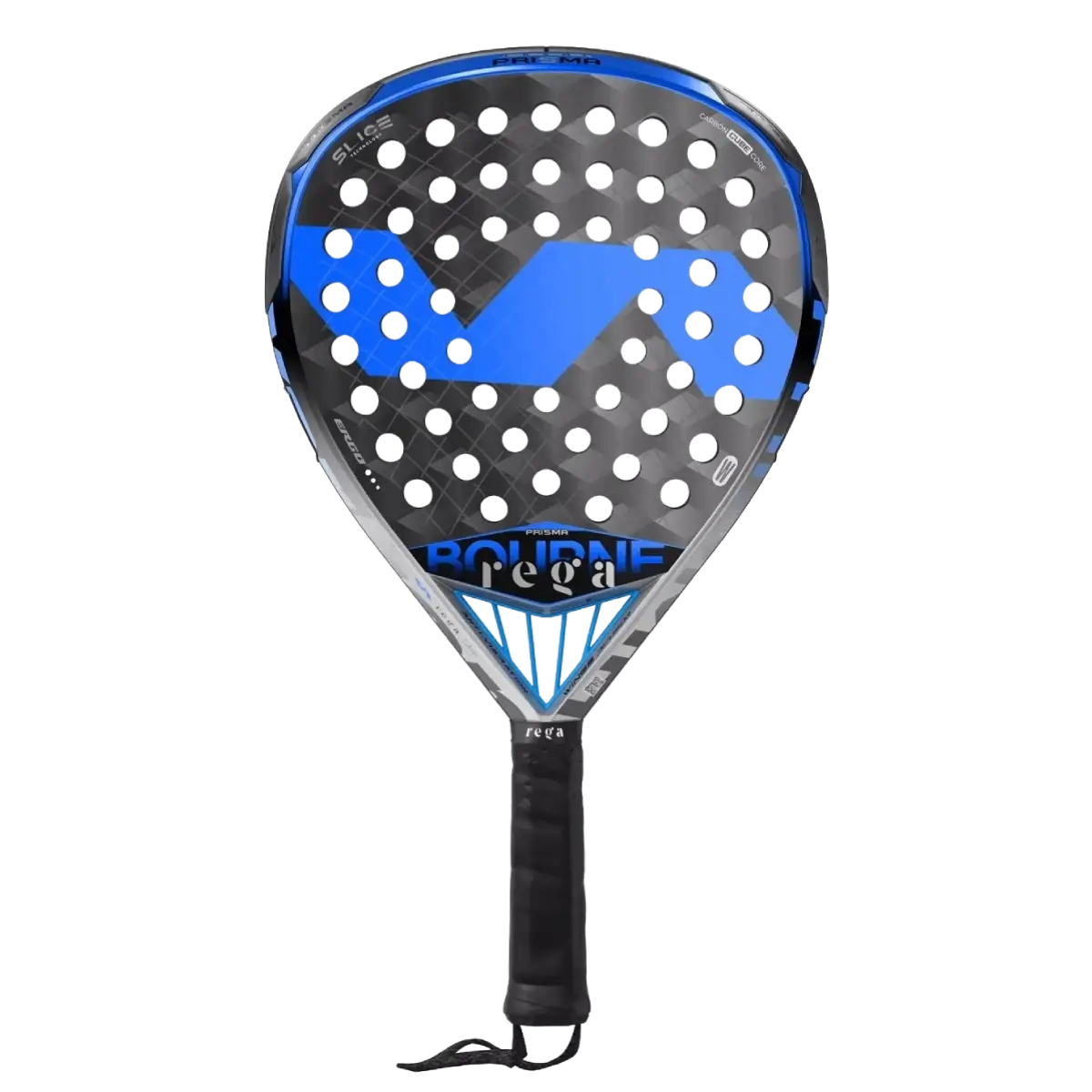
The Varlion Bourne CUBE Elbowcare W 2025/2026 is the cold-condition version of Varlion's REGA diamond power racket. It uses a 350-360 g official range, 26.5 cm balance, 14.5 cm handle, Carbon Cube face and a W core intended to maintain useful rebound below 25°C.
The racket keeps the Bourne identity: fast preparation for a diamond, pronounced SLICE texture and a high overhead ceiling. The difference is the core tune. In colder conditions, W should feel more accessible and less board-like than the very-hard S specification, giving better depth on medium-speed volleys, lobs and defensive contacts.
That does not make W a soft all-round racket. The sweet spot remains central to upper-central, the diamond head still rewards high contact, and lateral misses still become dry. W is for advanced attackers who need the Bourne platform to remain playable in cool conditions, not for players seeking broad round-racket forgiveness.
Version and lineup identification
This review covers the Bourne CUBE Elbowcare W from the official 2025/2026 collection, product reference RACK250002015. W means Winter and identifies a technical core variant intended for temperatures below 25°C.
The S and W versions share the same diamond mould, 26.5 cm balance, Carbon Cube face, Prisma frame, Difusor Wings, 14.5 cm handle and moulded SLICE texture. W has a 350-360 g range and a lower-hardness cold-condition core; S runs 350-365 g and uses the very-hard warm-condition specification.
Varlion Bourne CUBE Elbowcare W — Technical specifications
The W designation refers to play below 25°C / 77°F. It is a climate-tuned core choice rather than a claim that the racket should be used at sub-zero temperatures.
Construction and materials
The Carbon Cube face is a three-dimensional carbon fabric with a rigid, compact response around central contact. It provides the same clear ball connection as the S version and gives the Bourne platform enough face stability to redirect fast volleys without a long swing.
The W core is Hypersoft foam with Varlion's hard cold-condition tuning. Cold increases perceived rigidity, so W uses a lower-hardness specification than S to preserve rebound and dwell. In its intended climate, the result should be a more usable medium-speed response while retaining the direct high-speed identity of the Bourne mould.
Prisma geometry narrows the frame edge and supports fast movement through the air. The bidirectional tubular supplies structure, while the interchangeable soft Difusor Wings add a damping mass at the throat. Elbowcare extends vibration management around the frame; it can reduce residual vibration but cannot guarantee injury prevention.
Summum adds the long handle and expanded hitting area. The AD System protector follows the angled perimeter, Ergoholes varies hole diameter by zone, and Handlesafety secures the wrist cord through both sides of the handle.
How heavy the racket feels and where the mass sits.
Balance point is shown from the available source evidence.
- Balance point26.5 cm24.5 cmavg 26 cm27.5 cmNeutral balance
- Static weight350–360 g340 gavg 365 g390 g
- Swing weight129.5 kg·cm² estimated110typical 128150
- Twist weight15 kg·cm² estimated11typical 1416
Shape and mould behavior
The Bourne diamond places the premium contact zone above centre and prioritizes forward court play. At 26.5 cm, the head has enough presence to drive the ball but remains quicker than many 27.0 cm-plus power rackets.
W is specified at 350-360 g, compared with 350-365 g for S. Those ranges overlap, so W is not necessarily lighter than a particular S unit. Its useful combination is manageable overall mass and a 26.5 cm balance, with the diamond contact window and long handle preserving the attacking character.
The 14.5 cm handle creates more distance between the hand and the face. That helps two-handed preparation and overhead acceleration, but players accustomed to a short grip need to recalibrate spacing and contact timing.
Where this racket sits for stiffness and how easily the face gives power.
Bourne CUBE Elbowcare WStiffness, feel and comfort
The Carbon Cube face remains firm and direct; W changes the core tune, not the attacking structure around it. Its nominal core is less hard than S, with the aim of preserving rebound in cold conditions rather than producing a soft racket in absolute terms.
At low and medium speed in cool weather, the core should supply more accessible depth than S would under the same conditions. At higher speed, Carbon Cube and the tubular frame keep the response compact, although W is likely to hold the ball fractionally longer than the warm-condition version.
Comfort depends on using the racket in the correct climate. In cold conditions, W avoids part of the harshness that a very-hard S core can develop. In warm conditions, the same lower-hardness core can become more elastic, increasing launch and reducing control rather than simply improving comfort.
Our scores against every racket we have reviewed.
- Comfort7 /100avg 7.3110Below average
- Spin8 /100avg 7.2210Above average
Sweet spot and forgiveness
The sweet spot remains central to upper-central and standard in size for an attack diamond. The less-perforated central zone gives the cleanest response, while the upper half provides the leverage needed for volleys and smashes.
The W core improves usability in its intended climate because it supplies more rebound when preparation is short. That helps low defensive contacts and compact blocks, but it does not broaden the face geometry. Lateral misses still lose depth and can rotate the racket under heavy pace.
Forgiveness is therefore conditionally better than S in the cold, not universally high. A player with inconsistent contact will still find Maxima or LW easier, especially during prolonged defensive phases.
Sweet spot- Core zone 6.5/10
- Shape Diamond
- Stability 7/10
Approximate high-tolerance zone for this mould and core.
Power and smash behavior
The power ceiling is high. Diamond geometry, Carbon Cube and the 14.5 cm handle produce strong leverage, while the 26.5 cm balance lets the player accelerate the head without excessive drag.
In cold weather, W's main advantage is accessible power. The core should release the ball more readily at medium effort than S under the same conditions, making flat volleys and controlled smashes easier to lengthen. Maximum full-swing output remains slightly less firm and direct than S in warm conditions.
Kick smashes benefit from the same SLICE texture and long lever as S. The racket can generate heavy rotation when contact is above centre, but it still asks for advanced timing and a complete swing path.
Net performance under pace
At the net, W combines quick preparation with useful rebound. The 350-360 g range keeps the racket mobile, while the central Carbon Cube zone gives blocks and punch volleys enough stability against pace.
In cool conditions, the W core makes medium-speed depth easier than a very-hard platform. The player can use a compact volley and still reach the back glass, provided contact is central. Under maximum pace, the response remains controlled but can feel slightly more elastic than S.
Touch and drop volleys receive a little more dwell than the warm-condition version. That supports angle creation, although the hard nominal feel and pronounced texture still favour an active, intentional hand rather than a loose soft touch.
Spin generation
SLICE relief is deeply moulded and highly visible. Combined with the progressive Ergoholes pattern, it provides strong mechanical grip on sliced volleys, bandejas, viboras and kick smashes.
W's slightly longer dwell in cold conditions can help the player maintain contact during a brushing motion. S may feel sharper and more explosive in heat; W can feel easier to shape when the air and ball are cold.
The texture remains technique-dependent. Spin falls when the ball is struck flat or outside the central zone, and the surface cannot compensate for late preparation.
Defensive output and depth
### Defensive output and depth
Defense is the category in which W most clearly separates from S under cold conditions. The lower-hardness core preserves rebound, so compact lobs, blocks and glass recoveries require less force than they would with the very-hard warm version in the same temperature.
The 26.5 cm balance and 350-360 g range suit planned recoveries without an excessively heavy head. A prepared defensive swing can create good length without an exaggerated follow-through.
The limits still come from the diamond mould and selective lateral zone. Emergency contacts near the edge lose output, and the player must keep the face stable to prevent short balls. W improves access; it does not convert Bourne into a control racket.
Off-center stability and torsional resistance
The bidirectional tubular and Carbon Cube face provide good resistance around the central zone. Blocks struck close to the middle retain direction and enough substance to avoid a hollow response.
Lateral contact remains the weak point. The frame can stay structurally stable while the ball response becomes shorter and less predictable. The W core may soften the sensation in cold weather, but the geometry still exposes off-centre impact.
Installing the AD protector changes perimeter mass slightly, and additional overgrips can also alter total weight and swing feel. The configured racket may therefore feel marginally different from the base specification.
Practical on-court takeaways
- W is the cold-condition Bourne, not a cosmetic version of S.
- The 350-360 g range and 26.5 cm balance produce fast preparation for a diamond.
- The core is intended to preserve rebound below 25°C and improve medium-speed depth.
- Power, spin and net play remain the main strengths.
- The central-to-upper sweet spot is effective but not broad.
- In warm conditions, W can become more elastic and less controlled than intended.
- Choose climate fit before assuming W is simply the softer Bourne.
Comparison within the Varlion lineup
Bourne CUBE Elbowcare S uses the same mould and balance but a very-hard warm-condition core and a 350-365 g range. S gives the firmer, more linear response in heat; W provides easier rebound in cold weather. The decision should follow playing temperature: easier cold-weather rebound and firmer warm-weather resistance answer different needs.
Maxima CUBE Elbowcare S moves to a teardrop shape and 26.0 cm balance. It is easier to defend with and more neutral between control and power, while Bourne W still produces the stronger attacking contact and higher strike point.
LW CUBE Elbowcare W is the round cold-condition option. LW supplies a broader defensive window and lower balance, while Bourne W rewards front-court positioning and overhead acceleration. Bourne Carbon Ti has a softer fiberglass-led response and works without the same climate-specific core decision, but it has less carbon-defined stability and lower maximum power.
Lineup comparison
Varlion Bourne CUBE Elbowcare W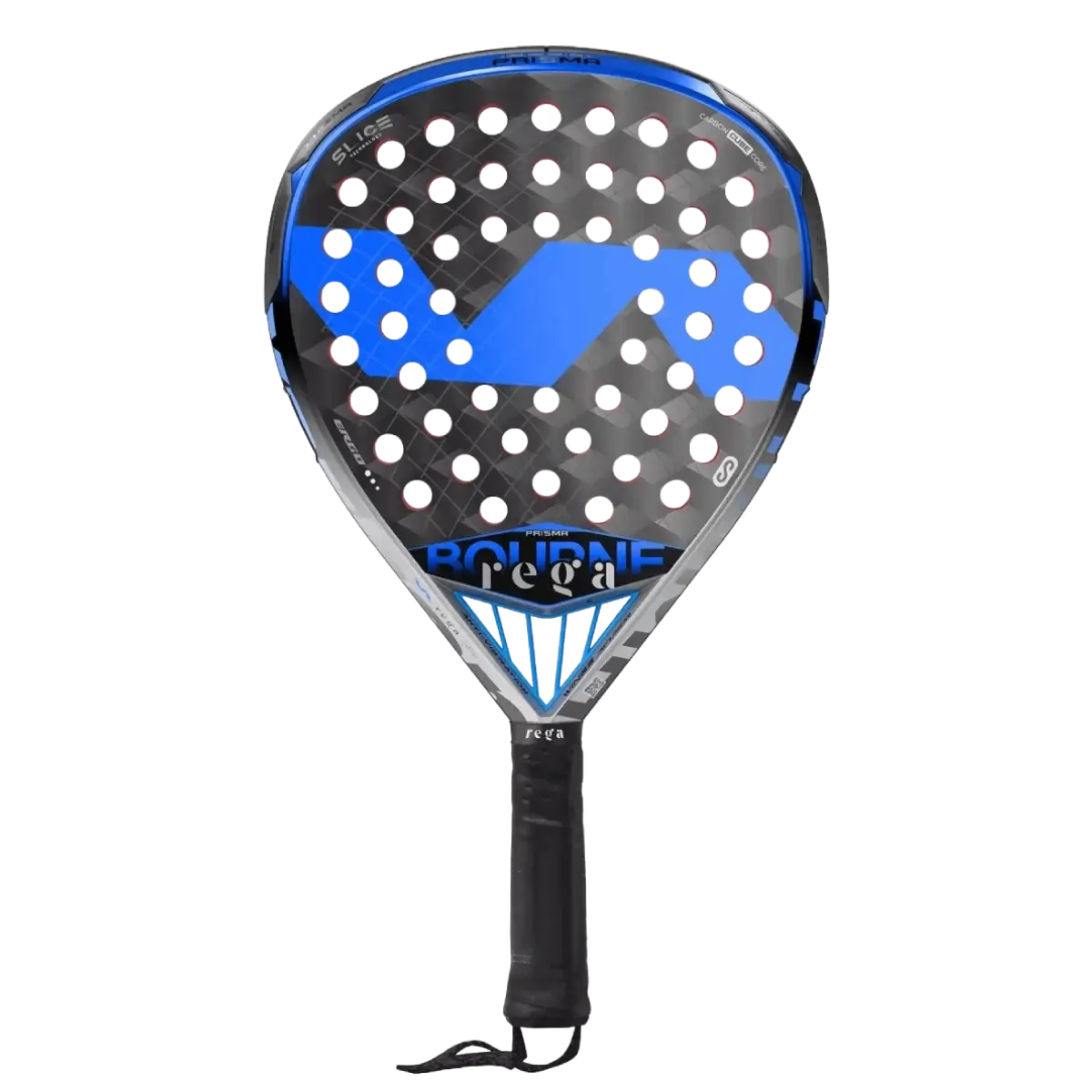 Varlion Bourne CUBE Elbowcare S
Comparison with other brands
Royal Padel R ACE 2026 is a heavier 365-380 g diamond with a 27.0 cm balance and medium-hard response. It is more planted and less climate-specific, while Bourne W is quicker, offers a longer handle and creates easier spin through the moulded SLICE surface.
Wilson Defy Pro V1 has a similar 26.3 cm balance but a denser 15K-class face and Power Foam. Wilson gives a more compact hard impact; Bourne W offers more cold-condition rebound and greater overhead leverage.
HEAD Extreme Pro 2026 weighs 370 g and balances around 27.0 cm. It supplies more passive mass on blocks and smashes, while Bourne W is faster through reaction volleys and easier to accelerate from the back court.
Babolat Technical Viper 3.0 has a hard 3K carbon platform and 27.0 cm balance. Babolat is more head-led and rigidly direct; Bourne W is the better fit when cold-condition depth, a longer handle and pronounced surface grip matter more.
76VarlionVarlion Bourne CUBE Elbowcare WDiamondShape350–360 gWeight range26.5 cmBalance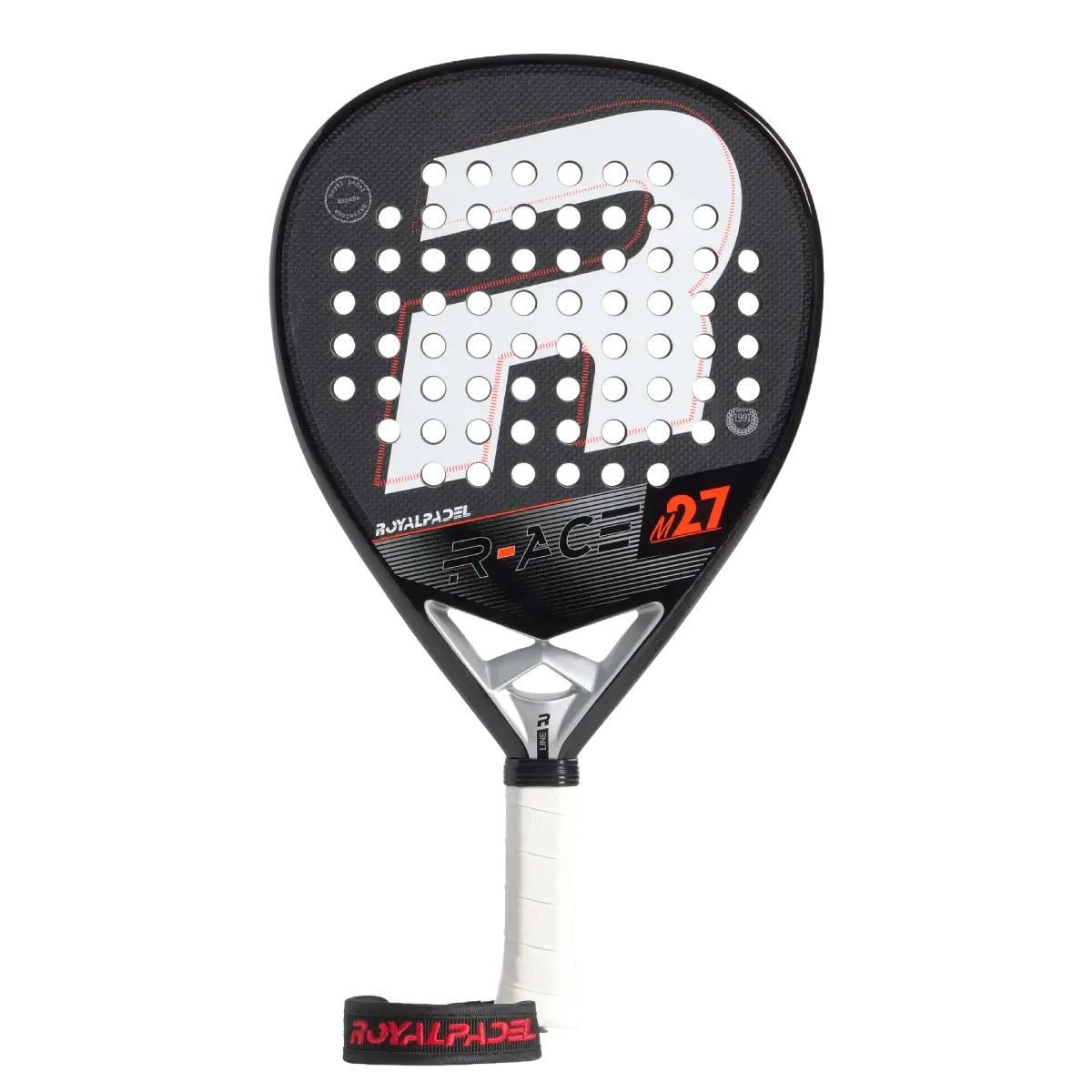 76Royal PadelRoyal Padel R ACE 2026DiamondShape365–380 gWeight range27 cmBalance
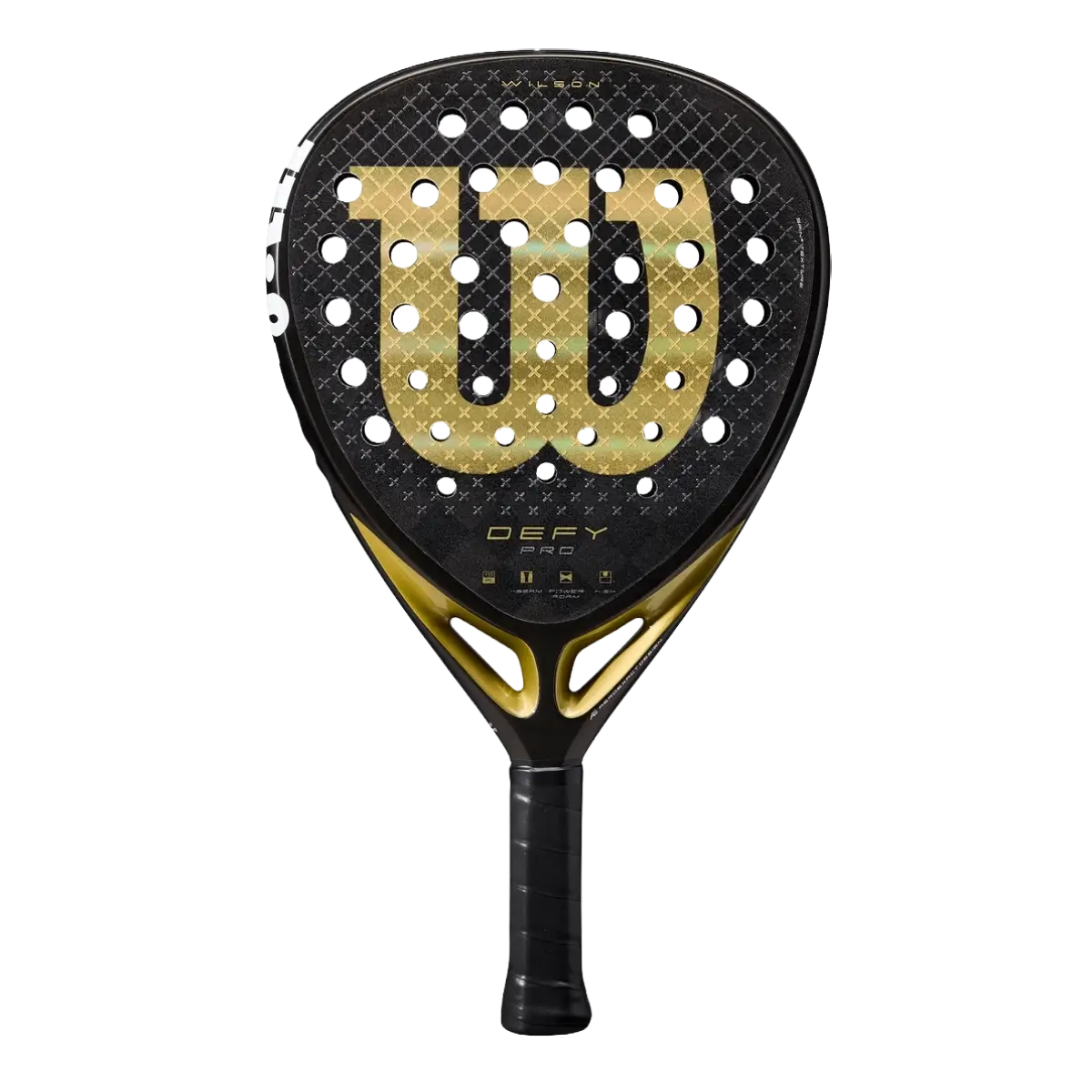 71WilsonWilson Defy Pro V1DiamondShape370 gWeight range26.3 cmBalance
Technical positioning and fit
Best for: advanced attackers in cool conditions, players who want high power without an extreme balance and users who value spin, a long handle and fast net preparation.
Choose it if: S feels too rigid in your usual temperatures and you want the same Bourne geometry with more accessible medium-speed output.
Think twice if: you play mainly above 25°C, need broad forgiveness or prefer a short handle and soft round-racket response.
Not best for: beginners, passive defenders, warm-climate players who need maximum high-speed control and anyone expecting W to feel universally soft.
Solid shape = this racket.Dashed outline = average of every racket we have reviewed.
Varlion Bourne CUBE Elbowcare W
Specifications
- Weight range
- 350–360 g
- Balance
- 26.5 cm
- Thickness
- 38 mm
- Shape
- Diamond
- Face material
- Carbon Cube three-dimensional carbon fibre
- Core
- Hypersoft foam; hard W tuning for below 25°C / 77°F
Common questions
W identifies the cold-condition version. Its hard core specification is intended to preserve rebound below 25°C, when cold would otherwise make a racket feel stiffer. It is a separate technical model from the S warm-condition version.
Its balance is 26.5 cm from the butt. Combined with the 350-360 g range and Prisma frame, that gives the diamond racket useful head presence without an extreme top-heavy swing.
Its nominal core is lower in hardness, but the comparison depends on temperature. W is designed to remain playable in cold conditions; S is designed to retain structure in heat. W should not be treated as universally softer at every temperature.
Yes. The diamond mould, Carbon Cube face and 14.5 cm handle provide a high power ceiling. It gives slightly more accessible rebound than S in its intended cold conditions, while S keeps the firmer maximum-output response in heat.
Forgiveness is moderate. The central-to-upper sweet spot is effective, but lateral misses still lose depth and stability. The W core can make short defensive contact easier in cold conditions without changing the underlying attacking diamond geometry.
It can be used, but warm conditions may make the lower-hardness W core more elastic and reduce high-speed control. Players who regularly compete above 25°C should normally start with the S version.
Choose it if you are an advanced attacking player in cool conditions and want the Bourne diamond, extended handle and spin texture with more accessible depth than the S version provides in cold weather.
Price alert
We check prices when we update our offers. Get one email when a verified price is below your threshold.
Player feedback
Player feedback is separate from our editorial review. Individual votes stay private — only the aggregate is published.
Thank you — your feedback is saved. You can revise it any time with Vote.
No player votes yet.
Questions & answers
No questions yet.