Royal Padel R ACE 2026 Review
 Methodology
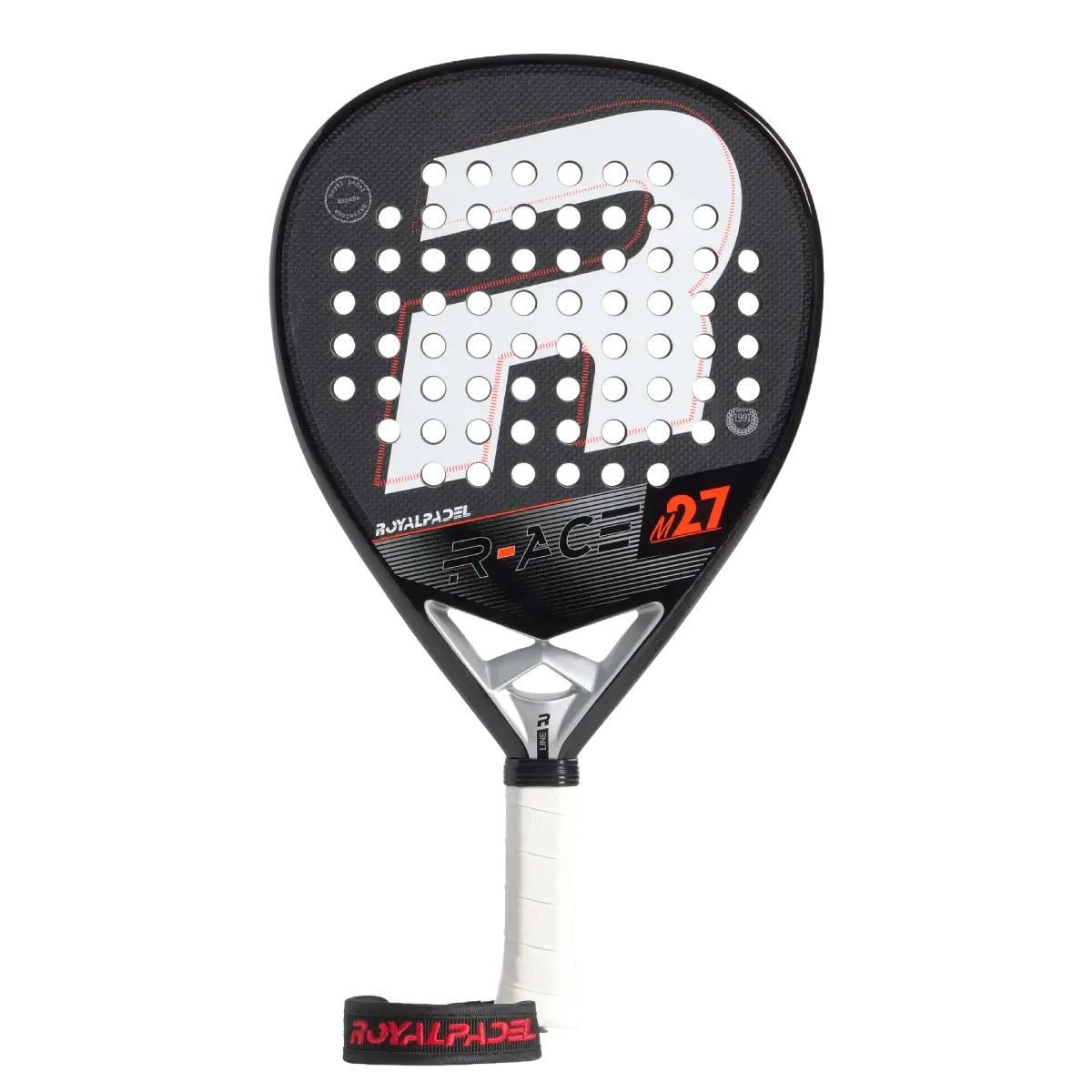
The Royal Padel R ACE 2026 is the attacking model in the R-Line: diamond shape, high balance, a 365-380 g range, 3K carbon faces and frame, and an EVA MID HARD core. Its balance point is 27.0 cm from the butt, so the racket carries real mass above the hand even though its mould is more manageable than the specification first suggests.
The defining quality is the combination of offensive leverage and control. The R ACE can accelerate volleys and overheads without producing an uncontrolled rebound, while its usable contact window is broader than that of many narrow, top-loaded diamonds. The rough surface adds practical grip for sliced volleys, viboras and kick smashes.
The trade-off is physical demand. A 372.5 g midpoint and high balance require early preparation, especially from the glass or during repeated body exchanges. The racket suits a technically organised intermediate or advanced player who wants pressure and stability without moving to an exceptionally hard frame. It is not the best choice for players who need a very light head or automatic defensive speed.
Version and lineup identification
This review covers the Royal Padel R ACE 2026, reference ACE2026 and EAN 8436614013518. It retains the R ACE identity: diamond mould, high balance, 3K carbon construction, EVA MID HARD and a full rough surface.
The R ACE Light is a separate model. It reduces static weight but keeps an attacking outline and should not be treated as the same racket with a cosmetic change. M27 Poly and M27 Light also sit nearby in the catalogue, but their round moulds and polyethylene cores move the emphasis toward control, defensive security and a larger central contact area.
The 2025 R ACE remains useful as a lineage reference, but its sample measurements and exact playing mass are not carried into this 2026 review. The current model is evaluated from its own 365-380 g specification and 27.0 cm balance point.
Royal Padel R ACE 2026 — Technical specifications
Construction and materials
The R ACE uses 3K carbon on the faces and a carbon frame. The construction produces a connected response when the player accelerates, while the EVA MID HARD core keeps the ball from sinking too deeply into the face. The result is firmer and more precise than a polyethylene control model, but less abrupt than a very hard, low-dwell attacking racket.
X Torsion reinforces the open heart and is intended to manage structural movement and vibration around the throat. It does not make a high-balance diamond effortless, but it helps the frame remain composed when receiving pace or striking above shoulder height.
The surface combines a full rough treatment with the Core Tech pattern. Its practical value is greatest when the swing already brushes the ball: sliced volleys, bandejas, viboras and kick smashes gain a more secure contact. It should be viewed as spin support, not a substitute for racket-head speed or correct face angle.
How heavy the racket feels and where the mass sits.
Balance point is shown from the available source evidence.
- Balance point27 cm24.5 cmavg 26 cm27.5 cmHead-heavy
- Static weight365–380 g340 gavg 365 g390 g
- Swing weight140.8 kg·cm² estimated110typical 128150
- Twist weight16.3 kg·cm² estimated11typical 1416
Shape and mould behavior
The diamond outline places the preferred contact area above the geometric centre. Combined with the 27.0 cm balance, this gives the head enough presence to carry through an overhead and to resist incoming pace on a well-timed volley.
The mould is not as selective as an extreme diamond. The central zone remains usable, and the transition into the upper-middle face is progressive rather than abrupt. The approximately 11.0 cm handle is compact by current power-racket standards, which favours one-handed preparation and direct wrist control but gives limited room for a true two-handed backhand.
Handling still depends on preparation. At the 372.5 g midpoint, late wrist corrections are slower than with M27 Light, and recovery after a wide defensive swing takes more effort. Compact preparation preserves its control; oversized swings make the high balance more obvious.
Where this racket sits for stiffness and how easily the face gives power.
R ACE 2026Stiffness, feel and comfort
The medium-hard response feels defined and moderately short in dwell time, especially when the swing speed rises. The core gives enough structure to keep the launch angle predictable without producing the extremely dry response associated with the hardest carbon-EVA combinations.
Comfort is better than the shape and balance alone imply. The usable centre, semi-hard rather than hard core, and throat damping reduce the sharpness of routine contact. That does not make it a comfort-first racket: repeated late impact or lateral misses still transmit more load than a round polyethylene model.
Players moving from a soft racket should expect a clearer, denser strike. Players coming from a hard power diamond will find more pocketing, easier control and less punishment outside the exact upper sweet spot.
Our scores against every racket we have reviewed.
- Comfort7 /100avg 7.3110Below average
- Spin8 /100avg 7.2210Above average
Sweet spot and forgiveness
The sweet spot is medium-large for a diamond and sits around the centre-to-upper-middle section. Clean contact in this band produces stable direction and useful depth without an exaggerated trampoline effect.
Central misses retain more control than expected because the rebound remains ordered. High contact carries strong leverage, while very low contact loses pace and exposes the top-loaded mass. Lateral misses create the clearest reduction in stability and comfort.
Forgiveness should therefore be understood correctly: the R ACE gives more usable surface than many power diamonds, but it does not erase the consequences of late preparation. It is forgiving within an attacking category, not equivalent to a round control racket.
Sweet spot- Core zone 7.5/10
- Shape Diamond
- Stability 7.5/10
Approximate high-tolerance zone for this mould and core.
Power and smash behavior
The power ceiling is one of the strongest areas. The high balance, carbon structure and EVA MID HARD core reward a full, organised acceleration. On viboras and kick smashes, the rough face and head presence make it easier to combine speed with rotation.
Flat-smash output is high when contact is early and above the body. The racket does not create the same result from a short, passive swing; its mass must be put into motion. Players relying on timing and body rotation will access more power than players expecting the core to catapult the ball.
The most repeatable offensive pattern is controlled aerial pressure rather than one-dimensional maximum force. Deep bandejas, fast viboras and directional overheads are easier to reproduce than emergency flat winners from poor position.
Net performance under pace
At the net, the R ACE is stable and authoritative through the centre. Punch volleys leave with a direct trajectory, while the moderate dwell time provides enough margin to redirect pace rather than simply reflecting it.
The high balance helps when blocking a heavy ball in front of the body. It is less helpful when the racket starts late or must change direction twice in quick succession. Fast exchanges reward compact preparation and a neutral ready position.
Touch volleys are viable because the face is not excessively reactive. Drop shots and short angles require a relaxed hand, but the controlled rebound gives better precision than the aggressive specification might suggest.
Spin generation
The Total Rough Spin / Core Tech surface creates strong spin potential. It is particularly effective on sliced volleys and viboras, where the player can combine the rough face with the inertia of the upper head.
Kick smashes also benefit from the elevated contact point and medium-hard response. The racket releases cleanly after a fast brush, preserving rotation instead of absorbing too much energy into the core.
On slower defensive slices, the roughness helps maintain control but cannot compensate for late contact. The highest spin output comes from speed, clean edge engagement and a stable wrist.
Defensive output and depth
Defense is competent rather than effortless. The broader-than-expected sweet spot helps on blocks and lobs, and the core supplies a controlled amount of rebound when the contact is in front.
The limitation is recovery speed. The 365-380 g range and high balance demand more space near the glass, and low balls become harder when the player is already late. Short preparation and active legs are important for producing depth without opening the face excessively.
For a left-side or aggressive right-side player, the defensive compromise is reasonable because the racket returns substantial value at the net and overhead. A player whose game is built around repeated emergency defense will find M27 Light materially easier.
Off-center stability and torsional resistance
Central and upper-middle contact are stable. The carbon frame and head mass help the face resist deformation when receiving pace, and the racket retains direction well on compact blocks.
The outer lateral zones are less forgiving. Twisting becomes noticeable when the ball meets the edge of the usable area, and the medium-hard response makes the loss of centre clear in the hand. The sweet spot is broad for the category, but torsional resistance is not uniform across the full face.
Practical on-court takeaways
- The R ACE is a high-balance diamond that behaves with more control than an extreme power-only racket. • The 365-380 g range provides stability and overhead leverage but makes late defensive preparation demanding. • The sweet spot is unusually usable for the shape, especially through the central and upper-middle face. • The medium-hard response gives direct feedback without becoming exceptionally dry. • The rough surface is most valuable on viboras, sliced volleys and kick smashes. • Choose it for controlled offense; choose M27 Light for speed or M27 Poly for round-shape security.
Comparison within the Royal Padel lineup
R ACE Light 2026: The Light version reduces static weight and is easier to accelerate, but it gives up some mass-based stability and finishing inertia. Choose R ACE for heavier volleys and overhead authority; choose R ACE Light when reaction speed and lower fatigue matter more.
M27 Poly 2026: M27 Poly uses a round mould and a polyethylene core. It offers a larger central sweet spot, calmer defense and more placement security. R ACE provides a higher contact point, stronger aerial leverage and a higher maximum power ceiling.
M27 Light 2026: M27 Light is substantially easier to move and much softer in classified feel. It is the stronger option for quick defense, long sessions and compact volleying. R ACE is more stable under full pace and more capable when the player attacks above the shoulder.
Comparison with other brands
Bullpadel Hack 04 2026: Both are attack-oriented and medium-hard in classified response. Hack 04 is the more specialised high-speed weapon, while R ACE offers a broader usable centre and a more control-oriented interpretation of the diamond format.
HEAD Extreme Pro 2026: Extreme Pro is classified harder and places a greater premium on clean acceleration. R ACE is the more moderate choice for a player who wants high balance and overhead leverage without moving to a distinctly hard response.
NOX AT10 Attack 12K 2026: The NOX is also a hard attacking platform with strong upper-face output. R ACE feels less rigid and gives more controlled pocketing; the NOX better suits players who prioritise a sharper, more technique-dependent finish.
76Royal PadelRoyal Padel R ACE 2026DiamondShape365–380 gWeight range27 cmBalance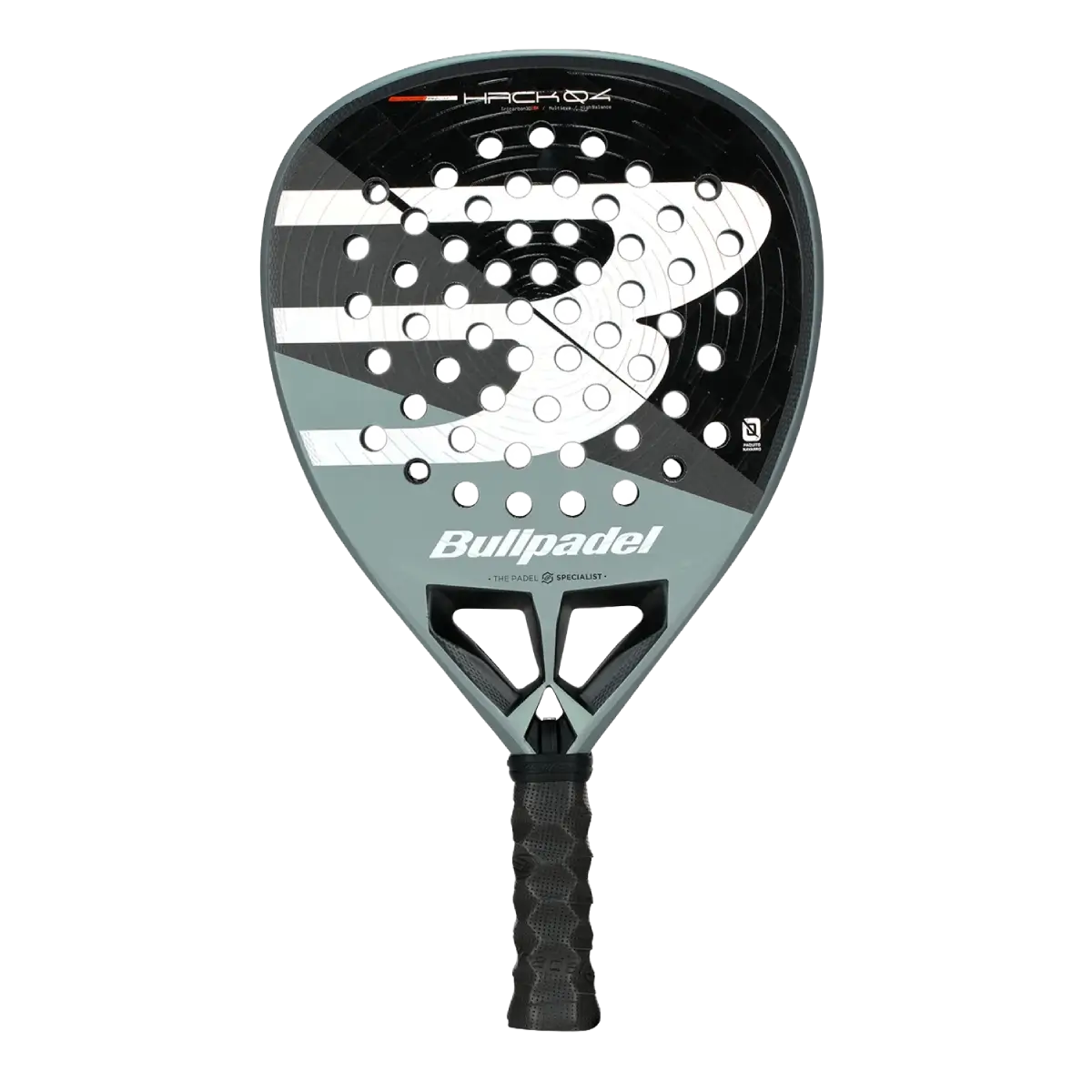 73BullpadelBullpadel Hack 04 2026DiamondShape370–380 gWeight range27–27.2 cmBalance
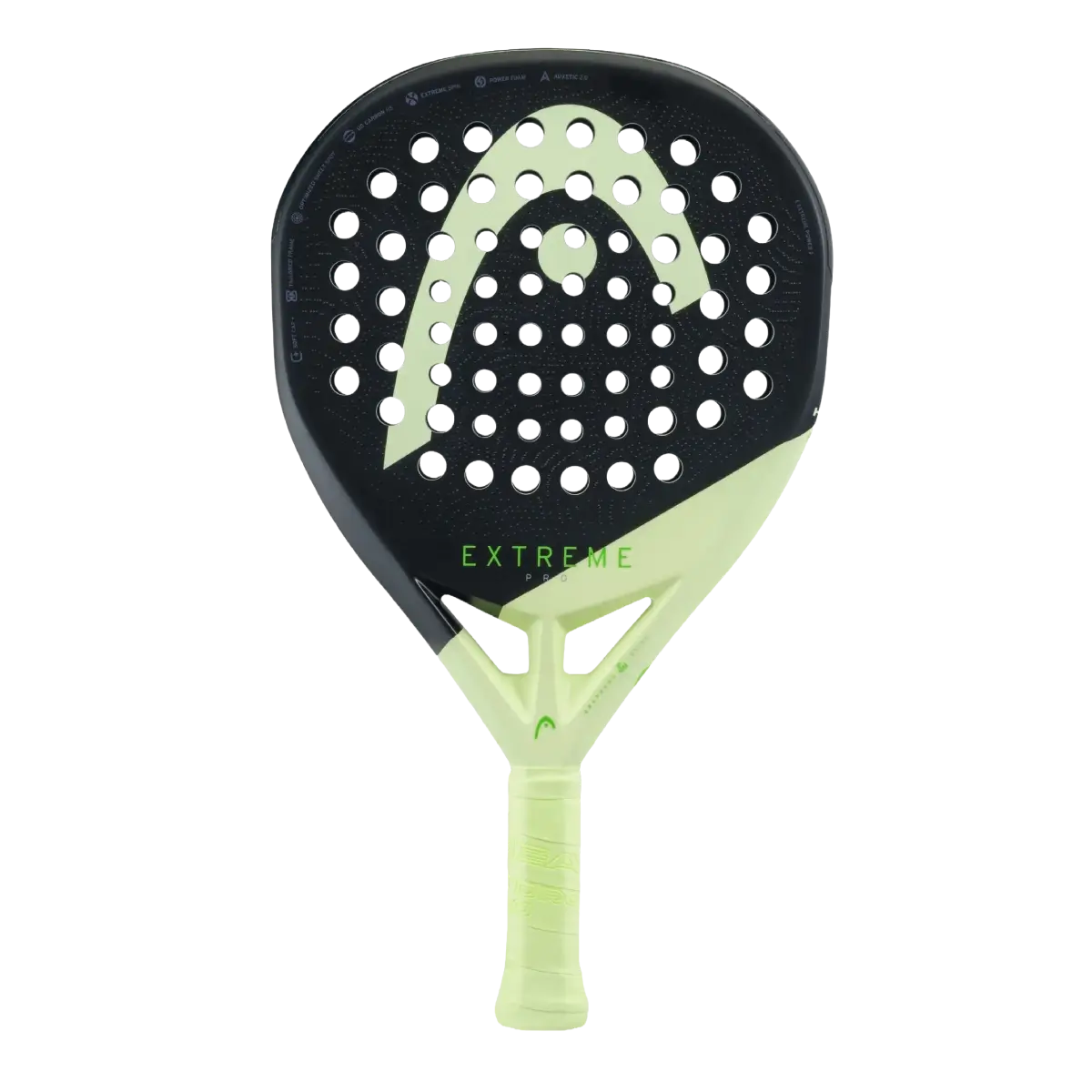 76HeadHEAD Extreme ProDiamondShape370 gWeight range27 cmBalance
Technical positioning and fit
Best for: technically organised intermediate and advanced players, aggressive right-side players, left-side players who value control, and players who use viboras and kick smashes to build pressure.
Choose it if: you want a genuine high-balance attack racket with a useful sweet spot, controlled rebound and medium-hard rather than extreme stiffness.
Think twice if: you defend late, prefer a light head, or want the racket to create depth with minimal preparation.
Not best for: beginners, players with slow preparation, and comfort-first users who need a distinctly soft polyethylene response.
Solid shape = this racket.Dashed outline = average of every racket we have reviewed.
Royal Padel R ACE 2026
Specifications
- Weight range
- 365–380 g
- Balance
- 27 cm
- Thickness
- 38 mm
- Shape
- Diamond
- Face material
- 100% 3K carbon
- Core
- EVA MID HARD / semi-hard EVA
Common questions
It is a 2026 diamond-shaped attacking racket with a 365-380 g weight range, high balance, 3K carbon construction and an EVA MID HARD core. It targets intermediate-to-advanced players who want offensive leverage without the narrow usable contact window of an extreme power racket.
The balance is High at 27.0 cm from the butt. At the 372.5 g midpoint, that configuration produces substantial head presence and should not be treated as a lightweight, neutral-handling racket.
Its padel.how stiffness index is 6.5/10, classed as medium-hard; this is an editorial classification, not a laboratory measurement. The EVA MID HARD core gives a direct response under acceleration, while the X Torsion structure and usable sweet spot keep the impact less severe than many hard diamond rackets.
It is more accessible than its diamond shape suggests, but the high balance and 365-380 g range still demand early preparation. A solid intermediate can use it, while advanced players will extract more from its overhead leverage, spin surface and high-speed stability.
Yes. The broad usable centre, controlled rebound and stable volley response make it viable on the right for an assertive player. It remains head-heavy, so a player prioritising maximum defensive speed may prefer M27 Light or another round, lower-inertia model.
Its power ceiling is high because the diamond mould, 27.0 cm balance, carbon structure and semi-hard core reward full acceleration. It is strongest on aerial pressure and kick or worked overheads; it is not an automatic flat-smash launcher when timing and contact quality are poor.
Choose it if you want an offensive racket with meaningful control, a more usable sweet spot than a typical extreme diamond and a medium-hard rather than brutally rigid response. Avoid it if you need very fast defensive handling, low head weight or a distinctly soft impact.
Price alert
We check prices when we update our offers. Get one email when a verified price is below your threshold.
Player feedback
Player feedback is separate from our editorial review. Individual votes stay private — only the aggregate is published.
Thank you — your feedback is saved. You can revise it any time with Vote.
No player votes yet.
Questions & answers
No questions yet.