Stealth Padel Nighthawk Review
 Methodology
Version and lineup identification
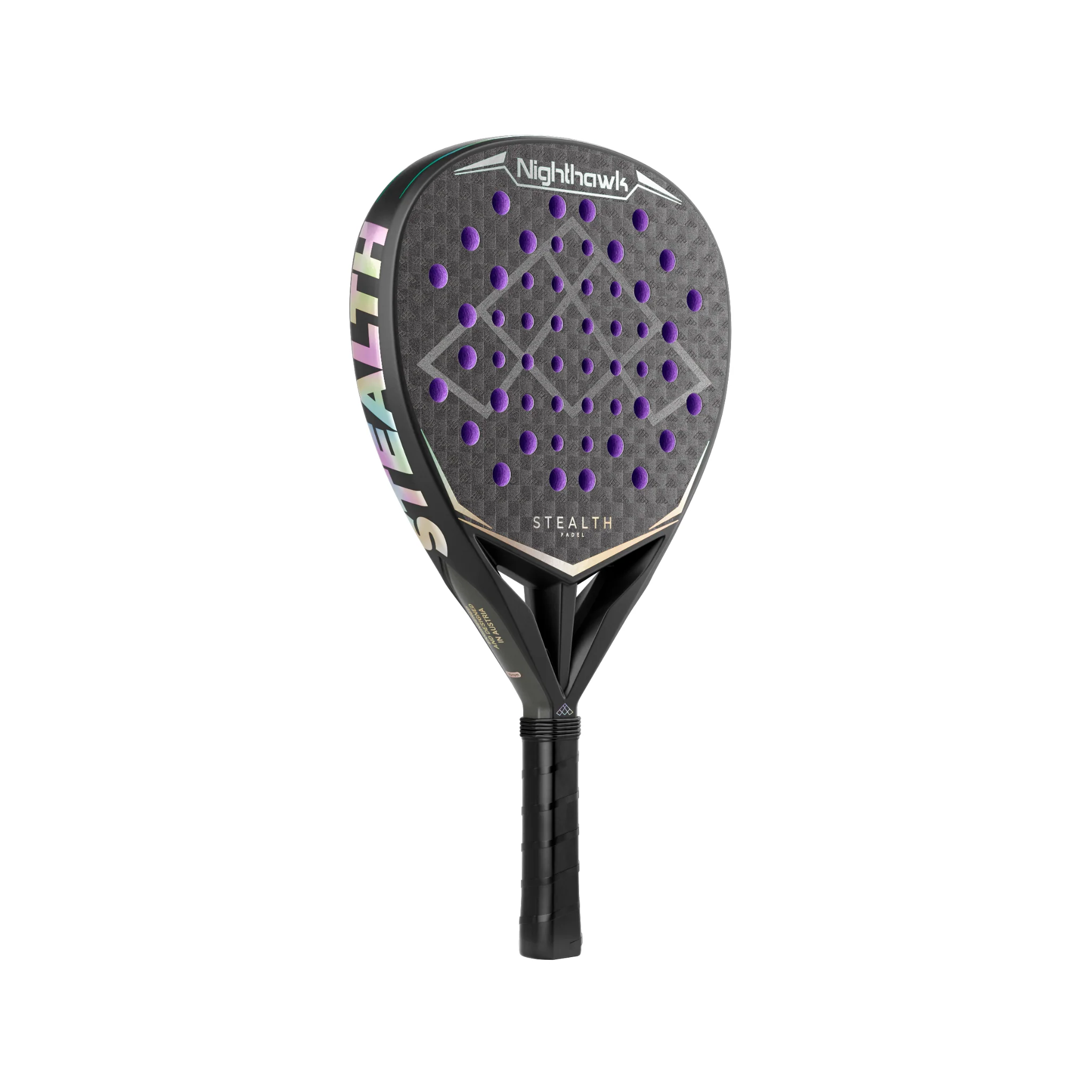
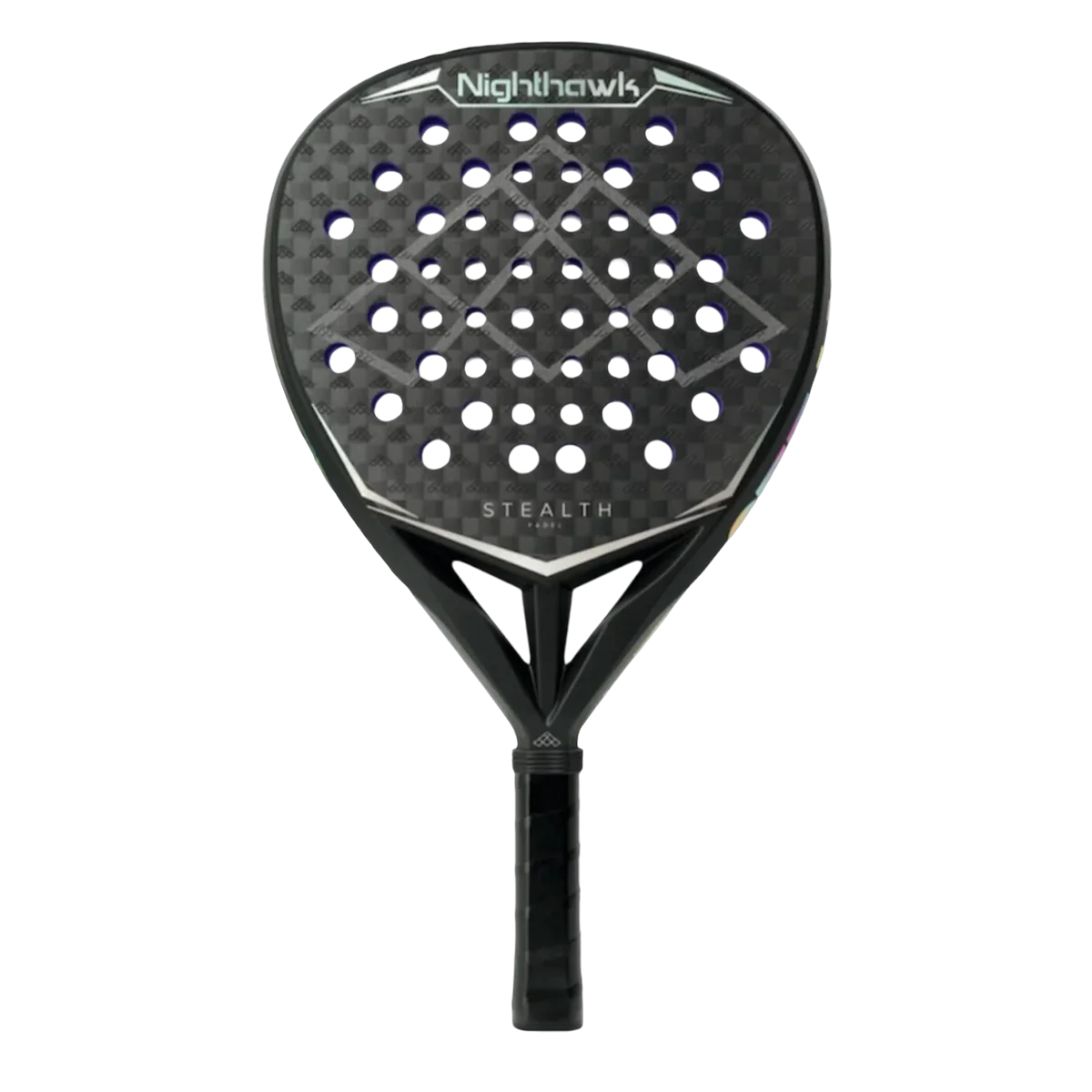
Nighthawk is an advanced attacking racket built around a 365 ± 10 g specification, diamond head and mid-to-high balance. That is a substantial, forward-oriented layout, paired with a 12K PREMIUM Carbon T700 face and Eva PWR core.
The payoff is a strong finishing ceiling and useful spin for a player who prepares the racket early. The cost is equally important: quick defensive recovery and cushioning are not its strengths. I would choose Nighthawk for its prepared attacking ball, not because it makes every part of the point easier.
Stealth Padel Nighthawk — Technical specifications
Construction and materials
The 12K PREMIUM Carbon T700 face and Eva PWR core give Nighthawk a direct response, with a Forged Carbon T700 frame providing the surrounding structure. The package suits active overheads much better than a search for deep, soft cushioning.
Ultra Spin System+ is the listed surface treatment. Its practical place in this review is to support spin-oriented attacking strokes, while the player still supplies the brushing path and acceleration. Neither that name nor the carbon specification removes the need for a clean strike.
How heavy the racket feels and where the mass sits.
Balance point is shown from our measurement.
- Balance point27 cm24.5 cmavg 26 cm27.5 cmHead-heavy
- Static weight355–375 g340 gavg 365 g390 g
- Swing weight137.9 kg·cm² estimated110typical 128150
- Twist weight16 kg·cm² estimated11typical 1416
Shape and mould behavior
The diamond head and Mid/High balance make preparation central to Nighthawk’s character. With a nominal 365 g before allowing for the ±10 g tolerance and the final playing setup, this is not a lightweight route to fast reactions.
That forward emphasis is useful when the racket is already organised for a volley or overhead. It becomes a cost when the point demands repeated changes of direction near the glass or at the net. Mid/High is a qualitative description, so no exact balance point or measured swingweight should be inferred from it.
Where this racket sits for stiffness and how easily the face gives power.
NighthawkStiffness, feel, and comfort
Nighthawk’s contact is direct rather than plush. The 12K PREMIUM Carbon T700/Eva PWR combination gives clear feedback, but cushioning remains a significant compromise when contact is imperfect or the player is forced into repeated defense.
There are two demands to consider together: the impact response and the work of positioning a substantial, forward-balanced racket. A clean smash may show the construction at its best, while a long sequence of rushed blocks reveals why this is an advanced, power-first choice.
Our scores against every racket we have reviewed.
- Comfort5.5 /100avg 7.3110Below average
- Spin8 /100avg 7.2210Above average
Sweet spot and forgiveness
The hitting area is usable for the attacking category, but it does not provide exceptional error correction. Nighthawk needs the player to meet the ball in the productive zone rather than relying on a wide reserve of rebound from the edges.
Its handling demand makes that especially relevant. When preparation is late, the player has less freedom to organise both the face angle and the contact point. The best way to access its power is to improve the setup for the strike, not to swing harder after losing position.
Sweet spot- Core zone 7/10
- Shape Diamond
- Stability 7/10
Approximate high-tolerance zone for this mould and core.
Power and smash behavior
The high overhead ceiling is the Nighthawk’s clearest strength. Its diamond, mid-to-high-balance layout and direct carbon/PWR response suit a prepared smash, forceful vibora or hard bandeja with clean acceleration.
Accessible power is a separate question. The racket can finish strongly, but a short or passive contact does not offer the same return as the committed stroke. I would use it when overhead opportunities are a recurring part of the game plan rather than hope that its power will compensate for a difficult defensive position.
Net performance under pace
Nighthawk is more convincing once the head is set in front of the player than while it is being redirected at the last moment. Prepared volleys can use the direct response to apply pressure, but the substantial weight and forward balance make repeated reflex exchanges more demanding.
A compact, deliberate action is therefore the better match. The racket’s attacking potential is available at the net, but the player has to create the preparation time; hand speed is not the feature that makes this model stand out.
Off-center stability and torsional resistance
The forged-carbon frame gives Nighthawk a structural platform, yet off-centre stability remains ordinary rather than exceptional. A heavy or forward-feeling racket is not automatically an immovable face on a lateral miss.
On hard returns and emergency volleys, preserving a playable direction is the first objective. The strongest attacking ball still comes from a clean, prepared strike, and the frame cannot make an awkward edge contact equivalent to that result.
Practical on-court takeaways
I would choose Nighthawk for an advanced attacker who can prepare a substantial head early and regularly use the overhead ceiling. Its spin potential gives that role more variety than a flat smash alone.
I would be more cautious when matches are decided by repeated low recovery, hurried net exchanges or comfort under imperfect contact. The 365 ± 10 g diamond and mid-to-high balance make those demands part of the package, not minor details that disappear because the racket can hit a powerful winner.
Comparison within the Stealth Padel lineup
The Aurora is the opposite starting point: a round, low-to-mid-balance control racket with a lower nominal weight and stronger emphasis on defensive organisation. Nighthawk offers the finishing ceiling, but asks more of preparation and contact.
The Nemesis is another power-first option, using a 24K T800 face and mid balance. That makes it a useful comparison for the amount of head-led workload the player is willing to accept; the weave count does not decide the winner.
The Spirit for Facu Dominguez uses a hybrid layout and 360 ± 10 g nominal specification. Its attacking brief places more emphasis on accessible pace, while Nighthawk is the more pronounced finishing-and-preparation trade-off in this shortlist.
Lineup comparison
Stealth Padel Nighthawk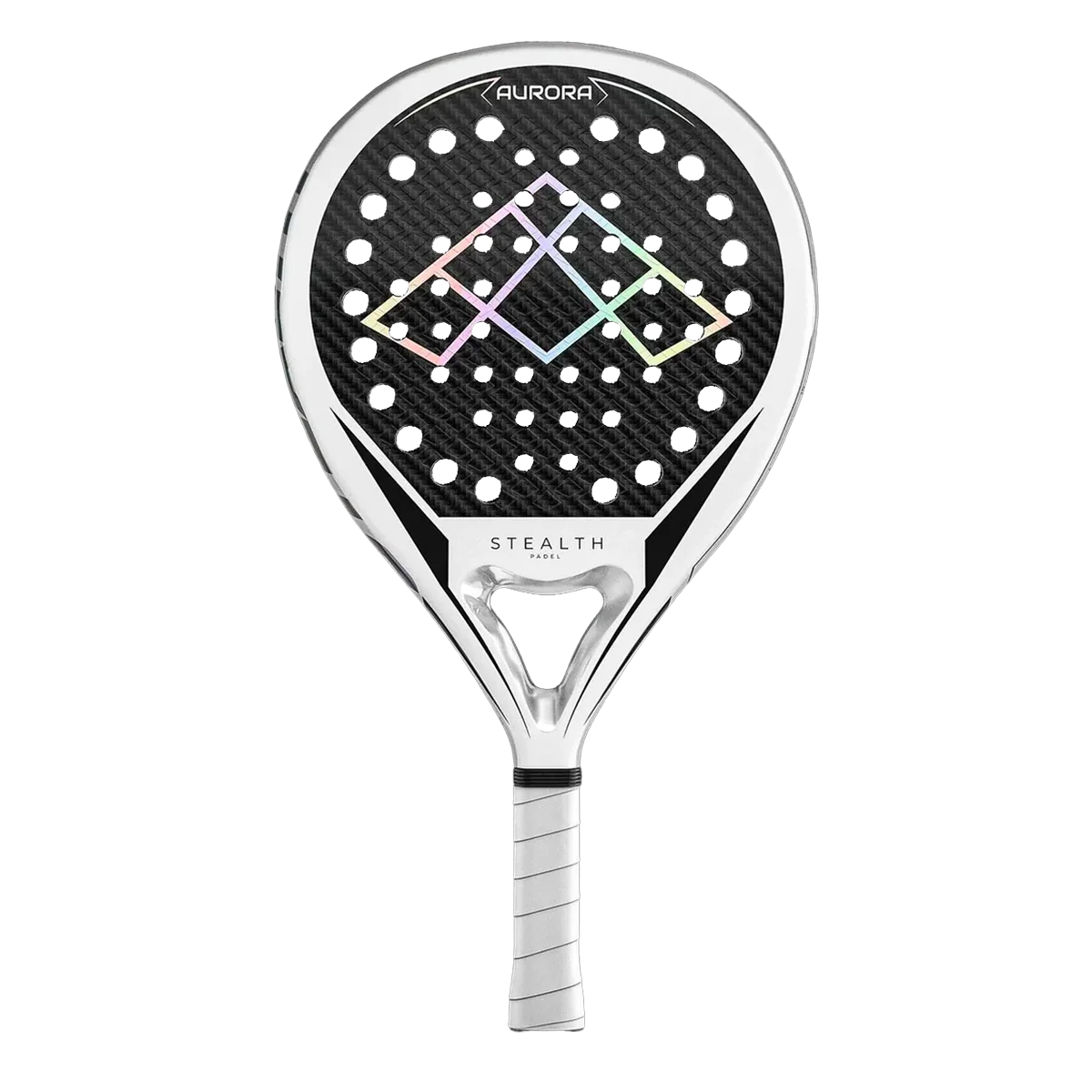 Stealth Padel Aurora
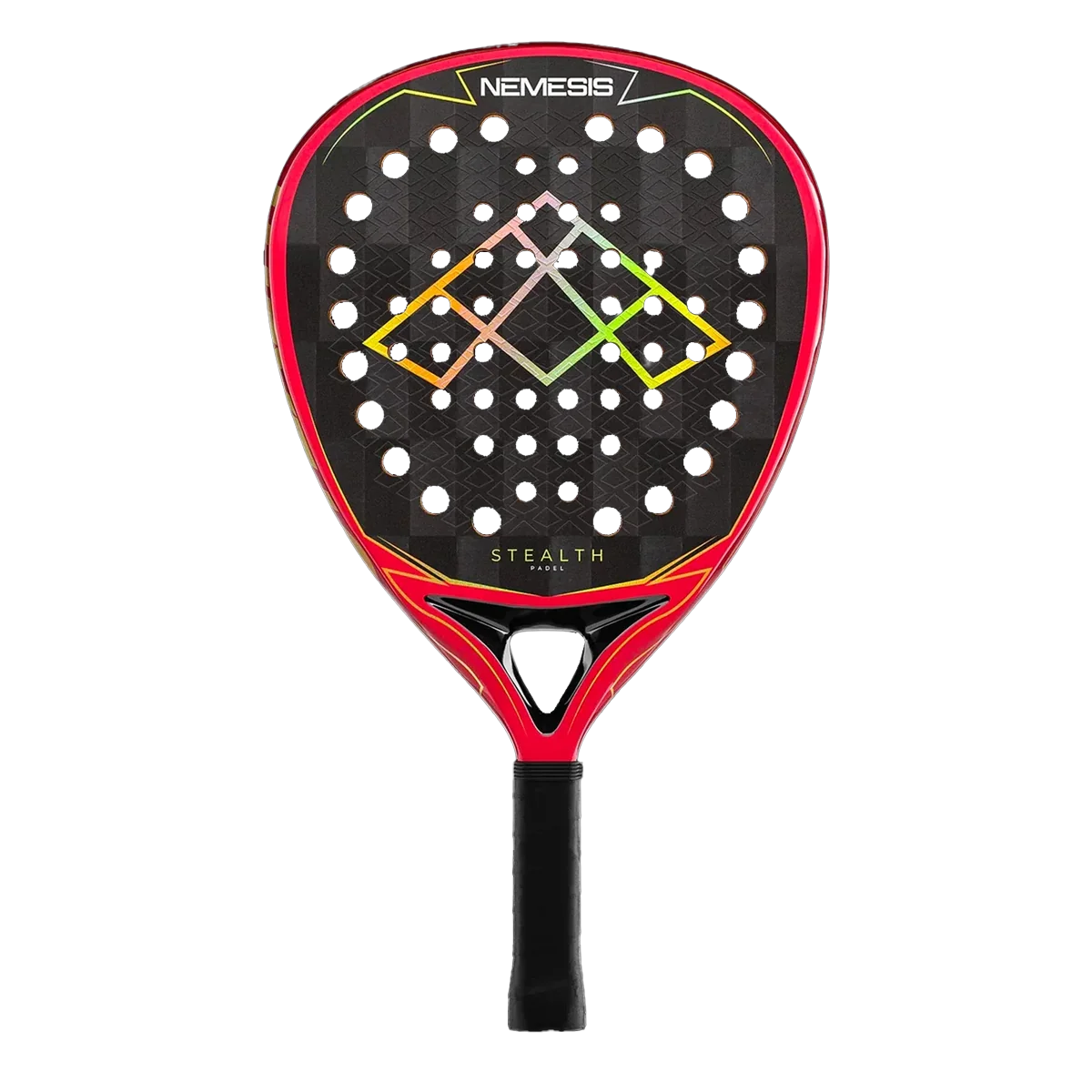 Stealth Padel Nemesis
Comparison with other brands
Cross-brand comparisons should begin with a similarly substantial attacking diamond, not an unrelated racket that happens to share the price or a 12K face. Nighthawk’s defining question is whether its prepared overhead benefit justifies the work needed to move and stabilise the head throughout the point.
A softer control alternative should be judged on easier recovery and repeated contact, while a more specialized attacker should offer a usable finishing advantage rather than only a more extreme specification. Nighthawk makes sense when the player can exploit its power often enough to accept the defensive and comfort costs.
The existing shortlist is in Compare Rackets. Check the actual weight and fitted setup, not only the nominal figure.
Technical positioning
Nighthawk’s construction and layout point in the same direction: a direct 12K T700/Eva PWR response in a substantial diamond with mid-to-high balance. Its best use is a well-prepared attacking stroke with enough acceleration to access the finishing ceiling.
The other side of that recommendation is limited defensive ease, modest hand speed and little emphasis on cushioning. I would choose it for an advanced player who accepts those costs as part of the attacking plan, rather than for someone seeking a generally easier racket.
Solid shape = this racket.Dashed outline = average of every racket we have reviewed.
Stealth Padel Nighthawk
Specifications
- Weight range
- 355–375 g
- Balance
- 27 cm
- Thickness
- 38 mm
- Shape
- Diamond
- Face material
- 12K PREMIUM Carbon T700
- Core
- Eva PWR
Common questions
Advanced attackers who prepare early and can use a strong overhead ceiling, while accepting more work in defense and fast reactions.
Nighthawk has a diamond head, a listed 365 ± 10 g weight, mid-to-high balance, a 12K PREMIUM Carbon T700 face and Eva PWR core. The balance description is qualitative, not an exact measurement in centimetres.
Stealth Padel Nighthawk scores 70/100 in the padel.how review model.
Price alert
We check prices when we update our offers. Get one email when a verified price is below your threshold.
Player feedback
Player feedback is separate from our editorial review. Individual votes stay private — only the aggregate is published.
Thank you — your feedback is saved. You can revise it any time with Vote.
No player votes yet.
Questions & answers
No questions yet.