Stealth Padel Aurora Review
 Methodology
Version and lineup identification
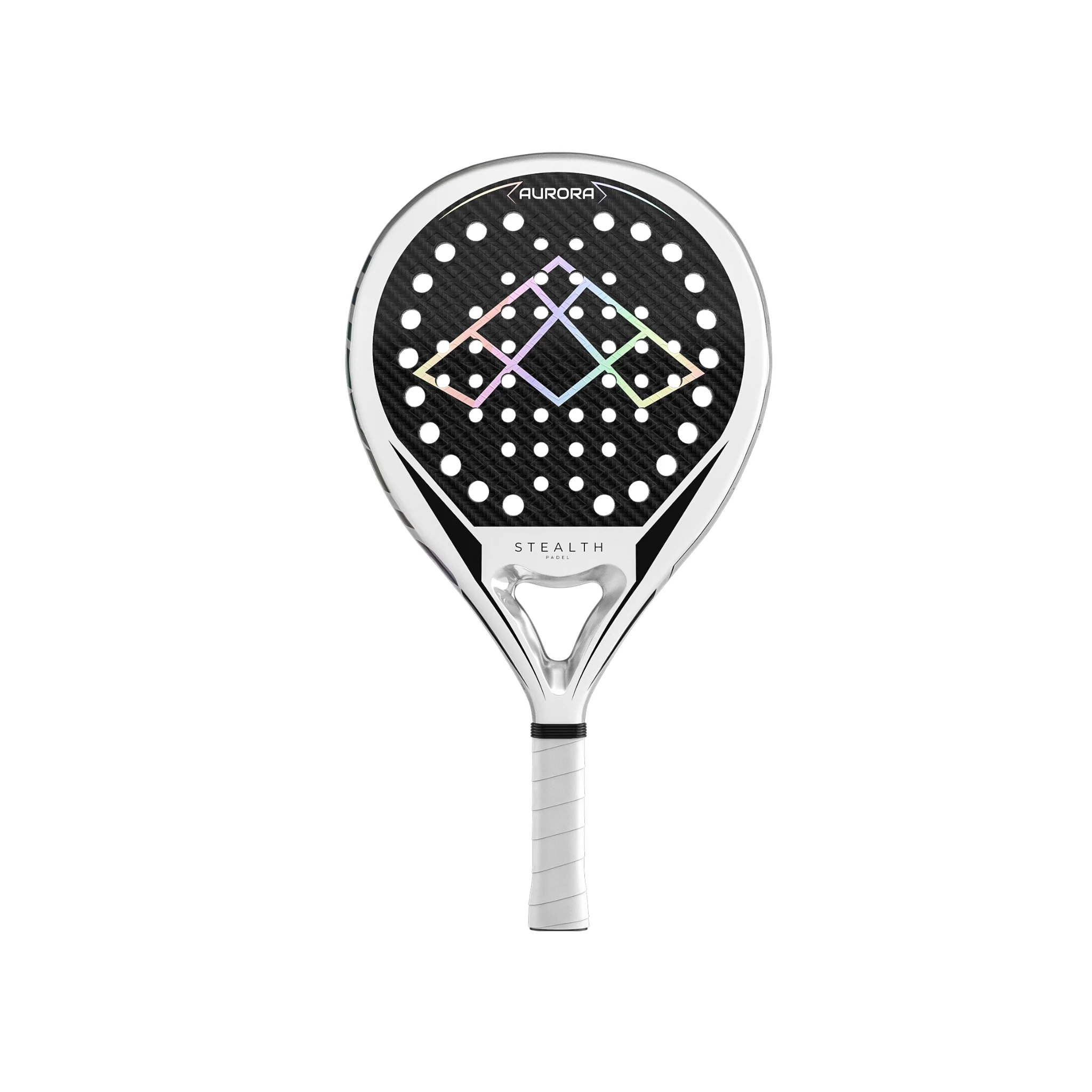
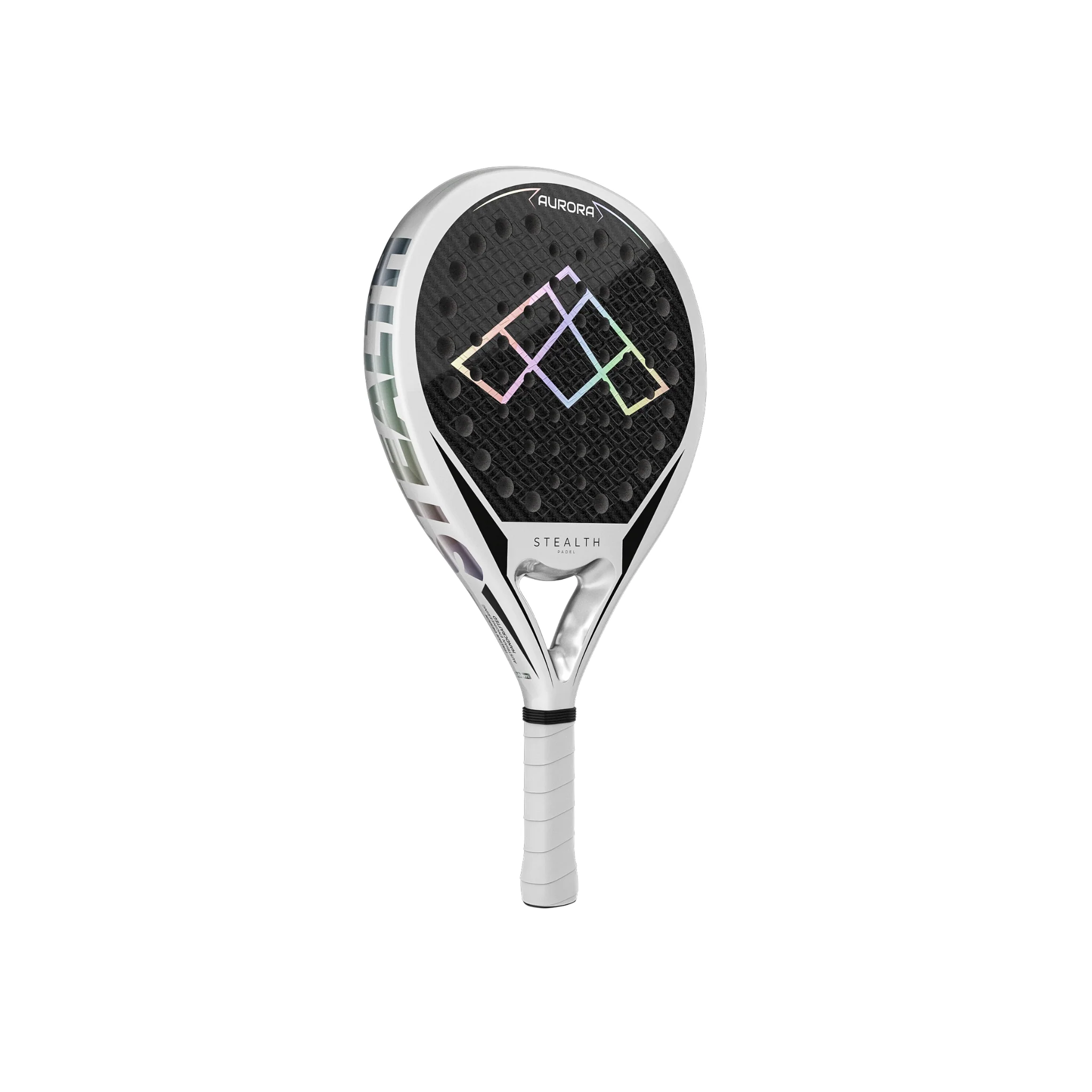
Aurora is Stealth Padel’s control-led choice for intermediate to advanced players. A round head, low-to-mid balance and 350 ± 10 g listed weight give it a more manageable layout than the brand’s attacking models, while the 3K XTREME Carbon T800 face and Eva MLT3 core retain a direct contact.
Its appeal is placement and defensive usability rather than an overwhelming finish. That distinction matters: a control racket can help organise the ball without being especially soft, and Aurora’s relatively limited cushioning remains part of the choice.
Stealth Padel Aurora — Technical specifications
Construction and materials
Aurora combines a 3K XTREME Carbon T800 face, Eva MLT3 core and Forged Carbon T700 frame. The face-and-core response is defined rather than deeply cushioned, giving the player a clear contact for controlling direction. Neither the 3K label nor the MLT3 name is enough to derive a numerical stiffness or a foam-layer recipe.
Hyper Spin System is the listed surface treatment. Spin is a useful part of the racket’s control brief, particularly when the player shapes a volley or overhead rather than relying on flat power. The surface is an aid to that stroke, not a substitute for the correct path through the ball.
How heavy the racket feels and where the mass sits.
Balance point is shown from our measurement.
- Balance point25.5 cm24.5 cmavg 26 cm27.5 cmNeutral balance
- Static weight340–360 g340 gavg 365 g390 g
- Swing weight118.4 kg·cm² estimated110typical 128150
- Twist weight13.7 kg·cm² estimated11typical 1416
Shape and mould behavior
The round mould and low-to-mid balance make a central, compact preparation the natural starting point. Aurora’s 350 ± 10 g specification also leaves less nominal mass to reposition than the heavier Nighthawk, which fits its more agile defensive role.
The tolerance still matters: 350 g is not the weight of every specimen, and Low/Mid is not a numerical balance measurement. I would compare the actual playing setup when deciding how quickly the head returns for a second volley, rather than judging the racket from shape alone.
Where this racket sits for stiffness and how easily the face gives power.
AuroraStiffness, feel, and comfort
The Aurora’s direct response is useful for a player who wants to distinguish a controlled strike from a loose contact. The 3K XTREME Carbon T800/Eva MLT3 package does not make the ball feel deeply buried in a soft face, even though the racket is positioned for control.
Cushioning is therefore a reservation, not a headline advantage. Quick handling can make preparation easier, but it does not make the impact itself gentle. I would judge the fit through repeated blocks and off-centre contacts as well as clean, deliberate strokes.
Our scores against every racket we have reviewed.
- Comfort6 /100avg 7.3110Below average
- Spin8 /100avg 7.2210Above average
Sweet spot and forgiveness
The round head provides a usable central contact window, but Aurora is not an unusually forgiving racket simply because its outline is round. Reliable placement still depends on presenting the face consistently and meeting the ball in the productive area.
Its manageable preparation is most helpful when it improves that contact. On a stretched defensive ball, getting the head behind the ball matters more than expecting the face to preserve the same depth and direction from any point near the rim.
Sweet spot- Core zone 7/10
- Shape Round
- Stability 7.5/10
Approximate high-tolerance zone for this mould and core.
Power and smash behavior
Aurora gives useful rally depth more readily than it gives a decisive flat smash. That suits a control-led game: compact active strokes can support defense and construction, while the final overhead still needs accurate contact and player-generated acceleration.
The low-to-mid balance and moderate nominal weight are not a recipe for a heavy, head-led finish. I would use its spin and placement to maintain pressure on a bandeja or vibora rather than choose it primarily for the biggest single smash.
Net performance under pace
At the net, Aurora’s more useful quality is getting the head into position quickly. Its round, manageable layout suits a compact first volley, an adjustment of direction or a controlled response to incoming pace.
It is less convincing as a source of heavy finishing pressure. The direct face gives feedback, but the player still has to create penetration through the stroke. I would favour a prepared angle and deliberate placement over expecting a short, passive block to become a dominant volley.
Off-center stability and torsional resistance
Off-centre stability is serviceable for Aurora’s control role, without making it an immovable blocker. The forged-carbon frame is part of the structural package, but the racket’s relatively modest mass means stability should be considered separately from its quick preparation.
On a hard return or backhand block, the objective is to keep the face set and preserve a playable ball. A clear edge hit is still a compromise; strong placement from clean contact does not mean identical output across the entire round face.
Practical on-court takeaways
I would choose Aurora when placement, defensive depth and manageable preparation matter more than raw finishing force. Its round shape and low-to-mid balance fit a player who builds the rally and uses spin or direction to create the opening.
The compromise is that this is not a plush beginner racket. The direct carbon/MLT3 response and ordinary contact tolerance still reward established technique, while the modest smash ceiling limits how much help the racket gives once an overhead opportunity arrives.
Comparison within the Stealth Padel lineup
The Nemesis changes the brief to attack, using a 24K XTREME Carbon T800 face and Eva PWR core in a diamond/hybrid layout. Aurora instead prioritises placement and defense; the choice is not a claim that one carbon weave is universally superior.
The Spirit for Facu Dominguez is the hybrid attacking alternative, with a more forward balance and a different 18K ALU Twill face. The Nighthawk takes the more physically demanding route through a 365 ± 10 g diamond and mid-to-high balance. I would stay with Aurora when quick preparation and control earn more points than the extra finishing ceiling of those alternatives.
Lineup comparison
Stealth Padel Aurora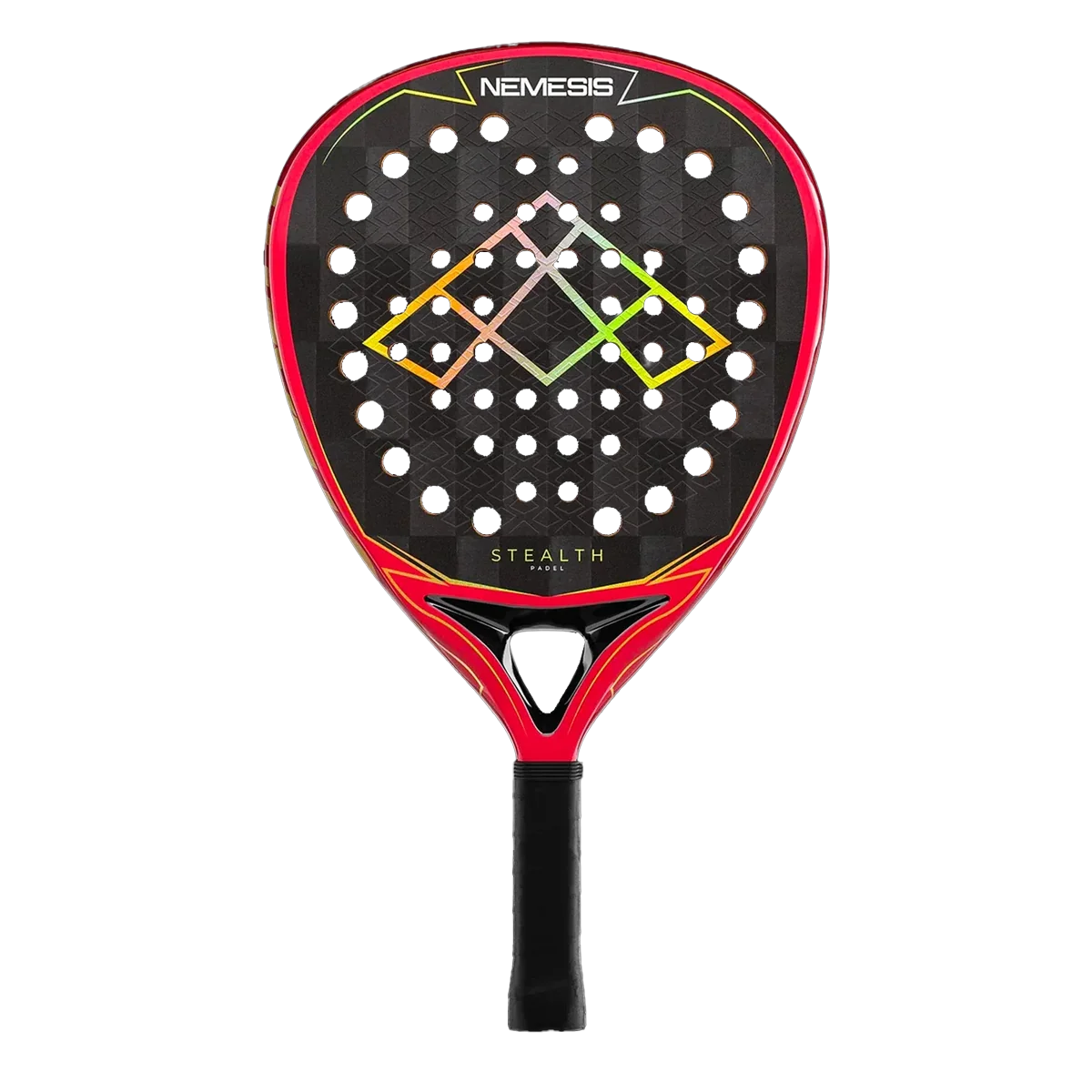 Stealth Padel Nemesis
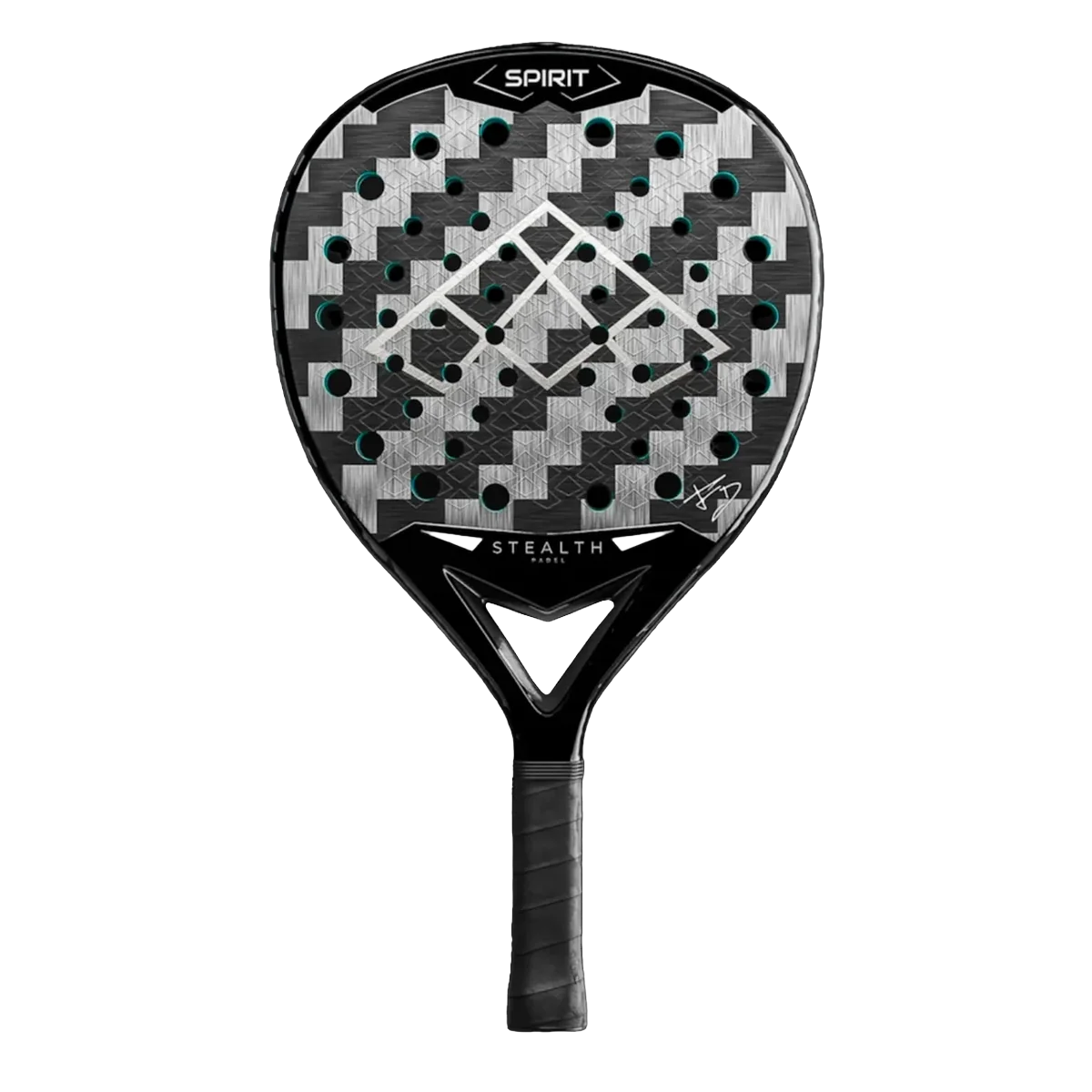 Stealth Padel Spirit for Facu Dominguez
Comparison with other brands
A useful cross-brand comparison starts with another round, low-to-mid-balance control racket, not simply a similarly priced carbon model. Aurora’s combination is distinctive because manageable preparation and strong placement coexist with a direct, relatively uncushioned impact.
A softer alternative should be judged on whether it makes repeated contact easier without introducing unwanted rebound. A more powerful alternative should justify any extra handling or contact demand through a finishing benefit the player can actually use. Aurora remains the choice when defensive organisation and direction are more important than either maximum cushioning or maximum smash force.
The existing shortlist is available in Compare Rackets. Use the construction and playing compromises together, rather than treating an overall total as the reason to buy.
Technical positioning
Aurora’s control identity comes from the combination of its round, manageable layout and a direct contact that rewards placement. The 350 ± 10 g specification and low-to-mid balance support preparation, while the carbon/MLT3 package keeps the feel more defined than plush.
For an intermediate to advanced point builder, useful defensive depth and spin broaden that role beyond simply blocking the ball back. The limits are cushioning and finishing authority. I would choose it to organise and direct a rally, not to hide every miss or add a heavy smash automatically.
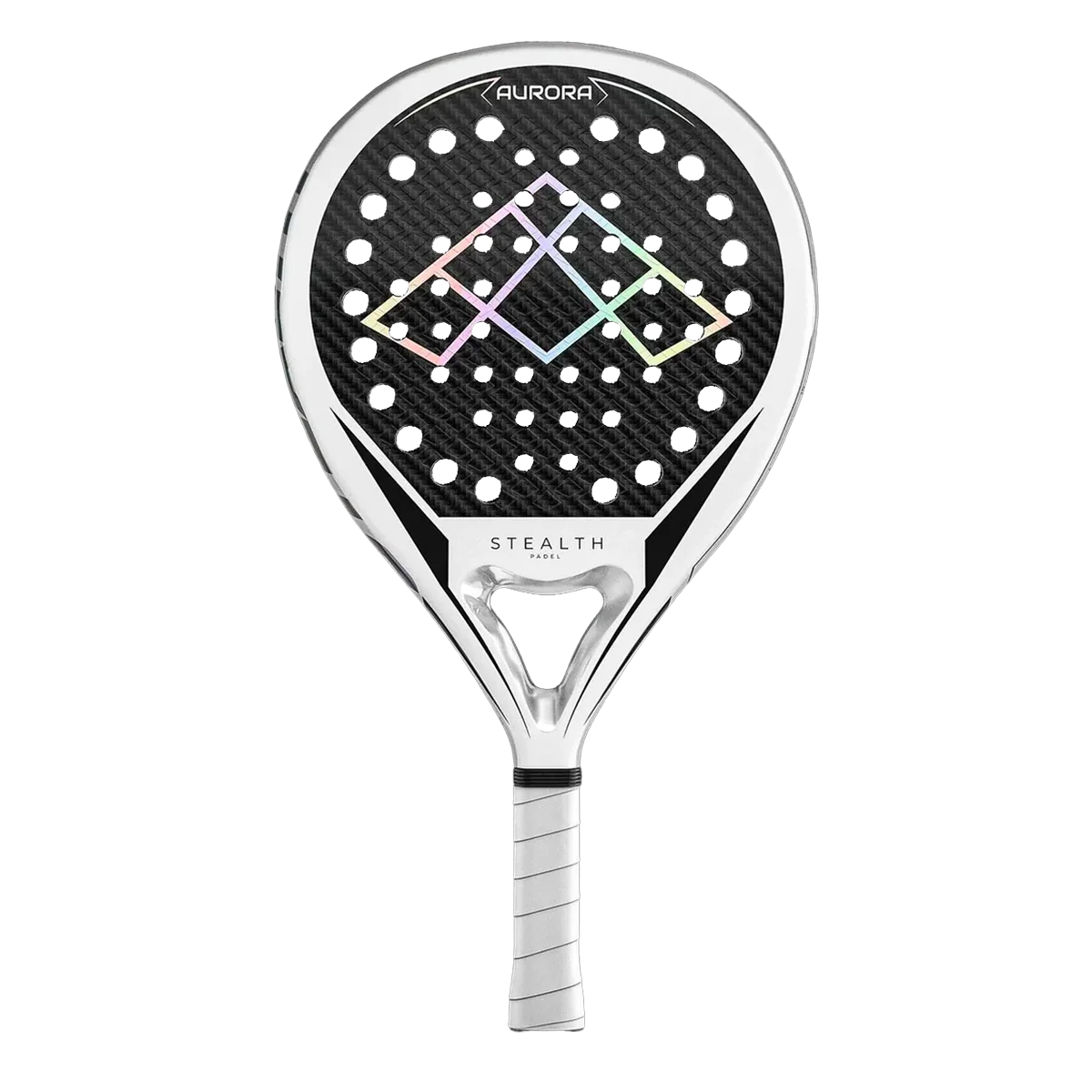
Solid shape = this racket.Dashed outline = average of every racket we have reviewed.
Stealth Padel Aurora
Specifications
- Weight range
- 340–360 g
- Balance
- 25.5 cm
- Thickness
- 38 mm
- Shape
- Round
- Face material
- 3K XTREME Carbon T800
- Core
- Eva MLT3
Common questions
Intermediate to advanced players who prioritise placement, defensive depth and manageable preparation, and who accept a direct rather than deeply cushioned impact.
Aurora has a round head, a listed 350 ± 10 g weight, low-to-mid balance, a 3K XTREME Carbon T800 face and Eva MLT3 core. Low/Mid describes the balance qualitatively, without specifying an exact point in centimetres.
Stealth Padel Aurora scores 76/100 in the padel.how review model.
Price alert
We check prices when we update our offers. Get one email when a verified price is below your threshold.
Player feedback
Player feedback is separate from our editorial review. Individual votes stay private — only the aggregate is published.
Thank you — your feedback is saved. You can revise it any time with Vote.
No player votes yet.
Questions & answers
No questions yet.