Stealth Padel Nemesis Review
 Methodology
Version and lineup identification
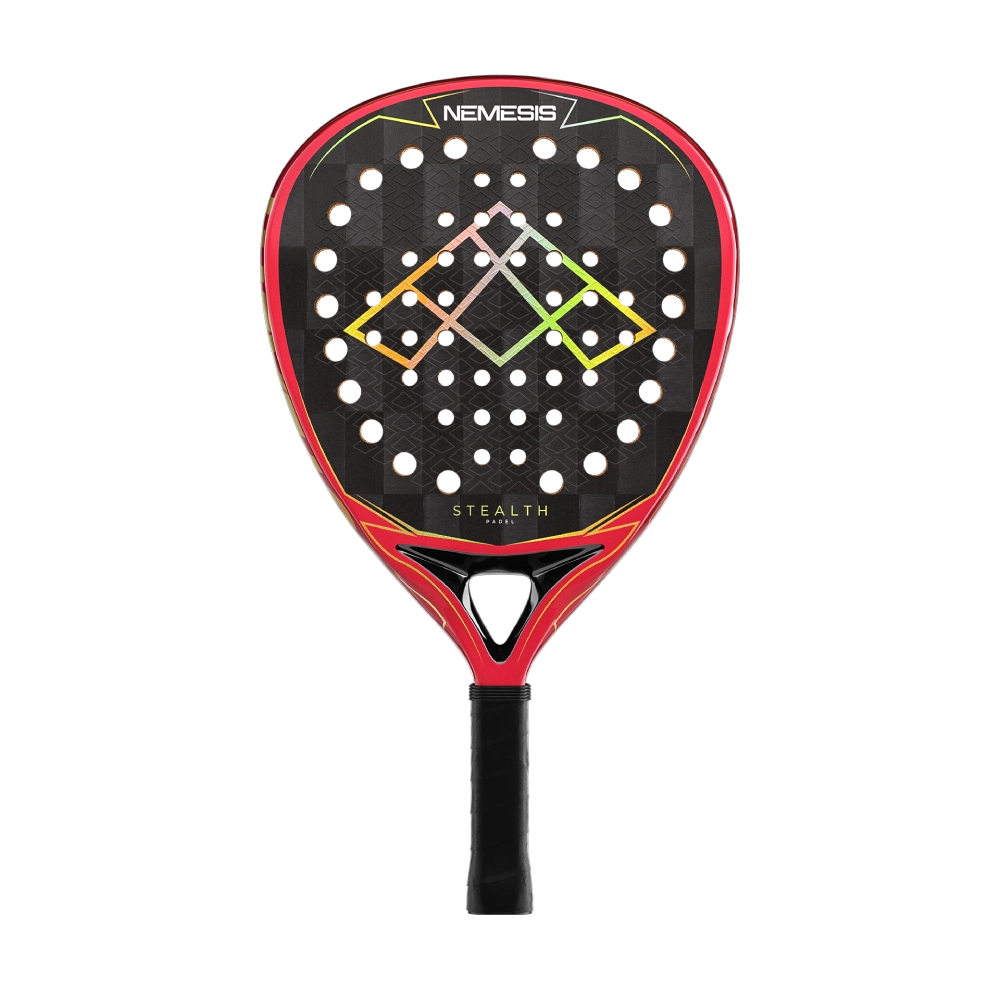
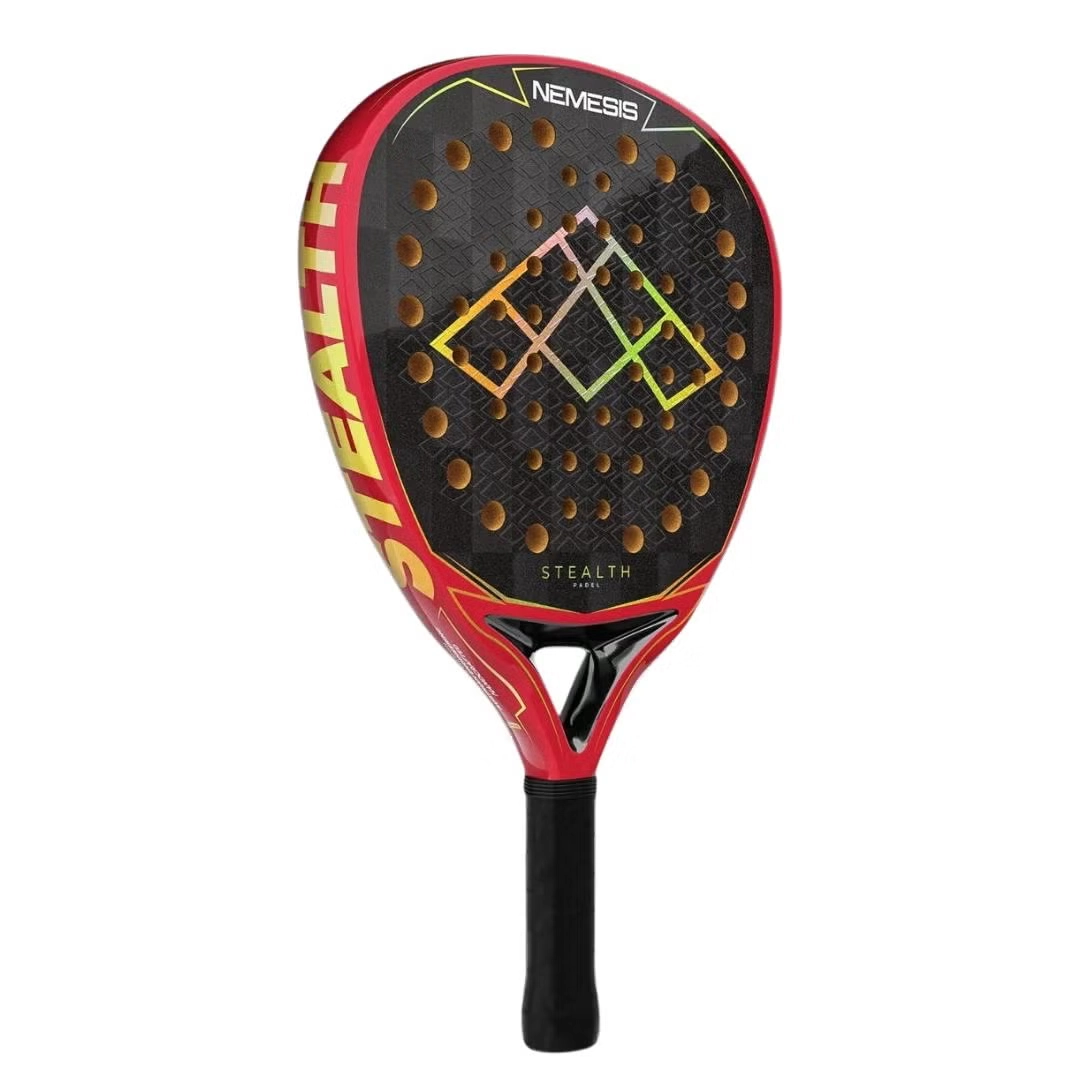
Nemesis is the power-first Stealth Padel option for advanced players who want a direct response and a high overhead ceiling. Its diamond/hybrid layout uses a mid balance rather than the more forward orientation of Nighthawk, together with a 24K XTREME Carbon T800 face and Eva PWR core.
The attraction is the committed attacking stroke, not broad comfort or effortless defense. I would choose it when finishing potential is worth a narrower margin through repeated recovery shots and imperfect contact.
Stealth Padel Nemesis — Technical specifications
Construction and materials
Nemesis combines 24K XTREME Carbon T800 faces, Eva PWR and a Forged Carbon T700 frame. The complete package has a direct character, fitting a racket intended to return a clean, forceful stroke rather than provide deep cushioning.
The material names do not establish a measured hardness or a comparison winner on their own. What matters here is that the attacking ceiling comes with limited comfort and only ordinary contact tolerance. Hyper Spin System is the listed surface treatment, adding another reason to consider a well-shaped vibora or spin-oriented overhead rather than relying only on a flat hit.
How heavy the racket feels and where the mass sits.
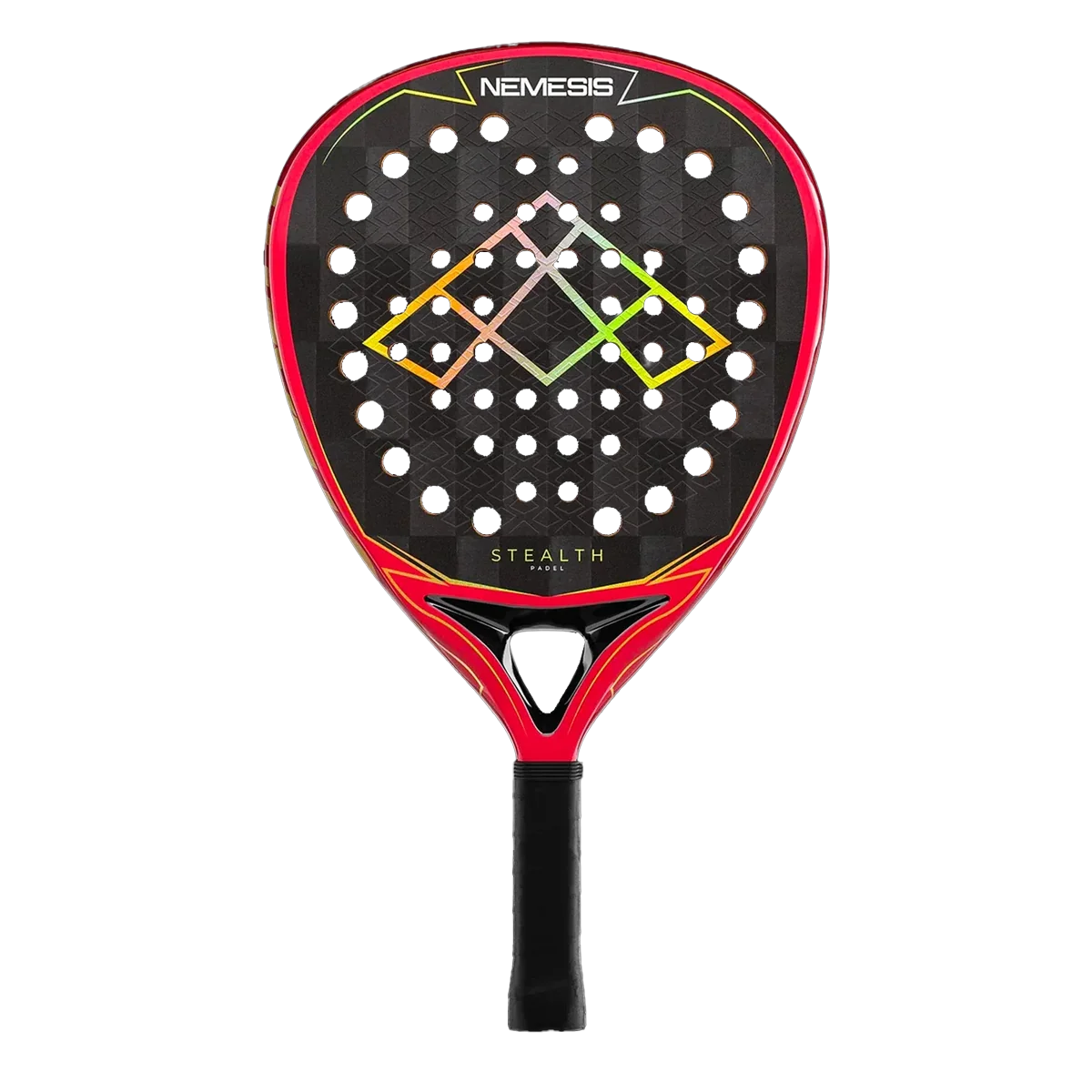
Balance point is shown from our measurement.
- Balance point27 cm24.5 cmavg 26 cm27.5 cmHead-heavy
- Static weight345–365 g340 gavg 365 g390 g
- Swing weight134.1 kg·cm² estimated110typical 128150
- Twist weight15.6 kg·cm² estimated11typical 1416
Shape and mould behavior
The diamond/hybrid mould gives Nemesis an attacking layout, while the mid balance is a less forward description than Nighthawk’s Mid/High. That does not make Nemesis a neutral control racket: its strongest payoff still comes when the player prepares and accelerates into the ball.
Weight requires care. The English listing gives 355 ± 10 g, while other-language listings give 360 ± 10 g. Those are two different nominal specifications, not one combined tolerance. I would establish the weight of the exact specimen and playing setup before using it in a handling comparison.
Where this racket sits for stiffness and how easily the face gives power.
NemesisStiffness, feel, and comfort
The 24K XTREME Carbon T800/Eva PWR combination gives a direct contact, but maximum cushioning is not part of the Nemesis brief. A well-centred attack can feel rewarding without making a sequence of edge hits or defensive blocks especially forgiving.
That is the important distinction for fit. Mid balance describes how the racket is distributed, not how gently the face absorbs the ball. I would judge the response over repeated competitive contact rather than infer comfort from the balance label or carbon weave count.
Our scores against every racket we have reviewed.
- Comfort5.5 /100avg 7.3110Below average
- Spin8 /100avg 7.2210Above average
Sweet spot and forgiveness
Nemesis offers a usable hitting area for an attacking racket, but not a large reserve that turns late contact into the intended finish. The player still needs to match the contact point to the diamond/hybrid mould and keep the face organised.
That requirement becomes more visible under pressure. A compact, prepared stroke is a better route to repeatable output than trying to recover a missed position with extra wrist speed. Its high ceiling describes what clean contact can deliver, not what happens everywhere on the face.
Sweet spot- Core zone 7/10
- Shape Diamond
- Stability 7/10
Approximate high-tolerance zone for this mould and core.
Power and smash behavior
The high finishing ceiling is the main reason to choose Nemesis. Smashes, viboras and hard bandejas reward a committed stroke with accurate contact, which fits the direct carbon/PWR construction.
The distinction is between potential and assistance. Nemesis can produce a forceful attacking ball, but that does not mean a short, passive swing will reveal the same performance. I would choose it for a player who creates and uses overhead opportunities rather than one who needs the racket to supply easy recovery depth throughout the point.
Net performance under pace
At the net, Nemesis favours an assertive, prepared volley over a sequence of improvised reactions. Its direct contact can support pressure when the racket is already set, but neither handling nor off-centre tolerance is a standout escape route when preparation is late.
The useful approach is a compact swing with a deliberate target. That lets the player use the attacking response without confusing a fast ball exit with control over every rushed block.
Off-center stability and torsional resistance
Off-centre stability is adequate rather than exceptional. The Forged Carbon T700 frame supplies structure, but a frame material label does not establish how much pace and direction will survive a hard edge hit.
For Nemesis, accurate contact remains part of the power trade-off. On a backhand block or emergency volley, preserving the face angle and keeping the ball playable is a more realistic objective than expecting the same authority as a prepared central strike.
Practical on-court takeaways
I would choose Nemesis for an advanced attacker who values a high smash ceiling, useful spin and a direct contact. The mid-balance description makes it a different handling proposition from the more forward Nighthawk, but it does not change the power-first recommendation.
The reservation is the rest of the point. Defense, repeated repositioning and cushioning are not its strongest reasons to buy. Its value is clearest when the player already has the preparation and contact quality to turn an opening into an attacking stroke.
Comparison within the Stealth Padel lineup
The Aurora is the clearer choice for placement and defensive construction, using a round, low-to-mid-balance layout and Eva MLT3 rather than Eva PWR. Nemesis sacrifices some of that ease to put finishing power first.
The Spirit for Facu Dominguez keeps an attacking brief in a hybrid layout with an 18K ALU Twill face. Its balance of usable output and peak power differs from Nemesis’s more pronounced finishing emphasis; the carbon numbers alone do not explain that difference.
The Nighthawk is the more forward, heavier-nominal diamond alternative. I would compare its preparation demand with Nemesis using actual specimens, because Nemesis’s listings disagree on nominal weight rather than defining one universal setup.
Lineup comparison
Stealth Padel Nemesis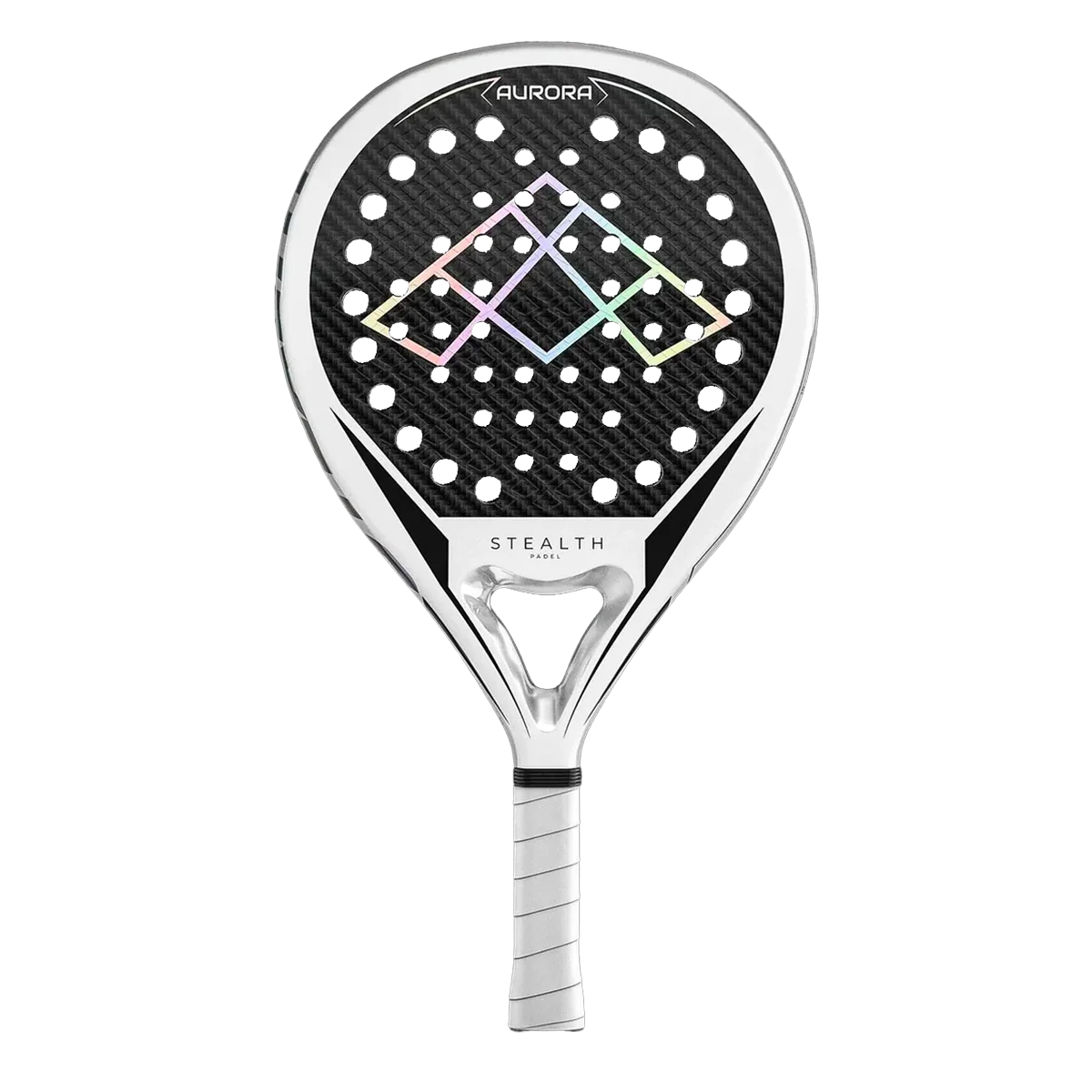 Stealth Padel Aurora
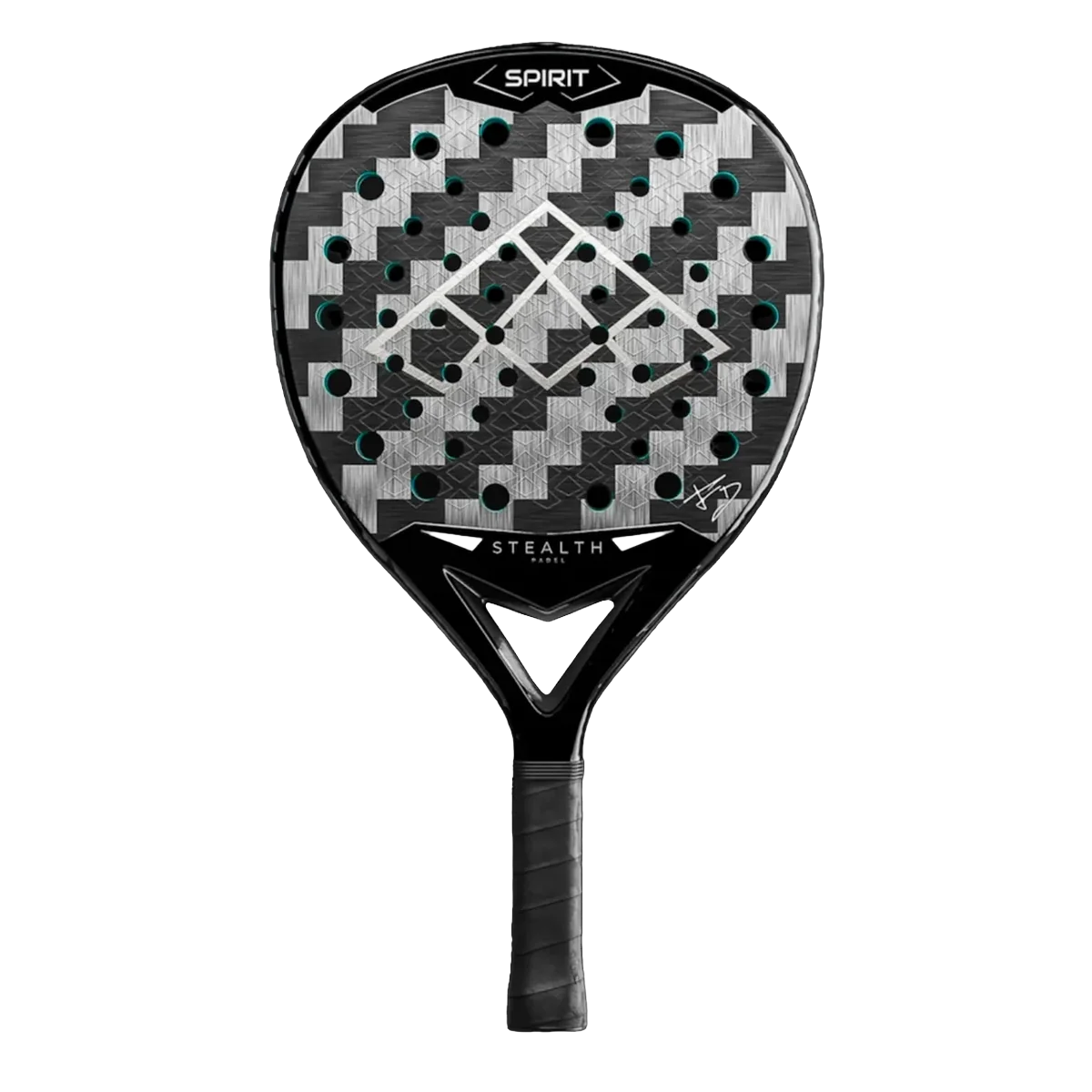 Stealth Padel Spirit for Facu Dominguez
Comparison with other brands
A meaningful cross-brand comparison should match Nemesis’s attacking geometry, mid-balance brief and direct response before considering price. Its strongest argument is the overhead ceiling available to an advanced player, not a uniformly easy game across defense and attack.
A softer alternative should offer a clear benefit in repeated contact and defensive recovery. A more aggressive alternative should justify any extra preparation demand through a finishing advantage. Nemesis belongs on the shortlist when its own power potential is usable often enough to outweigh the comfort and recovery compromises.
For the existing model shortlist, open Compare Rackets. Treat the differing nominal-weight listings separately rather than turning them into a single assumed specimen.
Technical positioning
Nemesis is a specialist recommendation within this group: a mid-balance attacking layout paired with a direct 24K XTREME Carbon T800/Eva PWR response. Its overhead ceiling and spin potential are the rewards for organised preparation and a clean, active strike.
I would not choose it simply because a Pro-style carbon construction looks technically impressive. Comfort and defensive ease remain limited, and ordinary off-centre tolerance makes consistent contact important. It is the right kind of trade for an advanced attacker, not a general-purpose upgrade for every player.
Solid shape = this racket.Dashed outline = average of every racket we have reviewed.
Stealth Padel Nemesis
Specifications
- Weight range
- 345–365 g
- Balance
- 27 cm
- Thickness
- 38 mm
- Shape
- Diamond
- Face material
- 24K XTREME Carbon T800
- Core
- Eva PWR
Common questions
Advanced attackers who can use a high finishing ceiling and direct response, and who accept less cushioning and defensive ease in return.
Nemesis has a diamond/hybrid layout, mid balance, a 24K XTREME Carbon T800 face and Eva PWR core. Weight listings differ: the English specification is 355 ± 10 g, while other-language listings give 360 ± 10 g. The exact specimen should be checked rather than merging those figures into one range.
Stealth Padel Nemesis scores 72/100 in the padel.how review model.
Price alert
We check prices when we update our offers. Get one email when a verified price is below your threshold.
Player feedback
Player feedback is separate from our editorial review. Individual votes stay private — only the aggregate is published.
Thank you — your feedback is saved. You can revise it any time with Vote.
No player votes yet.
Questions & answers
No questions yet.