Varlion Maxima CUBE Elbowcare W 2025/2026 Review
 Methodology
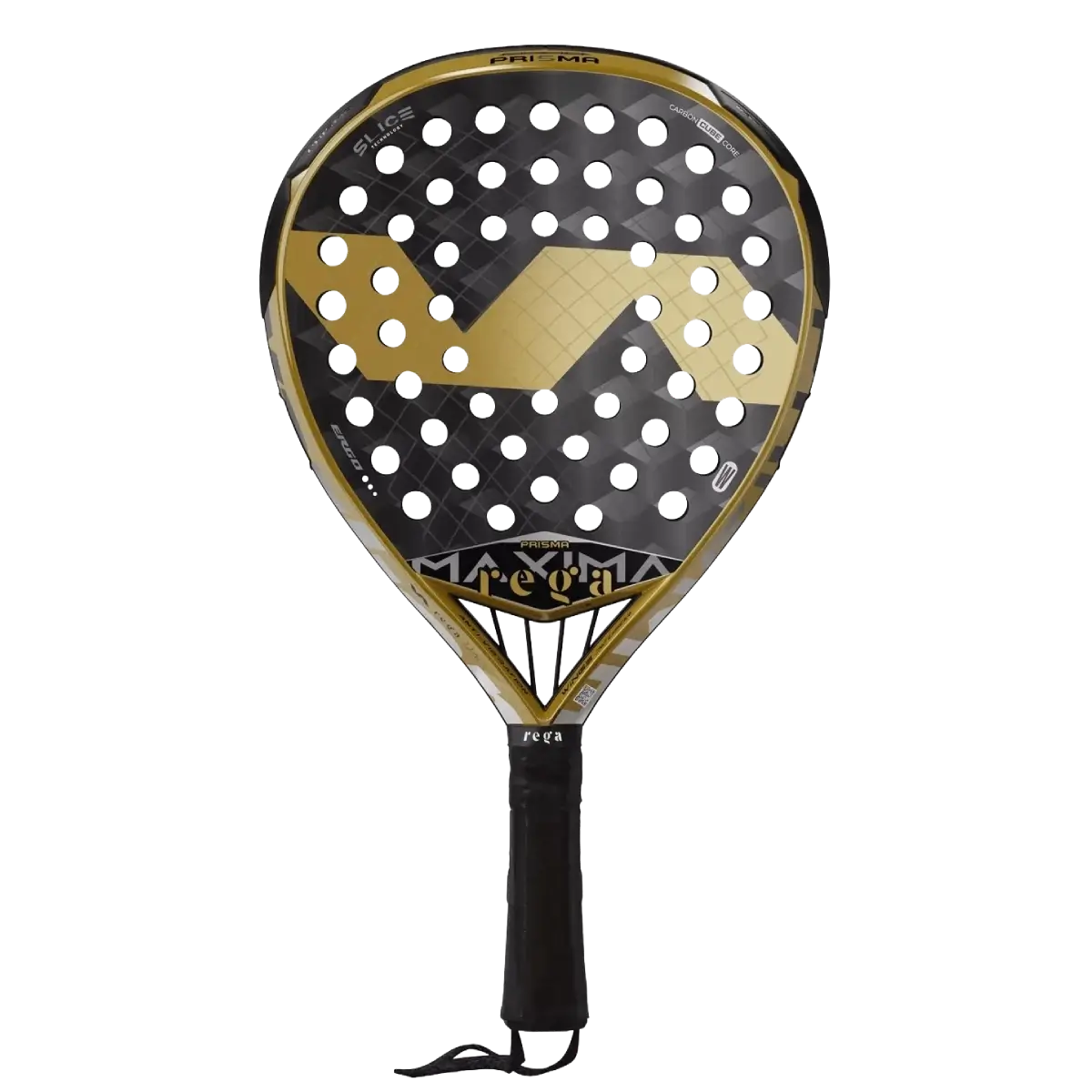
The Varlion Maxima CUBE Elbowcare W 2025/2026 is the cold-condition all-round model in the REGA CUBE family. It combines a teardrop mould, 350-360 g weight range, medium balance, Carbon Cube face, 14.5 cm handle and a W core intended to remain responsive below 25°C.
Its main strength is the way it combines quick preparation with a direct, precise strike. The Maxima shape sits between the Bourne diamond and LW round moulds: it is easier to move and defend with than Bourne, yet it retains more overhead leverage and a higher strike point than LW. The moulded SLICE texture is especially effective on sliced volleys, bandejas, viboras and kick smashes.
The principal trade-off is contact selectivity. Central contact feels clean and controlled, but lateral misses become drier and lose output. The W core adds useful medium-speed rebound in cold conditions, although its maximum flat-smash return reaches a plateau earlier than the firmer S version. This is an advanced racket for precision and variation rather than a forgiving automatic-power platform.
Version and lineup identification
This review covers the Maxima CUBE Elbowcare W from Varlion's official 2025/2026 collection, product reference RACK250006015. W identifies the cold-condition version and is a technical marker, not a colour designation.
The adjacent Maxima CUBE Elbowcare S uses a very-hard core intended for temperatures above 25°C and has a wider 350-365 g range. W uses the hard cold-condition tune and a 350-360 g range. Both share the teardrop mould, Carbon Cube face, Prisma frame, 14.5 cm handle, Difusor Wings and SLICE surface, but their rebound and high-speed resistance differ as temperature changes.
Within the wider REGA family, Bourne is the more attack-biased diamond and LW the more control-oriented round shape. Maxima is the technical midpoint: quicker and broader than Bourne, but more offensive and top-weighted in its strike geometry than LW.
Varlion Maxima CUBE Elbowcare W — Technical specifications
Construction and materials
The main structure uses a bidirectional carbon tubular frame around a Hypersoft foam core. The W tune is softer than the S tune within the same family, but that comparison should not be confused with a genuinely soft racket: the complete Maxima W remains a hard, direct platform.
Carbon Cube forms a three-dimensional face structure. Its rigidity sharpens central contact and supports a stable response when the player accelerates through the ball. The SLICE relief is moulded into the face rather than added as a light superficial grit, so the spin mechanism remains pronounced and mechanically consistent.
The angular Prisma frame reduces the frontal area around the edge and helps the teardrop head pass through compact preparation. The interchangeable Difusor Wings sit in the throat and combine airflow management with a soft damping element. Elbowcare extends vibration-management material around the frame, while the adhesive AD protector fits the Prisma profile without drilling the structure. These systems reduce residual vibration; they do not turn the racket into a soft-impact model or guarantee injury prevention.
Summum adds the 14.5 cm handle and an extended hitting area. The longer grip provides leverage on two-handed backhands and overheads, but it also rewards players who use the full handle and maintain consistent contact spacing.
How heavy the racket feels and where the mass sits.
Balance point is shown from the available source evidence.
- Balance point≈26 cm24.5 cmavg 26 cm27.5 cmNeutral balance
- Static weight350–360 g340 gavg 365 g390 g
- Swing weight124.8 kg·cm² estimated110typical 128150
- Twist weight14.4 kg·cm² estimated11typical 1416
Shape and mould behavior
The Maxima teardrop is the most neutral of Varlion's three REGA CUBE moulds. The contact window extends above the geometric centre without becoming as concentrated toward the tip as Bourne. That produces a natural transition between defensive preparation, flat volleys and overhead acceleration.
The medium balance supports a controlled swing arc rather than an extreme head-led release. Combined with the 350-360 g range and Prisma edge, it makes the racket quick enough for advanced all-round play while retaining enough head presence for attacking volleys and overheads.
Players who grip high on the 14.5 cm handle will find the racket especially compact and precise. Holding at the very end creates more leverage but also makes the head feel less settled during emergency changes of direction.
Where this racket sits for stiffness and how easily the face gives power.
Maxima CUBE Elbowcare WStiffness, feel and comfort
The Carbon Cube face gives hard, crisp central contact with relatively short dwell and clear feedback about strike quality. The W core gives more compliance than the S version at the same temperature, particularly in cold conditions where a summer core would become excessively rigid.
That relative softness does not remove the demanding side of the construction. Lateral contact feels woody and less elastic, and the racket asks the player to complete the swing rather than relying on a passive trampoline response. The benefit is directional clarity: clean volleys and controlled drives leave the face with a predictable trajectory.
Elbowcare and the soft Difusor Wings reduce residual vibration after impact. Comfort is therefore better than the hard strike alone might imply, but players seeking long dwell, muted feedback or a genuinely soft face should still choose a lower-stiffness platform.
Our scores against every racket we have reviewed.
- Comfort7.5 /100avg 7.3110Near average
- Spin8.5 /100avg 7.2210Above average
Sweet spot and forgiveness
The usable sweet spot is central to upper-central and broader than on the Bourne diamond. The teardrop outline and extended hitting surface give adequate vertical coverage, so normal timing variations do not immediately collapse the shot.
The main limitation is lateral tolerance. Contact close to either side of the frame loses depth and produces a drier response. Very high contact can still create spin and leverage, but the face becomes less stable when the ball reaches the outer tip rather than the upper-centre zone.
For an advanced all-round racket, forgiveness is sufficient rather than exceptional. It rewards clean spacing and gives immediate feedback when contact drifts, which helps precision but makes it less suitable for players who need a broad passive rescue zone.
Sweet spot- Core zone 7.5/10
- Shape Teardrop
- Stability 7/10
Approximate high-tolerance zone for this mould and core.
Power and smash behavior
Easy power is good in cool conditions. The W core supplies useful depth at medium effort, and the long handle helps the player create racket-head speed without moving to a high-balance diamond. Flat volleys and controlled overheads therefore carry more weight than the neutral shape suggests.
Maximum power is more limited. Under a very hard flat smash, the colder-condition core compresses earlier and does not keep adding output indefinitely. The racket can finish points, but its best attacking pattern is controlled acceleration with clean central contact rather than repeated maximum-force flattening.
Kick smashes suit it better. The SLICE relief grips the ball, the teardrop head accelerates quickly and the extended handle adds leverage. Players who generate power through spin, angle and timing will extract more from Maxima W than players who judge a racket only by the final margin of flat-smash power.
Net performance under pace
At the net, Maxima W is fast enough for reaction volleys and stable enough for compact blocks when contact is central. The Prisma frame helps it clear the air quickly, while the medium balance avoids the delayed face closure associated with more head-heavy attack rackets.
Active volleys are its strongest net action. The hard face gives precise depth control, the SLICE relief supports a low skidding trajectory and the long handle adds reach and leverage. On passive blocks, the W core contributes useful rebound in cold conditions, but off-centre contact loses stability more quickly than on a broad round control racket.
The racket is therefore strongest for players who keep the face in front, meet the ball cleanly and use small directional changes rather than late wrist corrections.
Spin generation
Spin generation is one of the clearest strengths. The SLICE pattern is deeply moulded and remains easy to engage on both open- and closed-face contacts. The teardrop swing path also offers enough speed to use that texture without forcing an exaggerated motion.
Sliced volleys stay low, bandejas gain controllable cut and viboras leave the face with a heavy combination of side spin and pace. On kick smashes, the long handle and upper-central contact point make it easier to brush upward and outward through the ball.
The hard response keeps the face from absorbing too much energy during brushing contact. The result is high spin potential, although the player still needs racket-head speed and clean timing; the texture does not replace technique.
Defensive output and depth
Maxima W is considerably easier from the back of the court than the Bourne diamond. The teardrop geometry comes through compact preparation quickly, and the W core helps the ball leave the face when the court is cold.
Lobs and controlled resets respond well to a positive forward path. The racket provides enough rebound to reach depth at medium effort, but it is not a passive rescue specialist. When preparation is late and contact moves toward the frame, output falls and the hard face sends more feedback into the hand.
Its best defensive user is an advanced player who values directional precision and can complete short swings under pressure. A player who wants the racket to create depth from little more than an open face will find a softer round model easier.
Off-center stability and torsional resistance
Central stability is strong. The carbon tubular, Carbon Cube face and Prisma geometry hold the face angle well on clean blocks and controlled counters. The response is especially convincing when the ball lands inside the central vertical channel.
Torsional tolerance is only moderate. Lateral misses rotate the face more and lose pace, while tip-side contact becomes dry. The damping systems reduce the vibration left after the strike but do not restore the output lost through poor contact.
This distinction matters: Maxima W can feel very stable to a technically clean player and noticeably selective to a player whose contact spreads across the width of the face.
Practical on-court takeaways
- Use the W version primarily below 25°C; the S core is the better same-mould option for sustained warm conditions. • The teardrop geometry is quicker and easier from defense than Bourne while retaining more overhead emphasis than the round LW. • The 14.5 cm handle rewards two-handed backhands, high grip positions and spin-led overheads. • Central contact produces excellent directional feedback; lateral misses lose depth and feel harder. • Kick smashes, viboras and sliced volleys are stronger than maximum-force flat smashing. • Elbowcare reduces residual vibration but does not make the hard platform soft or medically protective.
Comparison within the Varlion lineup
Maxima CUBE Elbowcare S: The same teardrop platform with a very-hard warm-condition core and 350-365 g range. S is more resistant and linear under full acceleration in heat; W gives easier rebound and a less rigid relative response in cold conditions.
Bourne CUBE Elbowcare W: Bourne uses a diamond mould and concentrates the strike zone higher. It produces more overhead leverage and a higher maximum-power ceiling, while Maxima W is easier in defense, quicker through reaction volleys and broader through the centre.
LW CUBE Elbowcare W: LW is round with a mid-low qualitative balance and a stronger control bias. It is quicker and more forgiving from the back of the court, but Maxima W offers more attacking presence, stronger flat-volley weight and a higher smash ceiling.
Lineup comparison
Varlion Maxima CUBE Elbowcare W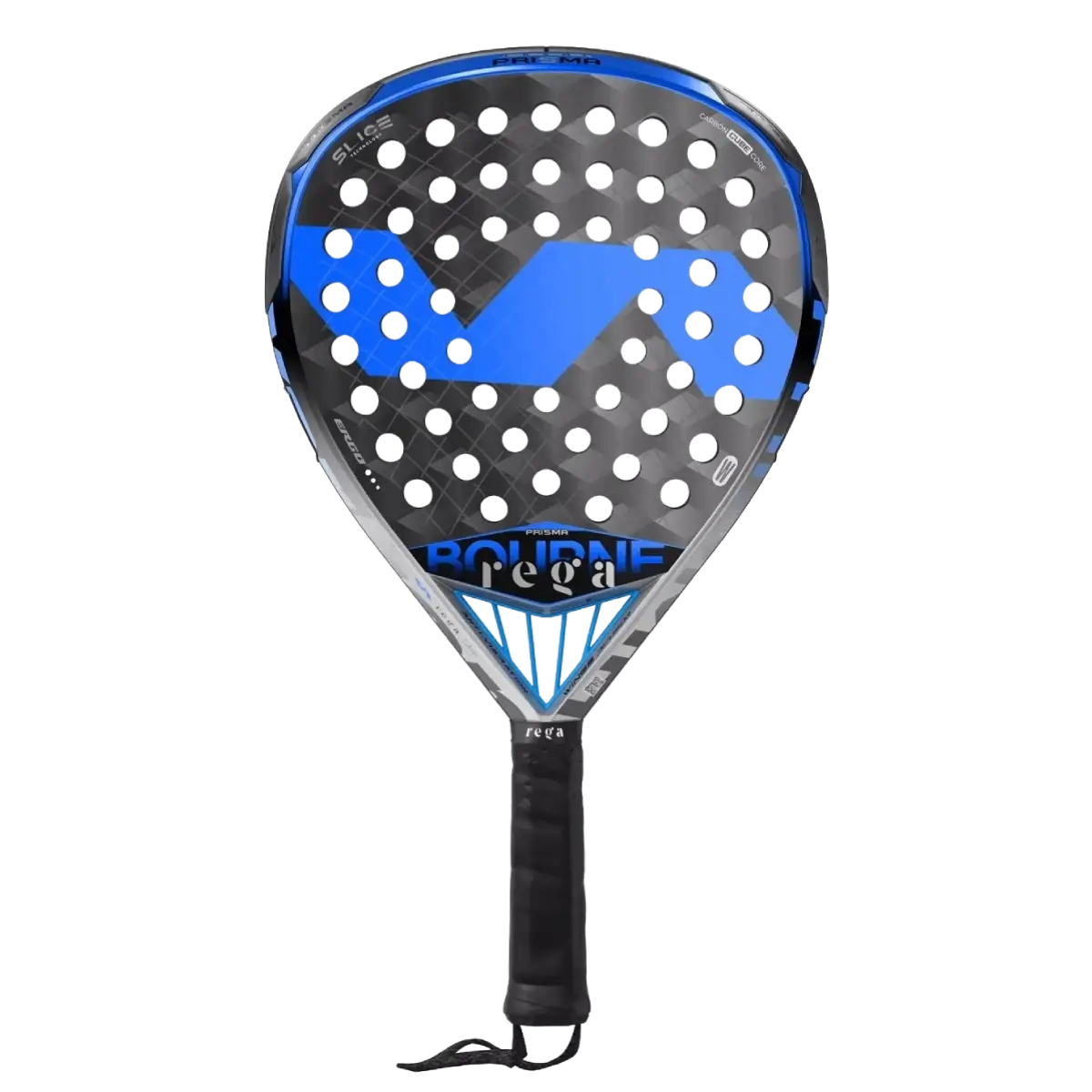 Varlion Bourne CUBE Elbowcare W
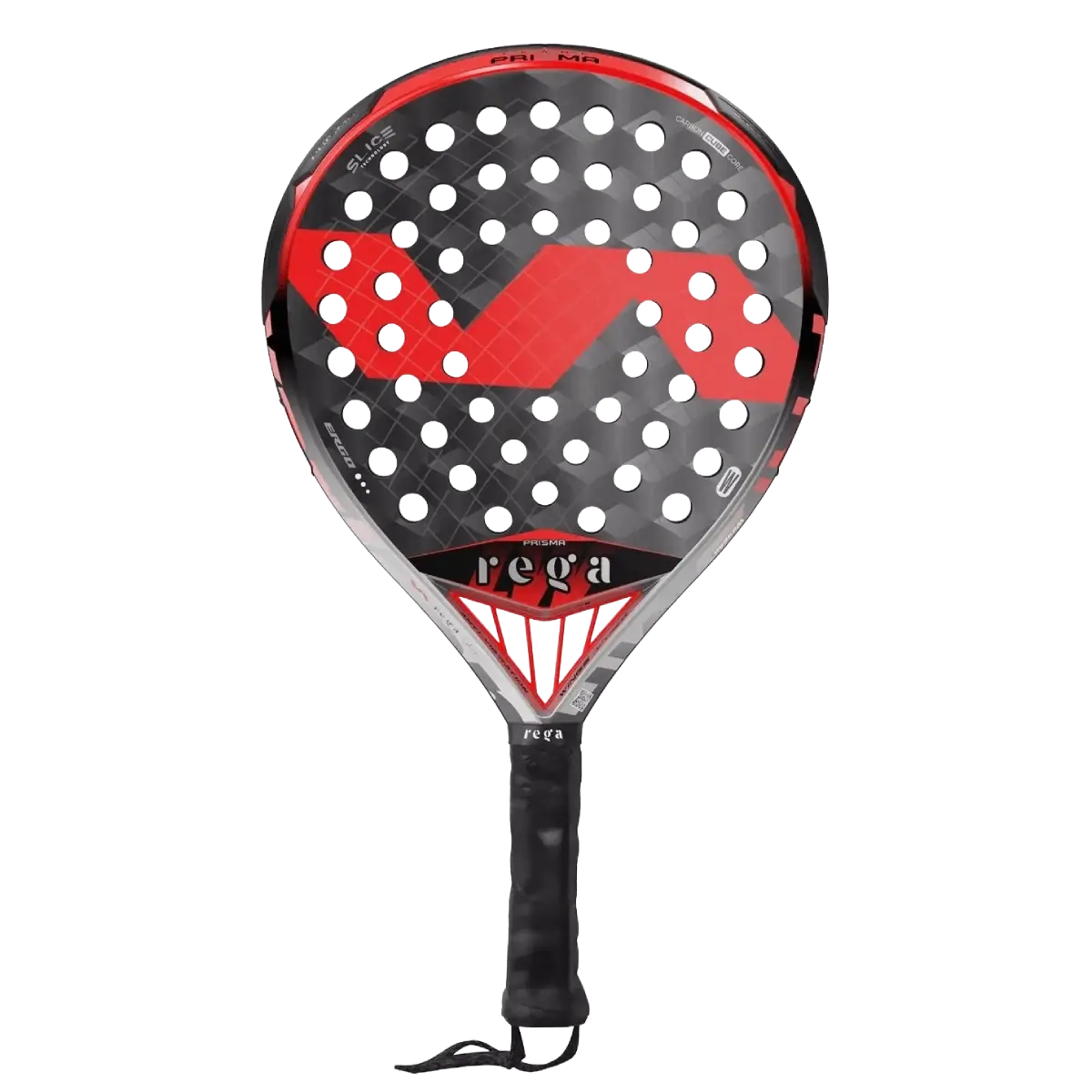 Varlion LW CUBE Elbowcare W
Comparison with other brands
NOX AT10 Luxury Genius 12K Alum XTREM 2026: NOX offers a more elastic and rounded all-round response with a broader sense of rebound. Maxima W is harder, more direct and more dependent on clean contact, but its moulded texture and long handle give stronger bite and leverage on advanced overheads.
StarVie Drax+ 2026: Drax+ is a teardrop all-round racket with a more accommodating medium-hard response. It is easier when contact is imperfect; Maxima W provides a crisper central strike, firmer high-speed control and a more aggressive surface texture.
SIUX Electra STUPA PRO 2026: SIUX carries more attack bias and denser head presence. Maxima W is quicker through defensive preparation and more neutral in transition, while SIUX offers a higher pure finishing ceiling for players who consistently accelerate through the top of the face.
77VarlionVarlion Maxima CUBE Elbowcare WTeardropShape350–360 gWeight range≈26 cmBalance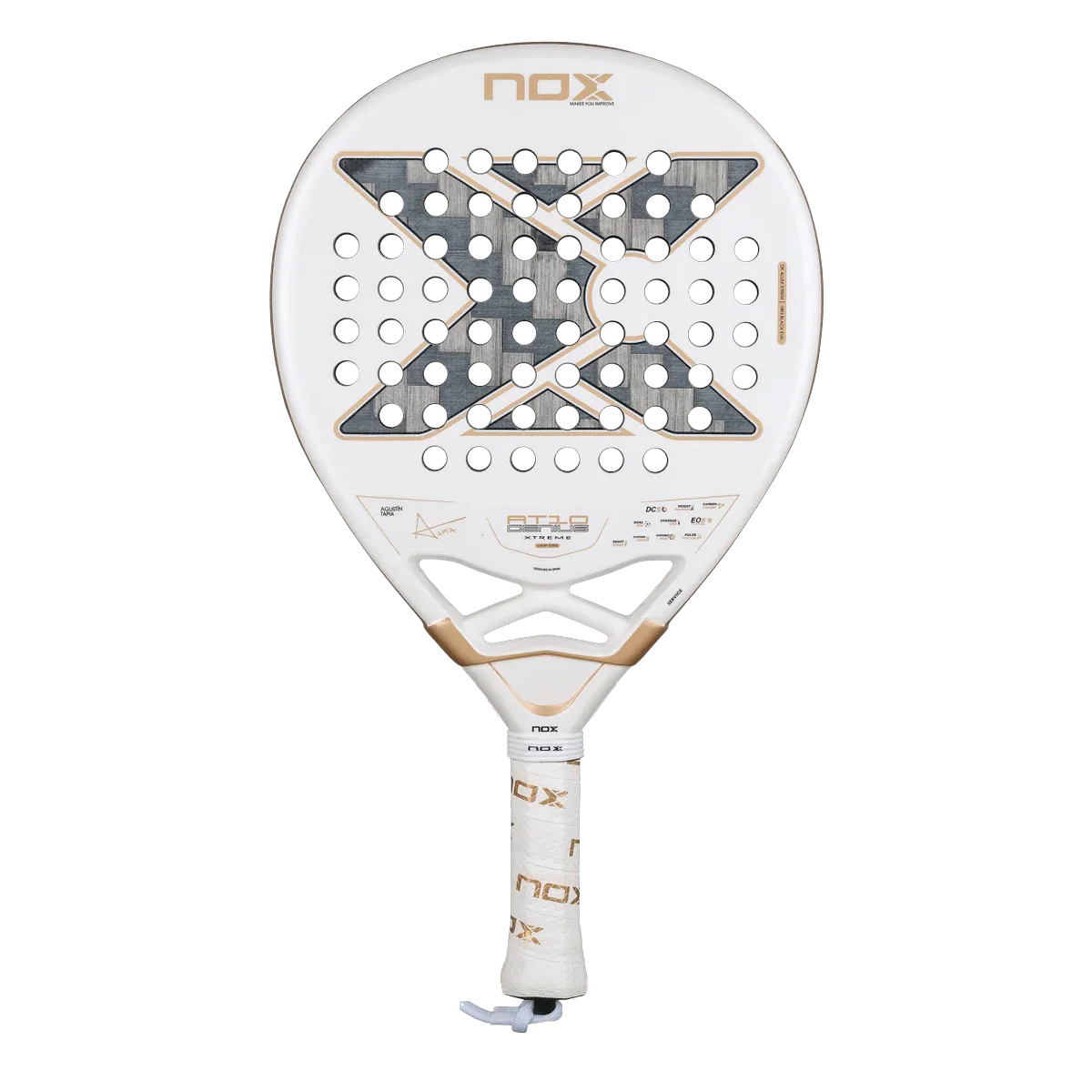 77NoxNOX AT10 Luxury Genius 12K Alum XTREM 2026TeardropShape360–375 gWeight range25.2–25.9 cmBalance
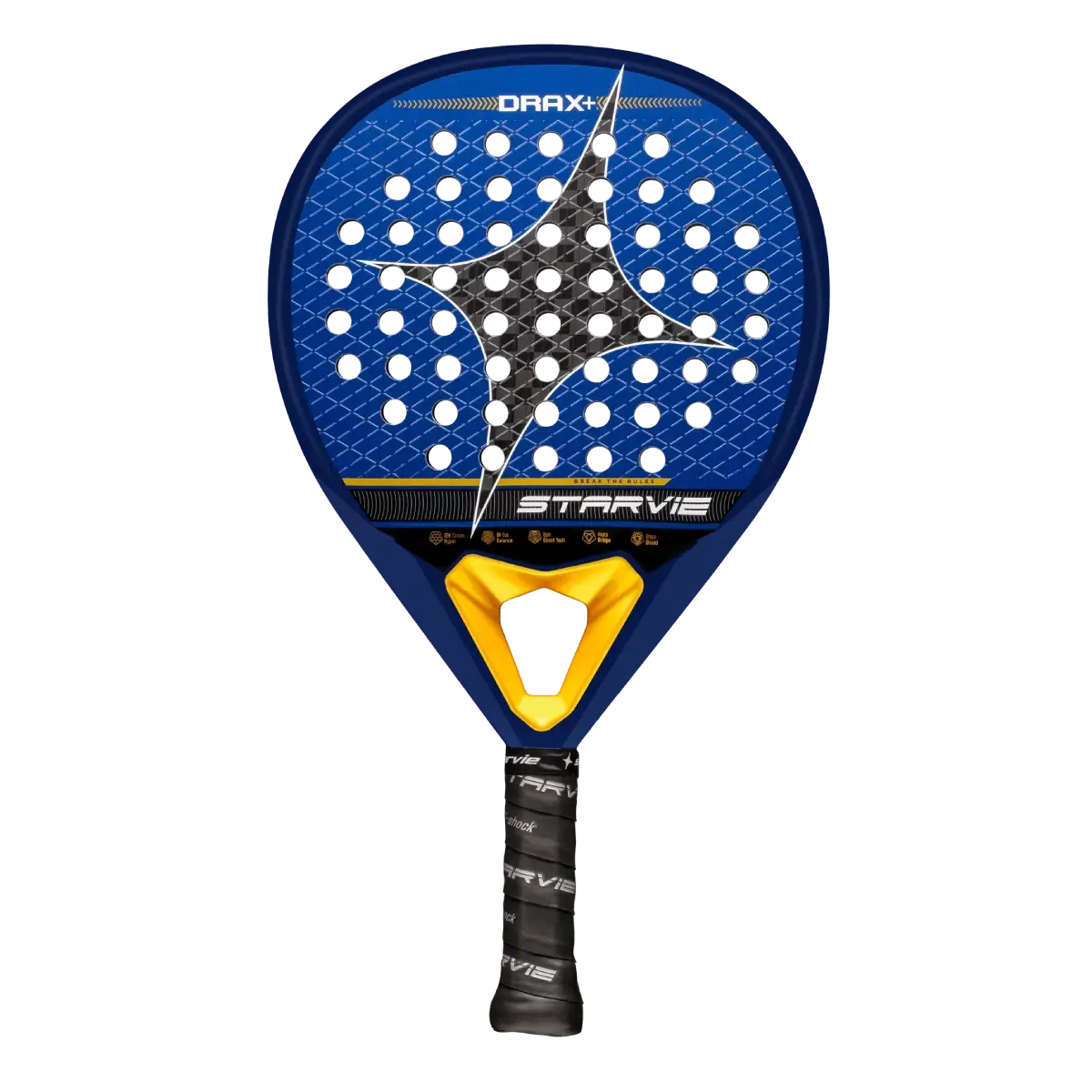 74STARVIEStarVie Drax+ 2026TeardropShape352–368 gWeight range26 cmBalance
Technical positioning and fit
Best for: advanced all-round players, aggressive right-side players, mobile left-side players and cold-condition users who want a firm, precise teardrop rather than a diamond.
Choose it if: you value fast preparation, strong spin, a 14.5 cm handle, clean volley placement and useful cold-weather rebound.
Think twice if: you need a genuinely soft impact, a very broad lateral sweet spot or maximum flat-smash return from every full swing.
Not best for: beginners, players with highly variable contact and anyone expecting Elbowcare to turn a hard carbon platform into an injury-prevention device.
Solid shape = this racket.Dashed outline = average of every racket we have reviewed.
Varlion Maxima CUBE Elbowcare W
Specifications
- Weight range
- 350–360 g
- Balance
- ≈26 cm
- Thickness
- 38 mm
- Shape
- Teardrop
- Face material
- Carbon Cube three-dimensional carbon fibre
- Core
- Hypersoft foam with hard W tuning for play below 25°C / 77°F
Common questions
It is a cold-condition teardrop racket positioned between control and power. The 350-360 g range, medium balance and long 14.5 cm handle make it more versatile than the Bourne diamond while retaining a firm Carbon Cube response and strong overhead spin.
The balance is medium. This keeps the Maxima head present enough for attacking volleys and overheads without making defensive preparation feel excessively head-led.
It feels hard and direct. The W core is softer relative to the S version and is intended to remain responsive below 25°C, but it sits behind a rigid Carbon Cube face. Easier cold-weather rebound does not make the entire racket soft.
W uses the cold-condition core and a 350-360 g range, while S uses the very-hard warm-condition core and a 350-365 g range. W gives easier rebound in cold weather; S keeps a more resistant and linear response in heat.
It supplies useful easy power and strong kick-smash spin, but it is not a pure maximum-power racket. Under very hard flat acceleration, the W core can compress and return less extra pace than the firmer S version or the Bourne diamond.
Forgiveness is moderate. The teardrop geometry gives a broader central window than Bourne, but lateral and high-frame contact feels drier and loses depth. It suits players who normally find the centre rather than those relying on automatic rescue output.
Choose it if you are an advanced all-round player in cool conditions and want precise volleys, fast preparation, strong spin and a long handle. Avoid it if you need a soft impact, a very broad sweet spot or the highest possible flat-smash ceiling.
Price alert
We check prices when we update our offers. Get one email when a verified price is below your threshold.
Player feedback
Player feedback is separate from our editorial review. Individual votes stay private — only the aggregate is published.
Thank you — your feedback is saved. You can revise it any time with Vote.
No player votes yet.
Questions & answers
No questions yet.