Varlion LW Carbon Black Orquidea 2025/2026 Review
 Methodology
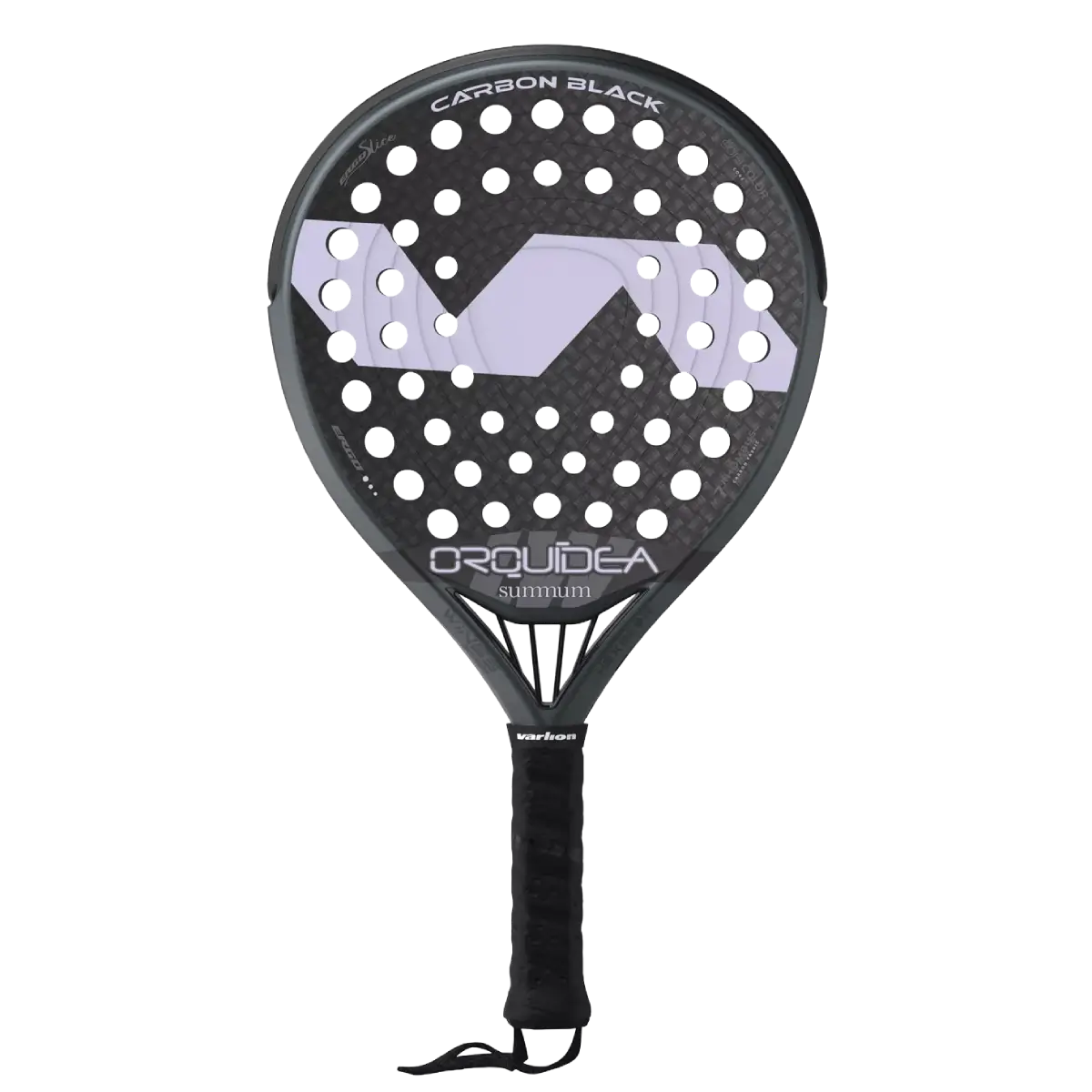
The Varlion LW Carbon Black Orquidea 2025/2026 is a light round control racket from the Pro Summum Hexagon line. Its official range is 340-355 g, with a mid-low balance, 12 cm handle, Carbon 7 Rhombus face, Medium Touch EVA and a soft ErgoSlice relief.
Its defining quality is low swing load. The head returns quickly after glass contacts, compact volleys and defensive blocks, while the round outline keeps the central contact window broad. The raised surface adds useful bite without changing the racket into an attack-led model.
The trade-off is output through mass. Black Orquidea does not carry the head momentum, long-handle leverage or wide-miss stability of Varlion's heavier Bourne and CUBE platforms. It is a precision and volume racket for players who build points through placement, recovery speed and spin rather than flat finishing power.
Version and lineup identification
This review covers the official 2025/2026 LW Carbon Black Orquidea, product reference RACK250020015. The shorter names LW Carbon Orquidea and LW Summum Carbon Orquidea refer to the same current Black Orquidea model.
Black Orquidea is a separate model from LW Carbon Goldblack. Both are round Pro Hexagon rackets with Medium Touch and Carbon 7 Rhombus, but Black Orquidea spans 340-355 g rather than 345-360 g. Its range is shifted lower, not completely separate: actual units overlap, so compare the complete playing setups rather than assuming every Orquidea is lighter.
The harder LW CUBE Elbowcare S and W models occupy the temperature-specific performance tier. Black Orquidea is the lighter, less demanding all-weather control option.
Varlion LW Carbon Black Orquidea — Technical specifications
Construction and materials
A bidirectional carbon tubular forms the chassis, with Varlion's Hexagon frame adding a structural rib around the edge. The adhesive AB protector sits on the frame without requiring drilled mounting points, preserving the continuous tubular construction.
The face laminate combines Carbon 7 Rhombus, described as a 12K diamond-pattern carbon, with fiberglass layers and additional carbon reinforcement. VAR-FLEX epoxy binds the laminate, and a titanium-dioxide coating is used on the exterior. The result is more defined than a fiberglass-only face but not as dry as a high-modulus hard-carbon build.
The core is Soft EVA of medium hardness, listed as Medium Touch. A Wings Diffuser occupies the heart, while Ergoholes and the 12 cm handle complete the Summum package. This exact LW configuration uses the shorter 12 cm handle rather than the 14.5 cm handle found on several Maxima and Bourne Summum models.
How heavy the racket feels and where the mass sits.
Balance point is shown from the available source evidence.
- Balance point≈25.2 cm24.5 cmavg 26 cm27.5 cmHead-light
- Static weight340–355 g340 gavg 365 g390 g
- Swing weight114.8 kg·cm² estimated110typical 128150
- Twist weight13.3 kg·cm² estimated11typical 1416
Shape and mould behavior
LW is Varlion's round control geometry. The round head provides a central contact window, while the mid-low balance keeps preparation compact. This is useful when the player is late, defending close to the glass or changing direction in a short volley exchange.
The 340-355 g range makes this one of the fastest adult carbon rackets in the current Varlion line. It rewards compact mechanics because an oversized swing can arrive too early. The short 12 cm handle also keeps the pivot compact, favouring one-handed control over maximum two-handed leverage.
Where this racket sits for stiffness and how easily the face gives power.
LW Carbon Black OrquideaStiffness, feel and comfort
Carbon 7 Rhombus gives the face a clean, defined impact, while the medium-hardness Soft EVA adds enough compression to avoid a brittle or board-like feel. The useful distinction is controlled release, not a soft trampoline: compact strokes remain connected without a large automatic launch.
At low and medium pace, launch is controlled rather than springy. At higher pace, the central zone stays connected, but the low mass means the racket absorbs less of the incoming ball than a heavier control model.
Comfort is good for a carbon control racket. The medium core and diffuser reduce residual harshness, although there is no dedicated Elbowcare package and lateral misses still feel drier than centred contact.
Our scores against every racket we have reviewed.
- Comfort7.5 /100avg 7.3110Near average
- Spin8 /100avg 7.2210Above average
Sweet spot and forgiveness
The sweet spot is broad and centrally positioned. Round shoulders and the progressive Ergoholes pattern leave useful space above, below and to either side of the centre, making routine defensive contact easier than on Bourne.
Sweet-spot usability is stronger than torsional stability. A ball can still leave the face with acceptable direction when contact moves away from centre, but the light frame loses depth and calm sooner than a 360 g racket. Forgiveness therefore comes mainly from geometry and handling, not from heavyweight resistance.
Sweet spot- Core zone 8.5/10
- Shape Round / LW control mould
- Stability 7/10
Approximate high-tolerance zone for this mould and core.
Power and smash behavior
Black Orquidea can create racket-head speed, but it does not convert that speed into maximum flat-smash momentum as effectively as a head-heavier model. The mid-low balance and 12 cm handle reduce leverage, and the 340-355 g range limits mass behind the ball.
Useful attacking pace is still available through clean acceleration. Kick and slice-oriented overheads suit the racket better than pure flat finishing because the player can exploit quick preparation and ErgoSlice grip. It is a control racket with enough attack to complete a constructed point, not a dedicated power frame.
Net performance under pace
At the net, the racket reaches contact quickly and is easy to reset after a first volley. Compact blocks stay directional, and the medium core prevents the ball from flying uncontrollably on short preparation.
The limitation is punch depth. Against a heavy incoming ball, a central block is stable enough, but a late or lateral contact loses more pace than it would with LW CUBE or NOX ML10. The best net use is early positioning, angle control and spin rather than trying to overpower the exchange.
Spin generation
ErgoSlice uses raised lines that follow the face contour. The relief is softer than an aggressive sand coating, but it provides consistent mechanical bite on sliced volleys, bandejas and viboras.
The low swing load is equally important. Players can accelerate the head through a short path, which keeps spin available when there is little preparation time. The short handle gives less kick-smash leverage than the 14.5 cm Summum handles used on Maxima and Bourne.
Defensive output and depth
Defense is a primary strength. The round face and mid-low balance make it easy to place the racket under the ball after the glass, and the broad central window supports controlled lobs and resets.
Depth is reliable when the player meets the ball cleanly and supplies a compact forward action. Very late emergency contacts do not receive large automatic rebound because the chassis is light and the core is controlled. The racket solves defensive problems through speed and contact quality rather than trampoline effect.
Off-center stability and torsional resistance
The carbon tubular and Hexagon rib keep central impact reasonably organised, despite the light 340-355 g range. Normal vertical misses remain usable.
Wide lateral contact exposes the mass limit. The face can rotate more under the ball, reducing depth and creating a sharper sensation in the hand. Players who frequently defend against high pace outside the centre may prefer the heavier Goldblack, LW CUBE or NOX ML10.
Practical on-court takeaways
- The 340-355 g range and mid-low balance make Black Orquidea exceptionally quick in defense and rapid exchanges.
- Round geometry and Ergoholes create a broad central sweet spot, but low mass limits wide-miss stability.
- Carbon 7 Rhombus plus Medium Touch EVA produces controlled, defined impact rather than soft trampoline rebound.
- The 12 cm handle supports compact one-handed control but gives less smash and two-handed leverage than Varlion's 14.5 cm models.
- Choose it for ball volume, placement and spin; do not choose it expecting Bourne-level finishing power.
Comparison within the Varlion lineup
LW Carbon Goldblack: Goldblack is the closest current sibling. It uses the same basic round, mid-low, Medium Touch and Carbon 7 Rhombus concept but carries a 345-360 g range. Goldblack gives slightly more mass and stability; Black Orquidea is faster and easier to reposition.
LW CUBE Elbowcare S: CUBE S is heavier, much harder and tuned for conditions above 25°C. It keeps more resistance under full acceleration, while Black Orquidea is easier at normal pace and more neutral across seasons.
LW CUBE Elbowcare W: CUBE W remains a hard, heavier control frame but is tuned for cooler conditions. It provides stronger counter pace and stability; Black Orquidea prioritises maneuverability and a more moderate impact.
Maxima Carbon Rose: Maxima is a light teardrop with medium balance and a 14.5 cm handle. It offers more overhead leverage and a better attack-defense split, while LW gives a broader sweet spot and easier back-court volume.
Lineup comparison
Varlion LW Carbon Black Orquidea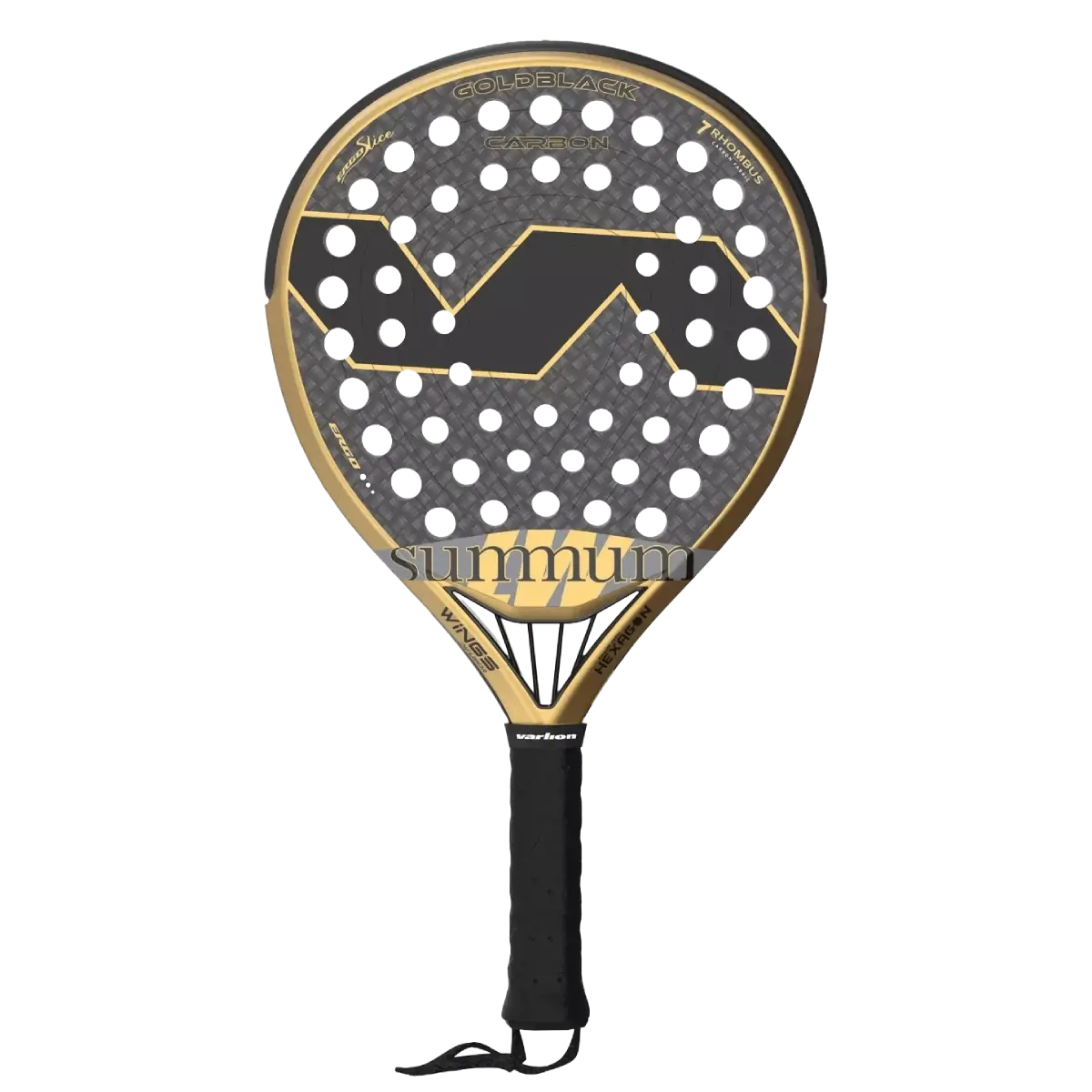 Varlion LW Carbon Goldblack
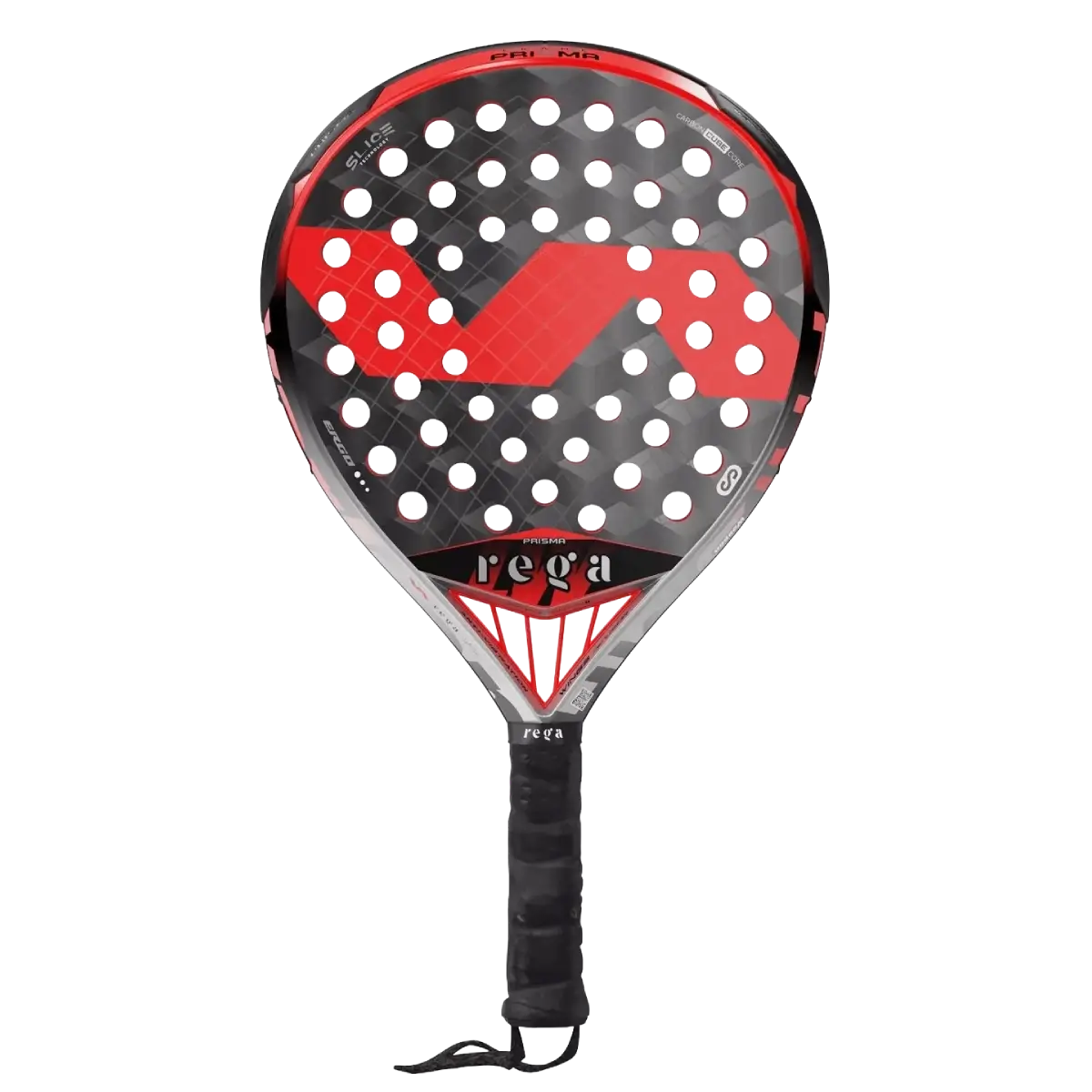 Varlion LW CUBE Elbowcare S
Comparison with other brands
NOX ML10 Ventus Control 3K 2026: NOX is heavier at 360-375 g, has a medium-hard response. It is more stable and mass-driven. Varlion is faster, lower-swinging and gives more surface-assisted spin.
Babolat Counter Veron 2.6: Counter Veron has a 27.0 cm balance and a medium Carbon Flex response, so it supplies easier head-led pace and counter power. Black Orquidea is quicker, more control-centred and less tiring through repeated defensive actions.
Wilson ENDURE LS V1 2026: Wilson is a 355 g round racket with a verified 25.5 cm balance and medium classification. It is softer and steadier through the centre. Varlion is lighter, more defined at impact and stronger for raised-texture spin.
77VarlionVarlion LW Carbon Black OrquideaRound / LW control mouldShape340–355 gWeight range≈25.2 cmBalance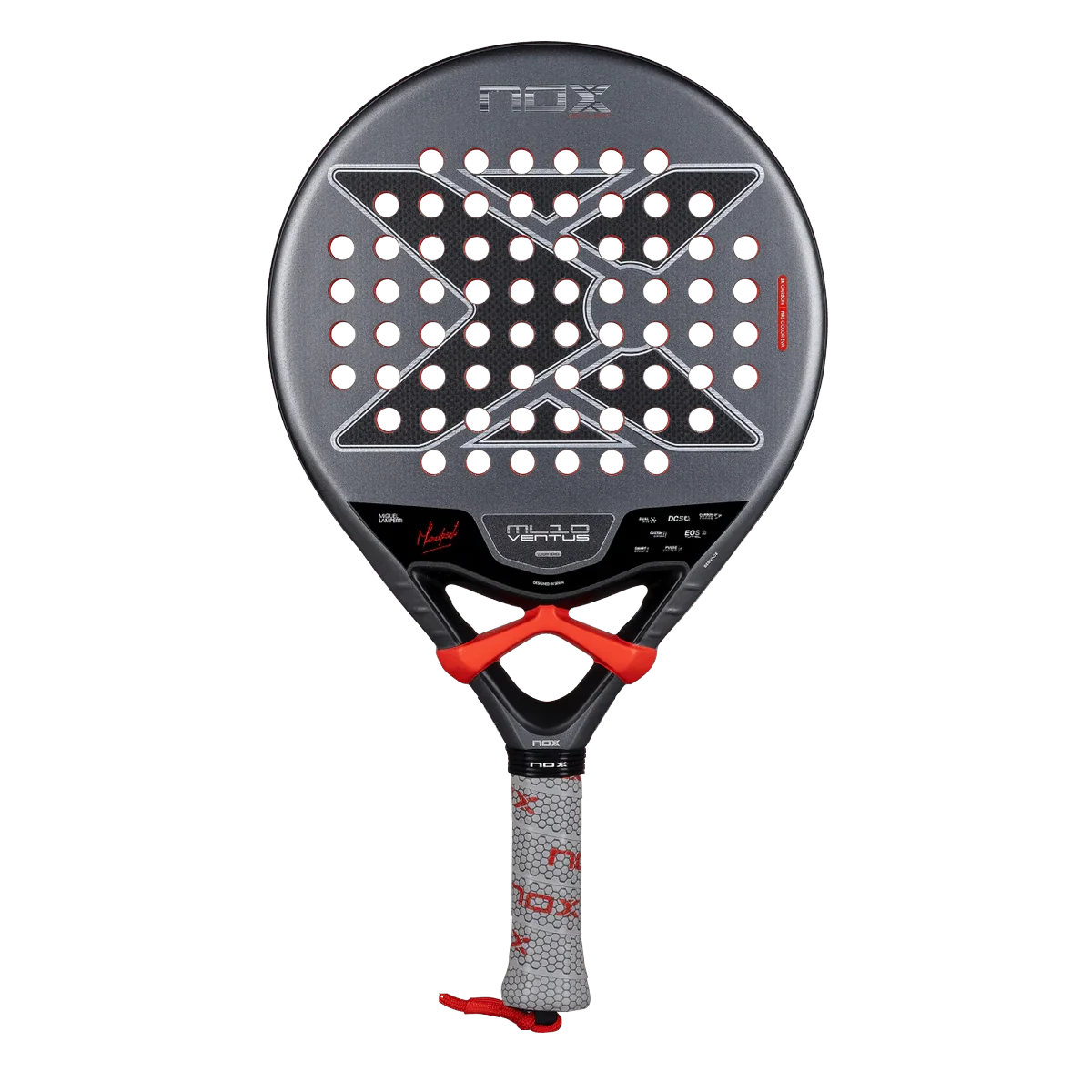 75NoxNOX ML10 Ventus Control 3K 2026RoundShape360–375 gWeight range25.6–25.7 cmBalance
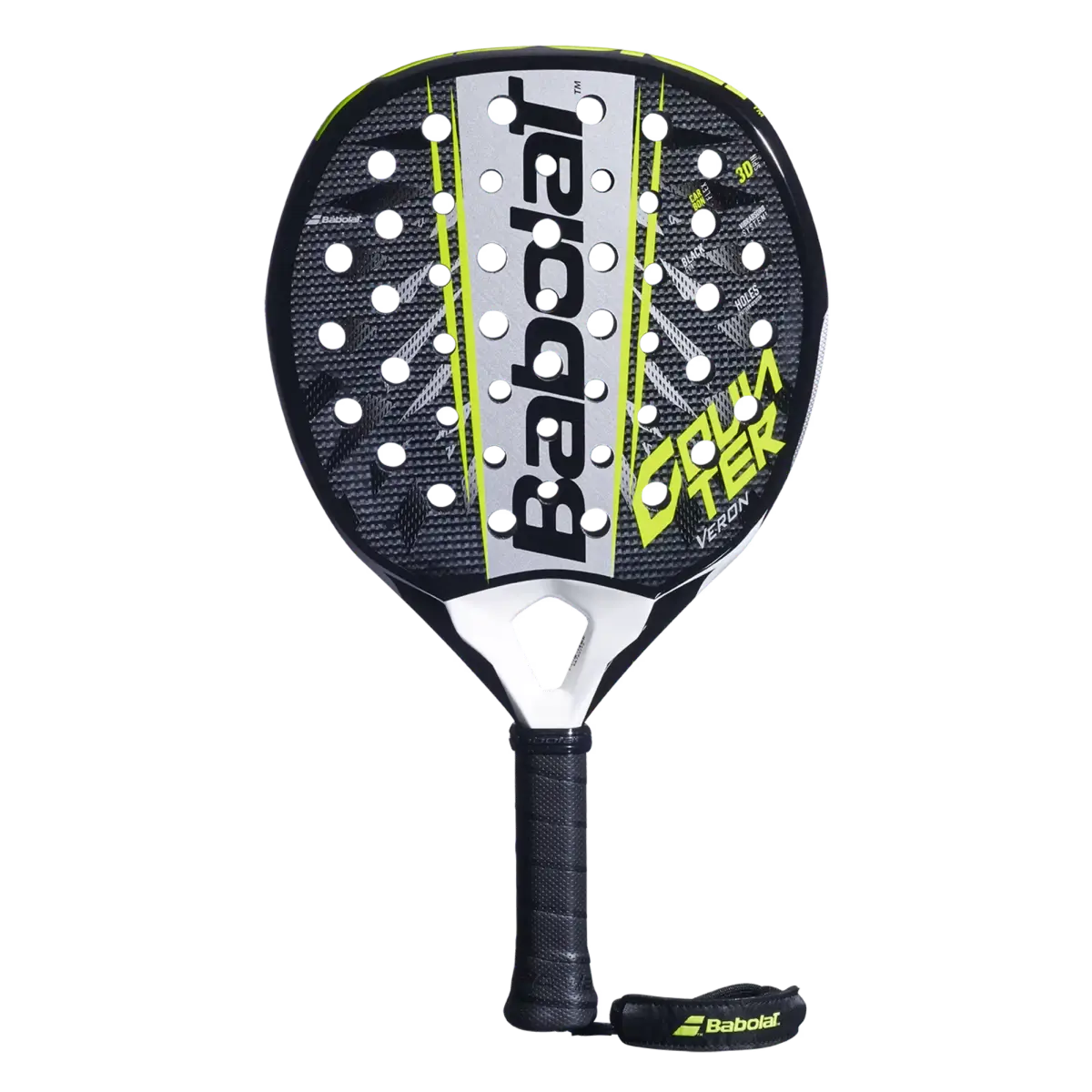 73BabolatBabolat Counter Veron 2.6RoundShape355–375 gWeight range27 cmBalance
Technical positioning and fit
Best for: control-focused right-side players, high ball-volume defenders, quick volley blockers and players who value a broad central contact window.
Choose it if: you want a very light round carbon racket with mid-low balance, controlled rebound and useful raised-texture spin.
Think twice if: you need a long handle, heavy punch volleys, passive emergency depth or high stability on lateral misses.
Not best for: pure power specialists, players who finish mainly through flat smash and anyone expecting the mass response of a 360-375 g frame.
Solid shape = this racket.Dashed outline = average of every racket we have reviewed.
Varlion LW Carbon Black Orquidea
Specifications
- Weight range
- 340–355 g
- Balance
- ≈25.2 cm
- Thickness
- 38 mm
- Shape
- Round / LW control mould
- Face material
- Carbon 7 Rhombus (12K) with fiberglass reinforcement
- Core
- Medium Touch Soft EVA, medium hardness
Common questions
It is a light round control racket from the 2025/2026 Pro Summum Hexagon line. Its 340-355 g range, mid-low balance, Carbon 7 Rhombus face, Medium Touch EVA and 12 cm handle prioritise maneuverability, defense, placement and spin.
The official range is 340-355 g. That is a range, not a single measured racket weight, and the protector and grip setup also matter when comparing units.
The balance is specified as mid-low, which suits compact preparation and fast recovery. It is not specified here as an exact point in centimetres.
The Carbon 7 Rhombus laminate feels defined, while medium-hardness Soft EVA gives controlled, moderate compliance. It is easier-going than the hard CUBE platform, but not a springy fiberglass learning racket.
Both are round, mid-low and Medium Touch Pro Hexagon rackets. Black Orquidea is officially 340-355 g, while Goldblack is 345-360 g. Orquidea is slightly quicker; Goldblack carries more mass and stability.
Maximum power is limited. The low balance, light mass and 12 cm handle favour control and recovery speed. It produces useful attacking pace through clean acceleration and spin, but it is not a flat-smash specialist.
Choose it if you are an established intermediate to advanced control player who receives high ball volume and values fast defense, a broad sweet spot and spin. Avoid it if heavyweight stability or maximum smash output is the priority.
Price alert
We check prices when we update our offers. Get one email when a verified price is below your threshold.
Player feedback
Player feedback is separate from our editorial review. Individual votes stay private — only the aggregate is published.
Thank you — your feedback is saved. You can revise it any time with Vote.
No player votes yet.
Questions & answers
No questions yet.