Varlion Bourne Carbon Platinum 2025/2026 Review
 Methodology
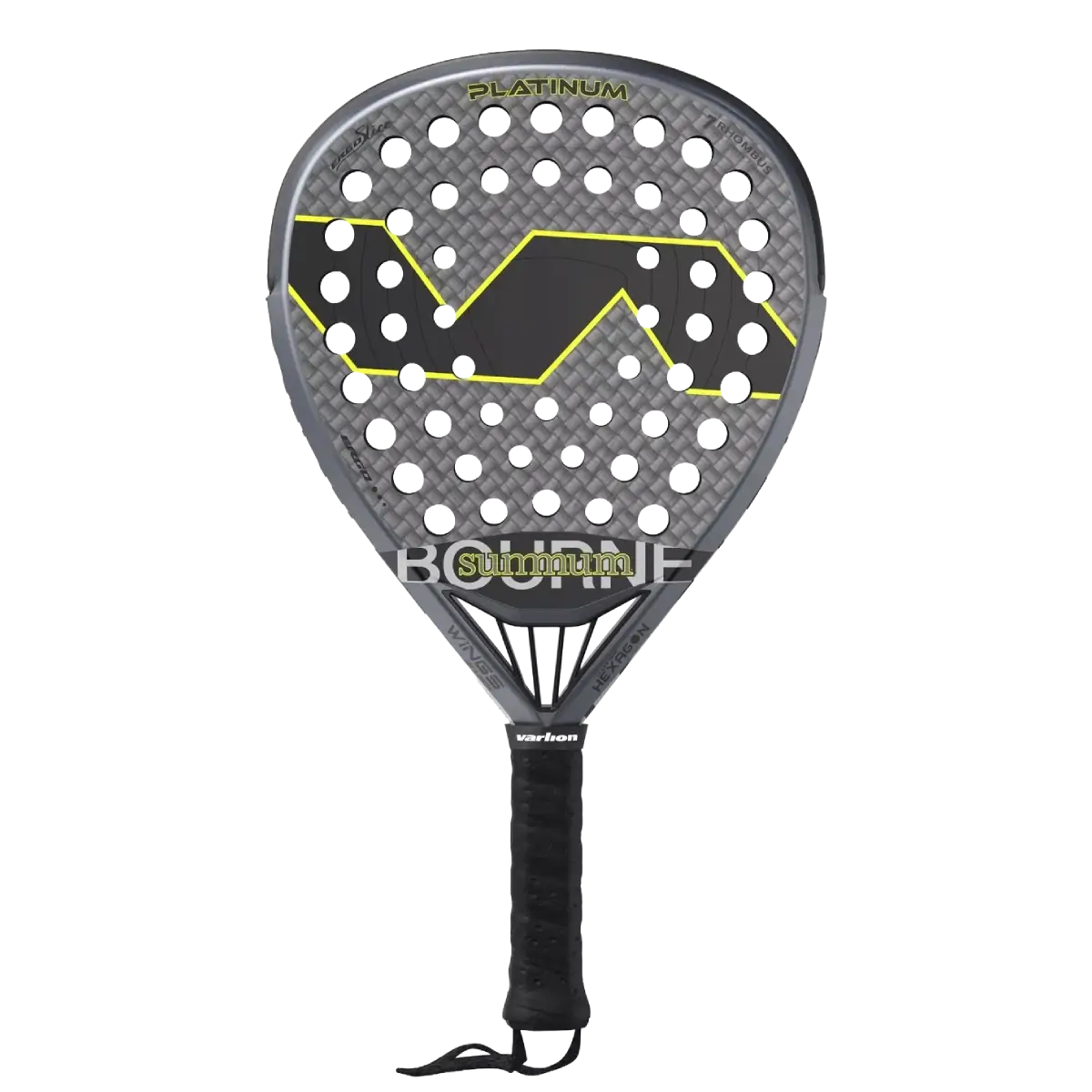
The Varlion Bourne Carbon Platinum 2025/2026 is the power model in the Pro Summum Hexagon group. It combines a diamond Bourne mould, 345-360 g official range, medium-high balance, Carbon 7 Rhombus Alu face, Medium Touch EVA, Hexagon frame and ErgoSlice texture.
Its key achievement is making a Bourne diamond feel less extreme. One documented exact-model sample weighed 350 g and balanced at 26.5 cm with the factory protector fitted. That is one sample with a particular setup, not a universal balance specification. It is consistent with the current model's manageable preparation, but another unit or a different protector and grip setup need not feel identical.
The racket still attacks first. It has strong overhead leverage, high spin potential and strong finishing power, yet the medium core gives the ball a more progressive release than the harder CUBE flagship. The main limits are passive defense, edge comfort and the fact that maximum pace remains technique-dependent.
Version and lineup identification
This review covers the Bourne Carbon Platinum from Varlion's official 2025/2026 collection, product reference RACK250018015. It is separate from Bourne CUBE Elbowcare S, Bourne CUBE Elbowcare W, Bourne Prisma Carbon Soft and the older Bourne Carbon Black lineage.
The official data sheet classifies the shape as diamond and the role as mainly power. Varlion's Bourne outline is not a perfectly triangular diamond: the shoulders and hitting area retain some teardrop influence, which gives the current model more control and a larger medium-to-high contact window than an extreme power mould.
Within the current range, CUBE S and W are the harder, more expensive flagship options. Carbon Platinum gives up part of their maximum explosiveness in exchange for easier medium-pace output, a more forgiving sweet spot and a lower technical threshold.
Varlion Bourne Carbon Platinum — Technical specifications
Construction and materials
The frame uses a bidirectional carbon tubular and Varlion's Hexagon profile. The straight edge and chamfered rib increase structural stiffness around the perimeter, while the AB protector is bonded to the frame rather than fixed through drilled holes.
Carbon 7 Rhombus Alu forms the face. The aluminised carbon gives the impact a slightly drier, cleaner response than the older non-aluminised Carbon Black concept. The Medium Touch EVA core adds compression and keeps the output progressive instead of making the racket behave like a rigid board.
A rigid Wings Diffuser occupies the heart, and the Ergoholes pattern changes hole size across the face. The handle is specified at 12.5 cm. Handle-length comparisons need the same endpoints: a grip-end measurement is not necessarily the same dimension.
How heavy the racket feels and where the mass sits.
Balance point is shown from the available source evidence.
- Balance point≈26.6 cm24.5 cmavg 26 cm27.5 cmHead-heavy
- Static weight345–360 g340 gavg 365 g390 g
- Swing weight129.5 kg·cm² estimated110typical 128150
- Twist weight15 kg·cm² estimated11typical 1416
Shape and mould behavior
The Bourne shape places the preferred contact point above centre and builds leverage through the upper face. This is visible on flat smashes, viboras and aggressive volleys, where the racket carries more head presence than Maxima or LW.
The current balance feels less extreme than the very head-heavy Bourne models of the past. A documented 350 g sample at 26.5 cm moved quickly for a diamond and remained controllable during preparation. The racket can still arrive early if the player swings with the old expectation of a slow, heavy head, so timing benefits from a compact start.
Where this racket sits for stiffness and how easily the face gives power.
Bourne Carbon PlatinumStiffness, feel and comfort
The Carbon 7 Rhombus Alu face gives a direct, connected impact, while Medium Touch EVA adds a rounder compression phase than the harder CUBE models. The complete racket feels medium-hard rather than either deeply cushioned or completely rigid.
At low pace, the racket gives some usable release but does not launch the ball from a passive touch. At medium pace, the core activates efficiently and produces the model's best combination of control and acceleration. At high pace, the face remains stable, although the absolute ceiling is one step below Bourne CUBE.
Comfort is acceptable for an attacking carbon racket. Centred impact feels clean, while the upper edge and lateral perimeter become drier. Players who want a soft, long-dwell strike should choose a different construction.
Our scores against every racket we have reviewed.
- Comfort7 /100avg 7.3110Below average
- Spin8.5 /100avg 7.2210Above average
Sweet spot and forgiveness
The sweet spot is medium rather than small and extends from the centre into the upper-middle face. That makes routine attack contact easier than on older extreme Bourne models and allows the player to use the racket from the back without treating every ball as an overhead.
The tip remains productive, which is important for kick smashes. The outermost edge is firmer and less forgiving, yet the upper contact zone remains usable rather than going abruptly dead. Lateral misses lose more output than vertical misses.
Sweet spot- Core zone 7.5/10
- Shape Diamond / Bourne hybrid profile
- Stability 7/10
Approximate high-tolerance zone for this mould and core.
Power and smash behavior
Power is a major strength. The diamond leverage, medium-high balance and Carbon 7 Rhombus Alu face create a high ceiling, while the Medium Touch core makes the first stages of acceleration easier to access than on the CUBE flagship.
Kick smashes are especially effective because the racket moves quickly enough to brush the ball and the upper sweet spot remains usable. Flat smashes carry strong pace through medium-high swing speeds. At absolute maximum acceleration, the harder Bourne CUBE still produces more resistance and explosive finish.
Net performance under pace
At the net, Carbon Platinum feels decisive without being cumbersome. Central volleys are connected and the medium core adds enough release for depth, and the manageable preparation helps it recover for the next ball. The documented 26.5 cm balance describes one sample, not every racket in the range.
Punch volleys and counters are strong when the player meets the ball in front. The racket is less comfortable when forced to block late outside the centre, but it recovers faster than its diamond label suggests.
Spin generation
ErgoSlice uses raised contour lines rather than a heavy sand coating. The relief is not visually extreme, yet the combination of the texture, progressive drilling and fast head speed gives the ball a strong practical grip window.
Viboras, sliced volleys and kick smashes are the most convincing applications. The racket accepts acceleration and lets the player work around the outside of the ball without the head feeling trapped behind the hand.
Defensive output and depth
Defense is viable because the current Bourne is more maneuverable and the sweet spot is more usable than older versions. Controlled lobs and glass recoveries work when the player creates a small amount of forward acceleration.
Passive rescue remains a limitation. The medium-hard face does not supply automatic depth from a late, short contact, and the preferred contact point sits above centre. Players who spend most of the match absorbing pace from the back will find Maxima or LW easier.
Off-center stability and torsional resistance
The Hexagon rib and carbon tubular keep the central face stable under pace. Upper-middle contact also retains useful output, which is important for the Bourne attack window.
The racket becomes noticeably drier at the outer edge. Lateral mishits twist more and lose depth, while very high frame-side contact can feel rigid. Stability is good enough for the intended role, not exceptional across the entire face.
Practical on-court takeaways
- The current Bourne prepares more quickly than its power-racket label suggests; the documented 350 g / 26.5 cm sample is one setup, not a universal specification. • Medium Touch EVA gives progressive output from medium to high pace; very passive touch still needs activation. • The medium-to-high sweet spot is more usable than on older extreme diamonds and remains productive near the tip. • ErgoSlice and fast acceleration make viboras and kick smashes major strengths. • Choose it for accessible attack and spin; choose CUBE only when maximum flagship explosiveness justifies the higher demand.
Comparison within the Varlion lineup
Bourne CUBE Elbowcare S: CUBE S is harder and more explosive in warm conditions. It rewards higher swing speed and offers the greater absolute ceiling. Carbon Platinum gives easier medium-pace depth, a more progressive strike and a broader fit from established intermediate upward.
Bourne CUBE Elbowcare W: CUBE W is the colder-condition flagship. It preserves more rebound below 25°C and feels more technically complex. Platinum is the simpler all-weather choice with a medium-hard response.
Maxima Carbon Rose: Maxima is lighter, medium-balanced and easier in defense. Bourne adds upper-face leverage, stronger punch volleys and a higher smash ceiling, while Maxima offers faster transition and a longer handle.
LW Carbon Goldblack: LW shares the medium-hard response but uses a round head and mid-low balance. It is better for control, blocks and back-court volume. Bourne is clearly superior for overhead attack and finishing.
Lineup comparison
Varlion Bourne Carbon Platinum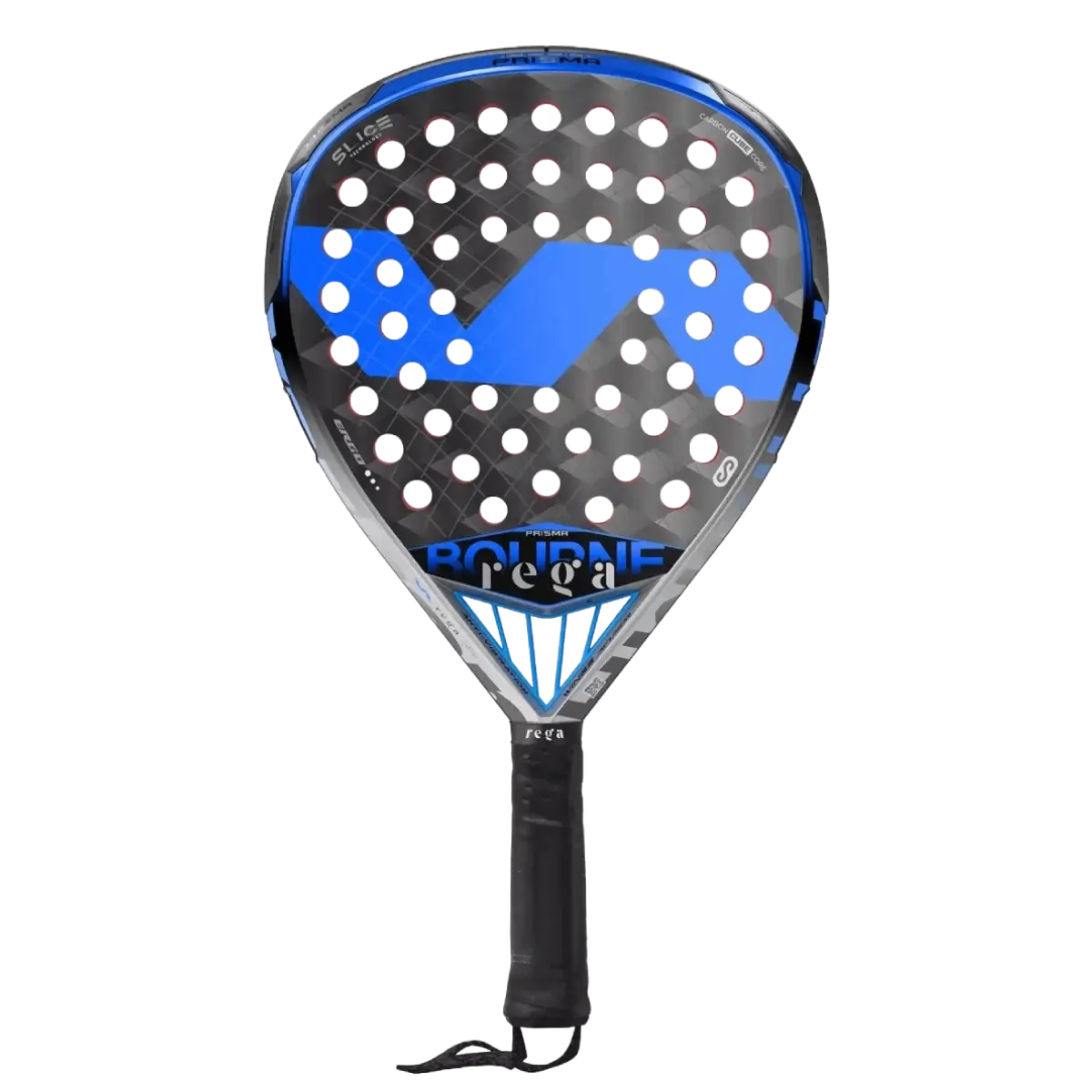 Varlion Bourne CUBE Elbowcare S
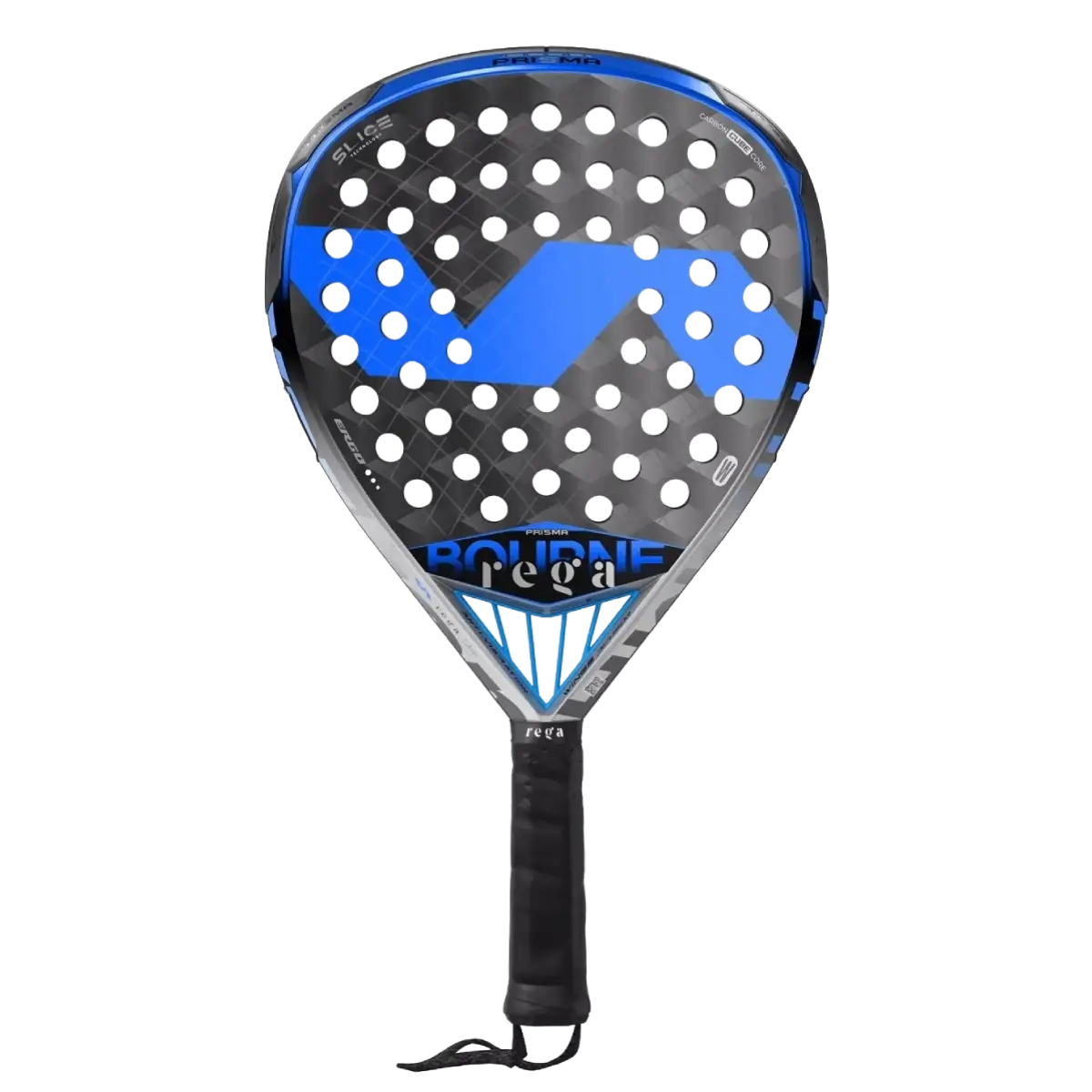 Varlion Bourne CUBE Elbowcare W
Comparison with other brands
Babolat Air Viper 2.6: Both have a medium-hard, connected response rather than a plush strike. Air Viper is lighter and more focused on rapid attack transitions. Bourne carries more head presence, gives a larger usable upper window and produces more progressive medium-pace depth.
StarVie Tritón Balance+ 2026: Tritón Balance+ feels harder and denser under full acceleration. It rewards elite timing and delivers sharper high-speed precision. Bourne is easier to activate, more forgiving at medium pace and less severe on imperfect preparation.
NOX AT10 Luxury Genius Attack 18K Alum 2026: NOX is medium-hard with a conventional attack mould and stronger full-swing demand. Bourne is quicker for its shape, more generous through the medium upper sweet spot and more texture-led on spin overheads.
77VarlionVarlion Bourne Carbon PlatinumDiamond / Bourne hybrid profileShape345–360 gWeight range≈26.6 cmBalance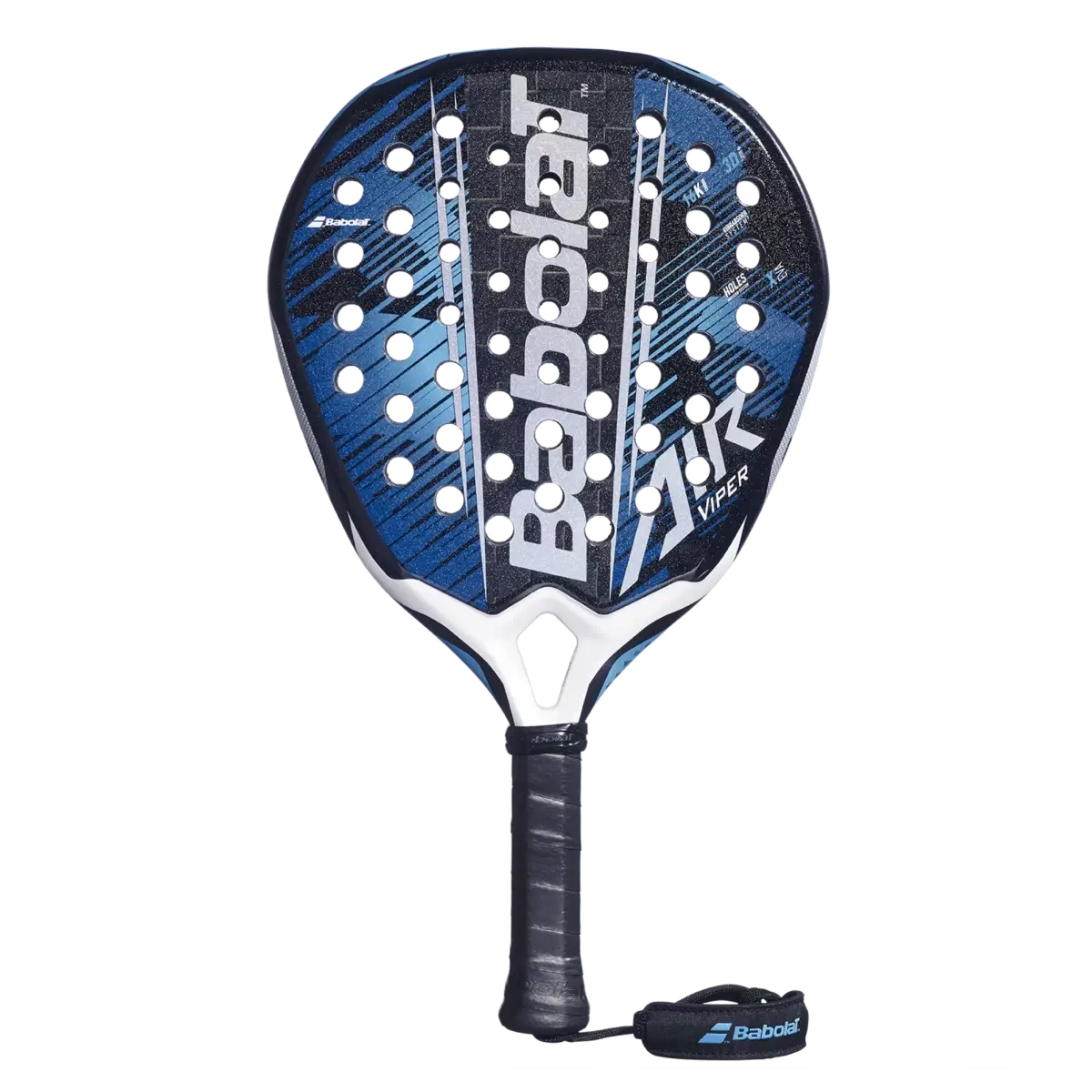 79BabolatBabolat Air Viper 2.6TeardropShape345–365 gWeight range26.5 cmBalance
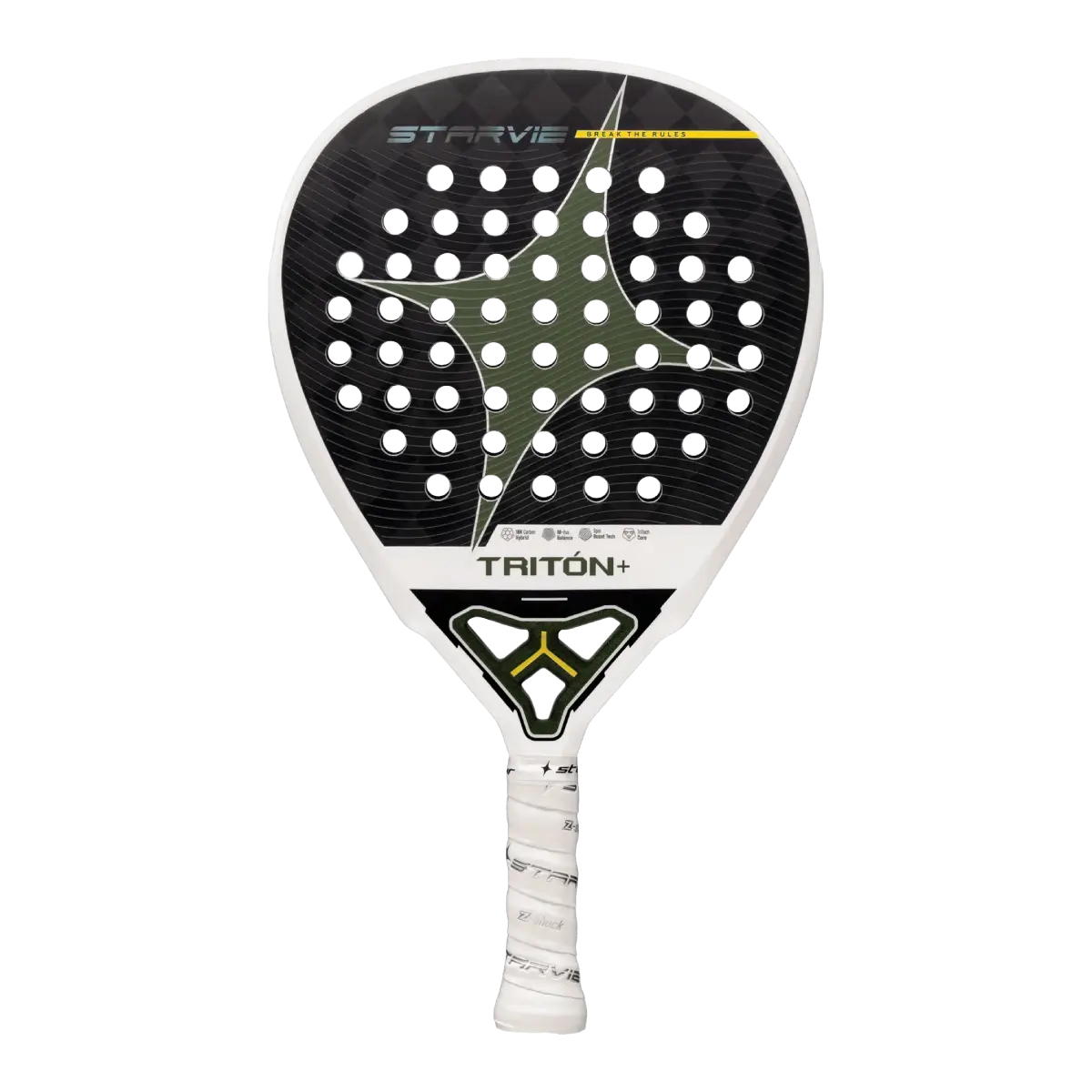 80STARVIEStarVie Tritón Balance+ 2026DiamondShape350–366 gWeight range27 cmBalance
Technical positioning and fit
Best for: established intermediate to advanced attackers, left-side players, spin-oriented overhead users and players who want a manageable diamond.
Choose it if: you want strong power, fast head movement, progressive medium-hard output and a sweet spot that is usable beyond perfect contact.
Think twice if: your game depends on passive defense, you prefer a genuinely soft impact or you want the absolute flagship power ceiling.
Not best for: beginners, low-tempo defenders and players who consistently contact near the lateral frame.
Solid shape = this racket.Dashed outline = average of every racket we have reviewed.
Varlion Bourne Carbon Platinum
Specifications
- Weight range
- 345–360 g
- Balance
- ≈26.6 cm
- Thickness
- 38 mm
- Shape
- Diamond / Bourne hybrid profile
- Face material
- Carbon 7 Rhombus Alu
- Core
- Medium Touch EVA / medium hardness
Common questions
It is a medium-hard diamond power racket for established intermediate to advanced players. Its 345-360 g range, medium-high balance, Carbon 7 Rhombus Alu face and Medium Touch core prioritise overhead attack, progressive power and spin.
The official balance class is medium-high. One documented exact-model sample weighed 350 g and balanced at 26.5 cm with the factory protector fitted. That is a sample value, not a universal manufacturer specification or our measurement.
It feels medium-hard. The Carbon 7 Rhombus Alu face is direct, while Medium Touch EVA makes medium-pace acceleration more progressive and manageable than on the harder Bourne CUBE models.
It remains a technical diamond, but the current balance and medium upper sweet spot make it easier than older head-heavy Bourne rackets. An established intermediate with clean preparation can use it effectively.
Yes. Power ceiling is one of its strongest categories. It produces strong flat smashes, punch volleys and kick overheads, although the harder Bourne CUBE platform still offers more maximum explosiveness.
Carbon Platinum is medium-hard, more progressive and easier at medium pace. Bourne CUBE S/W are harder, more temperature-specific and more explosive at maximum acceleration, but they demand cleaner technique.
Choose it if you want an attacking Varlion diamond with strong spin, high power and better maneuverability than older Bourne models. Avoid it if soft impact, passive defense or round-racket forgiveness is the priority.
Price alert
We check prices when we update our offers. Get one email when a verified price is below your threshold.
Player feedback
Player feedback is separate from our editorial review. Individual votes stay private — only the aggregate is published.
Thank you — your feedback is saved. You can revise it any time with Vote.
No player votes yet.
Questions & answers
No questions yet.