Oxdog Ultimate Court 2026 Review
 Methodology
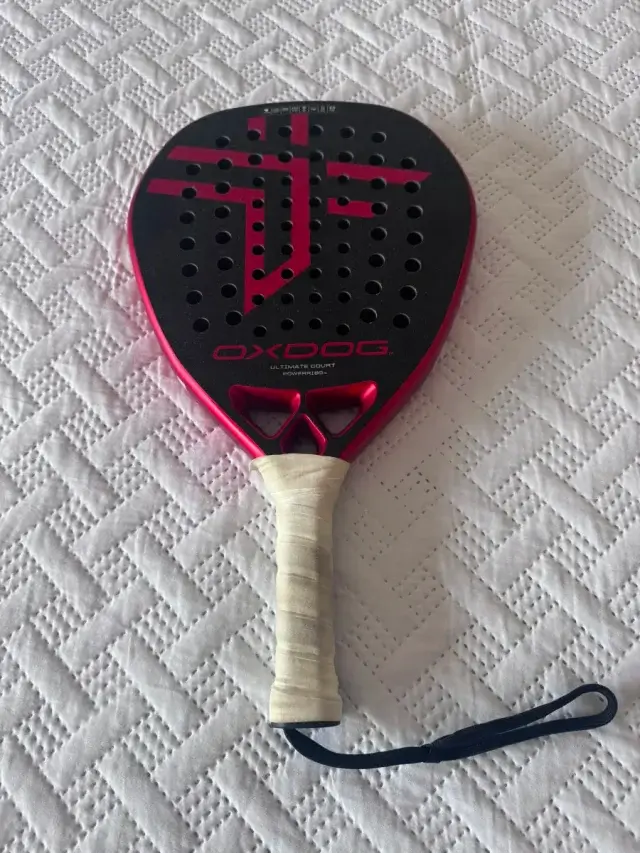
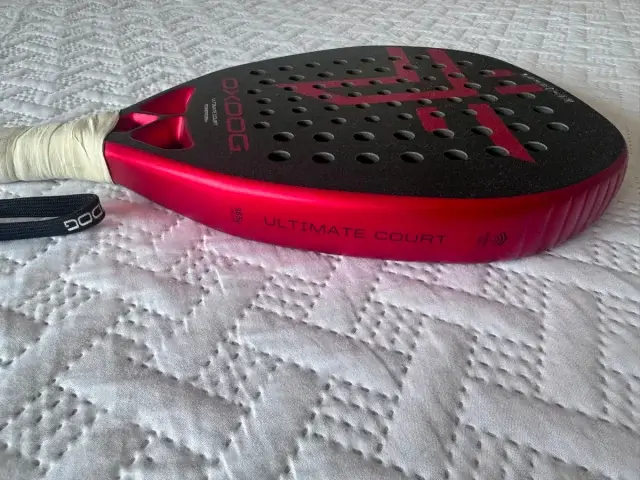
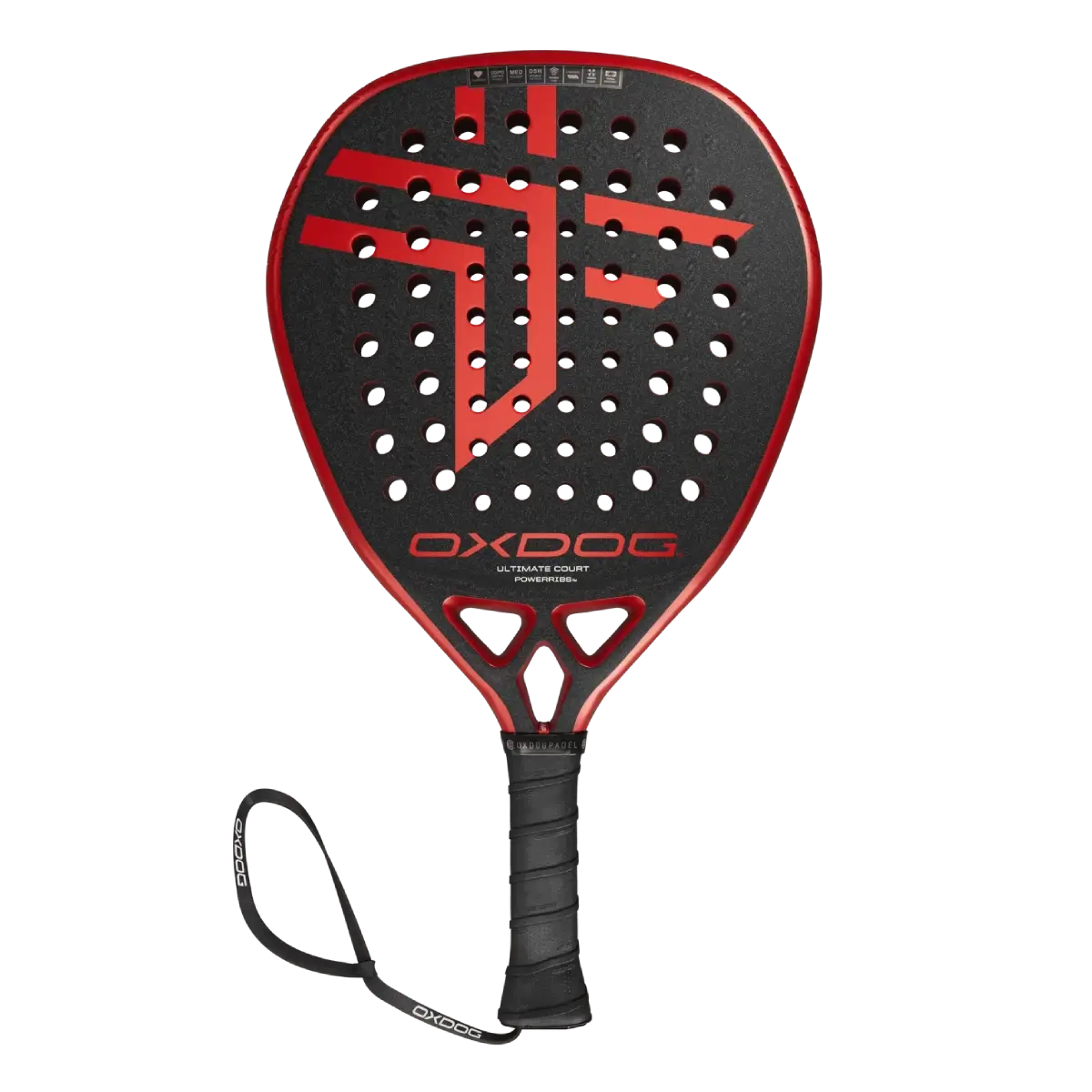
The Oxdog Ultimate Court 2026 is the accessible conventional diamond in the current Ultimate family. It combines a 38 mm profile, a 365 g official listed weight, Medium balance, Medium foam, a Composite face and a sandy surface. Oxdog positions it for casual-to-intermediate players, and that is the correct frame of reference: Court offers more adult-racket mass and stability than NXT-GEN without moving into the firmer, more top-loaded behavior of Tour X, Pro or Pro+.
Its defining strength is useful output without a hard impact. The Composite face and Medium core create a medium-soft response with strong rebound at low and medium swing speed. Lobs, controlled volleys and routine overheads leave the face easily, while the sandy finish adds mechanical grip for slice and spin. The 365 g mass gives the central contact more substance than a lightweight development racket.
The main trade-off is speed and precision. Medium balance prevents the diamond head from feeling extreme, but 365 g still requires earlier preparation than a 345–355 g model. The Composite response is comfortable and lively rather than perfectly linear, so compact technique matters when blocking fast balls or playing short touch volleys. Ultimate Court is a practical progression racket, not a disguised Pro model.
Version and lineup identification
The current official product title is ULTIMATE COURT without a year marker. We identify it as the 2026 model because this is the version sold in the current 2026 range. It is distinct from Pure Court, which uses a hybrid shape and Soft foam.
Ultimate Court has existed through several annual listings. The 2023, 2024 and 2025 versions share the same broad concept: a 365 g diamond, accessible response and versatile Court role. No major 2025-to-2026 redesign is confirmed, so the current racket should be treated as a continuation rather than marketed as a new construction.
Within the current Ultimate line, Court sits between NXT-GEN and Tour X. NXT-GEN is 345 g, 35 mm and Soft, with a longer thinner grip for developing and lightweight players. Tour X is 355 g, uses HES-Carbon and Medium foam, adds a sandy performance face and includes an 8 g removable RBS. Court is heavier than both but uses a more elastic Composite construction and no RBS.
Oxdog Ultimate Court 2026 — Technical specifications
The conventional 38 mm diamond combines a composite face with Medium foam. Its appeal is accessible depth and a less demanding response than the carbon models, rather than an unusually light build. The overall mass still matters in quick reactions, where this easier contact does not make the head effortless to redirect.
Grip and protector choices change the finished setup. I would judge that complete racket in the hand, rather than use a calculated inertia figure as a substitute for its actual handling.
Construction and materials
Ultimate Court uses a conventional 38 mm frame, giving it more structural volume than NXT-GEN and Pro Smash. That thickness, combined with a 365 g listed weight, supplies a stable base for central volleys, blocks and overheads. The racket does not depend on a thin aerodynamic profile to create speed; it depends on medium balance and a predictable swing path.
The face is listed as Composite rather than HES-Carbon. Oxdog does not publish a precise fiber ratio, so it should not be expanded into a specific carbon-and-fiberglass formula. On court, the face behaves more elastically than the Pro constructions. It returns the ball readily, softens the impact and makes ordinary depth easier, but it also creates a slightly longer and less linear launch when the stroke becomes very forceful.
Medium foam supports that accessible response. The official core is not Soft, yet the complete face/core system feels medium-soft because the Composite layer contributes flex and rebound. This distinction matters: the racket is comfortable without becoming a low-density trampoline, and it still has enough body to control a normal volley or bandeja.
PowerRibs reinforce the frame, while DSH uses two hole sizes to improve playability around the sweet spot. Vibradamp places silicone inserts under the grip to reduce the amount of impact vibration transmitted to the hand. These systems improve structural coherence and feel, but they do not justify a medical claim or turn off-center contact into central contact.
How heavy the racket feels and where the mass sits.
Balance point is shown from the available source evidence.
- Balance point25.5 cm24.5 cmavg 26 cm27.5 cmNeutral balance
- Static weight365 g340 gavg 365 g390 g
- Swing weight123.5 kg·cm² estimated110typical 128150
- Twist weight14.3 kg·cm² estimated11typical 1416
Shape and mould behavior
The diamond mould gives Court more leverage above the head than a round entry-level racket. Medium balance keeps that geometry usable, and the 25.5 cm current-unit reference supports a neutral-to-medium interpretation rather than a genuinely head-heavy one. The head is present, but it does not dominate every stroke.
Static mass matters more than balance alone. At 365 g listed, Court feels slower to recover than NXT-GEN or Tour X even when the balance point is moderate. Players who prepare early will find the swing stable and predictable. Players who wait until the ball reaches the body may struggle to move the racket through late defensive contact.
The best contact zone is central to upper-central. The diamond shape gives useful leverage on overheads, while the Medium/Composite response prevents the upper zone from feeling excessively hard. Low-face contact remains the least effective area, especially when the player is stretched behind the ball.
Where this racket sits for stiffness and how easily the face gives power.
Ultimate Court 2026Stiffness, feel and comfort
The impact is medium-soft and lively. At low swing speed, the face compresses enough to return useful depth, which helps casual and intermediate players avoid short balls. At normal match speed, the response remains comfortable and connected rather than hollow.
The racket is not perfectly muted. A clean central strike gives clear feedback, while a larger miss produces a more diffuse sensation. The Composite face does not feel as crisp as HES-Carbon, but that softer definition is part of the model's purpose: it reduces the technical cost of creating depth.
Comfort is good for a 365 g diamond, although the weight should not be ignored. A player who needs a genuinely light racket may still fatigue during long matches or repeated overhead drills. Vibradamp addresses impact transmission; it does not remove the physical work of accelerating and stopping 365 g.
Our scores against every racket we have reviewed.
- Comfort7.5 /100avg 7.3110Near average
- Spin8 /100avg 7.2210Above average
Sweet spot and forgiveness
The sweet spot is medium-large for an accessible diamond. Central and near-central contact produces stable depth, and the lively face prevents small timing errors from dying immediately. DSH helps the usable zone remain practical around the center.
Forgiveness is strongest at low and medium pace. On a routine volley or lob, the racket supplies enough rebound to rescue a slightly imperfect strike. On a hard lateral block, the face can launch less predictably than the denser HES-Carbon models. The response remains playable, but precision decreases.
Compared with NXT-GEN, Court has more mass and structural support on off-center contact. Compared with Tour X or Ultimate Pro, its face is less exact under heavy compression. It occupies the middle: more stable than a very light development racket, less controlled than a performance carbon frame.
Sweet spot- Core zone 7.5/10
- Shape Diamond
- Stability 7.5/10
Approximate high-tolerance zone for this mould and core.
Power and smash behavior
Court creates easy power efficiently. The Composite face and Medium foam return pace at low-to-medium effort, while the diamond shape adds leverage above the head. A controlled flat smash, deep bandeja or compact vibora does not require advanced acceleration.
The maximum ceiling is good rather than elite. The 365 g mass can produce a heavy ball, but the face/core system is built for accessibility rather than the hard linear compression of Ultimate Pro+ or a specialist power racket. At full speed, some energy is expressed as rebound rather than a perfectly direct transfer.
The best overhead approach is progressive. Let the racket's rebound create depth on routine bandejas, then add acceleration when the ball is favorable. Kick smashes benefit from the sandy surface, while flat smashes depend more on clean central contact and body mechanics.
Net performance under pace
At the net, Ultimate Court feels substantial. The central face holds its line on normal volleys, and 365 g supplies enough mass to keep the ball deep without a large punch. The sandy finish adds bite on slice volleys and helps the player keep aggressive contact low.
The lively response requires restraint. On a fast incoming ball, a compact block is more reliable than a long forward swing. The face can release the ball quickly, so angle control matters on short volleys and soft touch.
Reaction speed is average for the class. Medium balance prevents the racket from feeling clumsy, but it does not erase the static weight. Players who value very fast hand changes should look at Tour X, NXT-GEN or lighter cross-brand alternatives. Players who prefer a stable central block may accept the slower recovery.
Spin generation
The sandy surface is one of Court's clearest advantages. It gives the ball mechanical grip on slice volleys, bandejas, viboras and controlled kick. The effect is useful even at intermediate swing speed because the texture does not depend entirely on extreme racket-head speed.
The Medium/Composite response provides enough dwell time to shape the ball. That makes spin accessible, but maximum rotation still requires a clean brushing path. The racket is not as fast through the air as NXT-GEN or Tour X, so advanced players may generate more rotation with those models despite Court's strong surface assistance.
Defensive output and depth
Defense is accessible when preparation is early. The core creates useful rebound on lobs and glass exits, and the medium balance keeps the head from becoming excessively difficult to lift. The player can use a compact stroke and let the face supply part of the depth.
The 365 g mass is the limiting factor. On low emergency contact or a late ball close to the body, Court requires more time and space than a 345–355 g racket. A round or broad hybrid mould also gives more margin at the bottom and sides of the face.
Court works best for players who are progressing technically and already prepare before the bounce. It provides more stability than a very light beginner racket, but it does not remove the footwork and timing requirements of a full-weight diamond.
Off-center stability and torsional resistance
The 38 mm frame, 365 g mass and PowerRibs create useful structural stability. Near-central blocks retain direction, and the racket does not feel fragile when the point accelerates. DSH improves playability around the sweet spot, particularly on moderate misses.
Lateral output is less exact than on Ultimate Pro or Pro+. The Composite face flexes more, and the response can vary when the ball catches the edge of the usable zone. That is a control issue rather than a severe vibration problem.
The numeric reference of 25.5 cm suggests that the measured current unit does not carry extreme mass at the tip. This helps handling, but it also means the racket's stability comes from overall mass and frame structure rather than a strongly head-loaded configuration.
Practical on-court takeaways
- Prepare early. Medium balance makes the 365 g setup manageable, but late hand speed is not its strongest quality.
- Use compact blocks and volleys. The Composite/Medium system already creates rebound, so unnecessary forward swing reduces control.
- Exploit the sandy surface on slice volleys, bandejas and viboras. Spin is one of the clearest reasons to choose Court over a smooth entry-level racket.
- Keep defensive contact central. The racket supplies depth readily, but low and wide misses still expose the diamond shape.
- Do not expect HES-Carbon precision. Court is designed around accessible output and comfort rather than a hard, linear Pro response.
- Move to Tour X when you want lower mass, faster preparation and a more defined carbon face. Move to Ultimate Pro when you want firmer control and a higher power ceiling.
Comparison within the Oxdog lineup
Against the Oxdog Ultimate Court 2025, no major redesign can be defended from the available specifications. Both maintain the 365 g diamond Court concept with a medium-response construction and accessible all-court role. The current model should be identified as 2026 because it is the reviewed sold version, but buyers should not expect a dramatic performance change without a confirmed technical update.
The Oxdog Ultimate NXT-GEN 2026 is 20 g lighter and three millimetres thinner. It is faster, softer and better suited to smaller hands, while Court provides more mass, stronger adult-pace stability and a heavier ball at the net. NXT-GEN is the progression specialist; Court is the conventional adult platform.
The Oxdog Ultimate Tour X 2026 is ten grams lighter on the official listings but more performance-oriented. Its HES-Carbon face, Medium foam, sandy surface and removable RBS create a faster, firmer and more tunable response. Court is softer and easier at low speed; Tour X offers better precision, spin through acceleration and advanced all-court ceiling.
The Oxdog Ultimate Pro 2026 shares the 365 g listed weight and diamond family but changes the performance level. Medium+ foam, HES-Carbon, Top balance and an 8 g RBS create firmer control, heavier volleys and stronger full-speed smashes. Court is the more accessible and comfortable option; Pro is the higher-ceiling tool.
Lineup comparison
Oxdog Ultimate Court 2026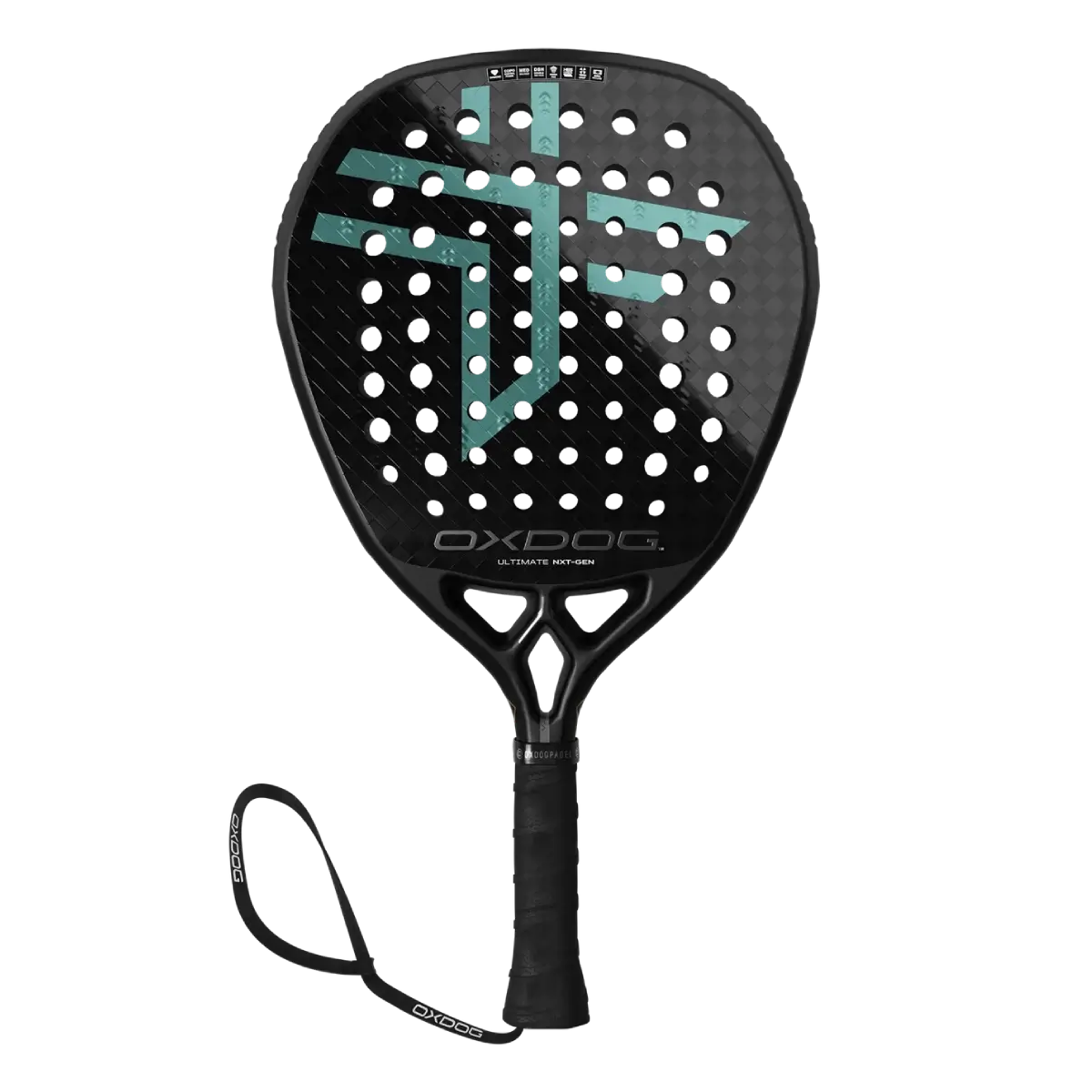 Oxdog Ultimate NXT-GEN 2026
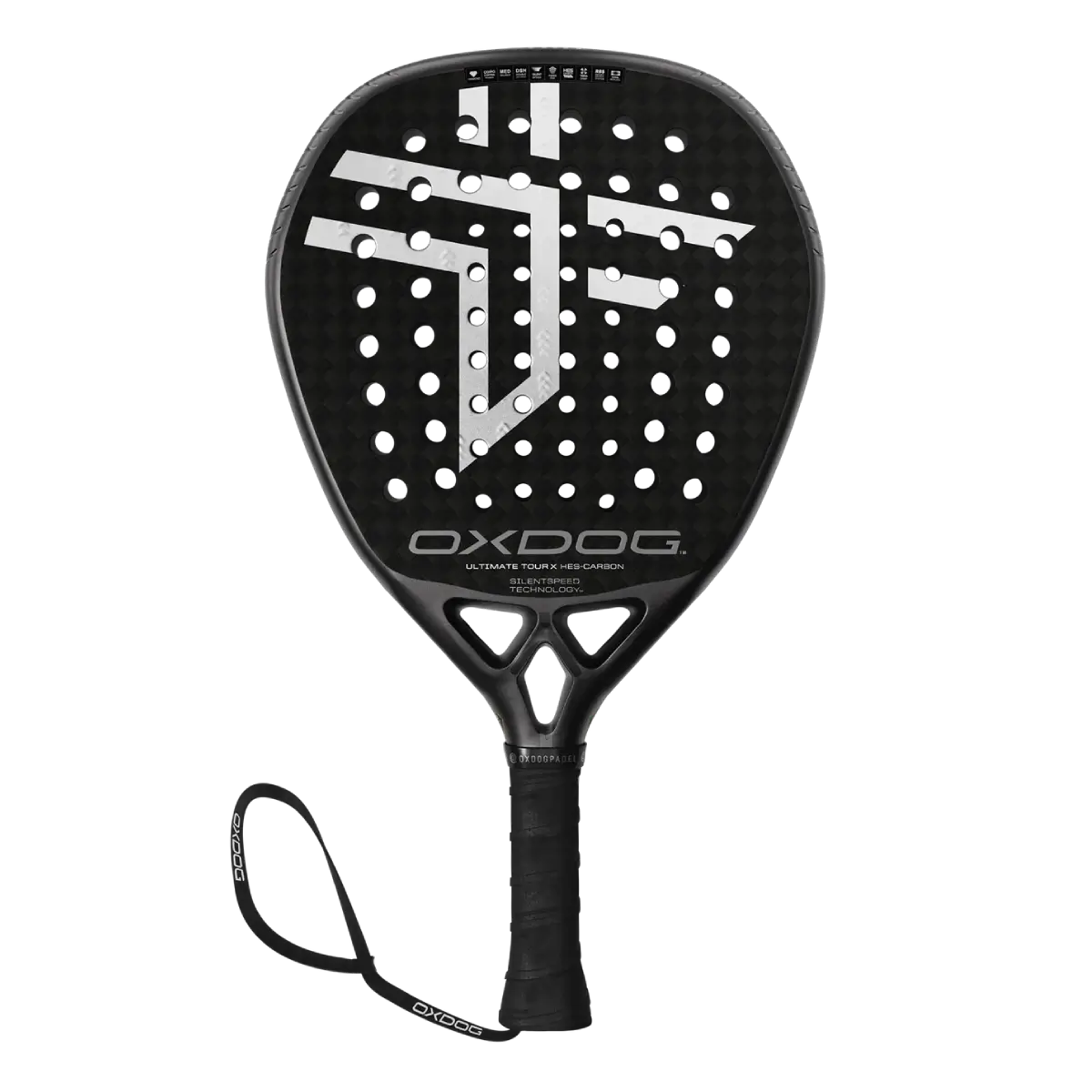 Oxdog Ultimate Tour X 2026
Comparison with other brands
The Babolat Air Vertuo 2.6 is lighter and softer. Its fiberglass face and teardrop shape make repeated defense easier and reduce physical demand, but it gives up mass, net stability and spin ceiling. Choose Air Vertuo for maximum assistance; choose Court for a more substantial adult response and sandy-surface versatility.
The Babolat Air Veron 2.6 uses Carbon Flex and a lighter teardrop platform to create faster preparation and a more defined impact. Court provides more mass and a livelier medium-soft rebound, while Air Veron feels more neutral through transitions. The Babolat is the faster all-court choice; Court is the heavier, more stable easy-output option.
The Babolat Technical Veron 3.0 is a more attack-focused diamond. Its approximately 27 cm balance and Carbon Flex face produce stronger tip leverage and a higher overhead ceiling, but defense is more demanding and the head is more present. Court is easier to control at medium tempo; Technical Veron rewards a player already building an aggressive game.
The HEAD Extreme Motion 2026 is lighter, quicker and firmer. Its carbon construction and higher balance provide more speed-driven attack performance, but the usable window is more technical. Court gives easier rebound and a calmer impact; Extreme Motion is the stronger choice for an advanced intermediate who prioritizes overhead acceleration.
75OxdogOxdog Ultimate Court 2026DiamondShape365 gWeight range25.5 cmBalance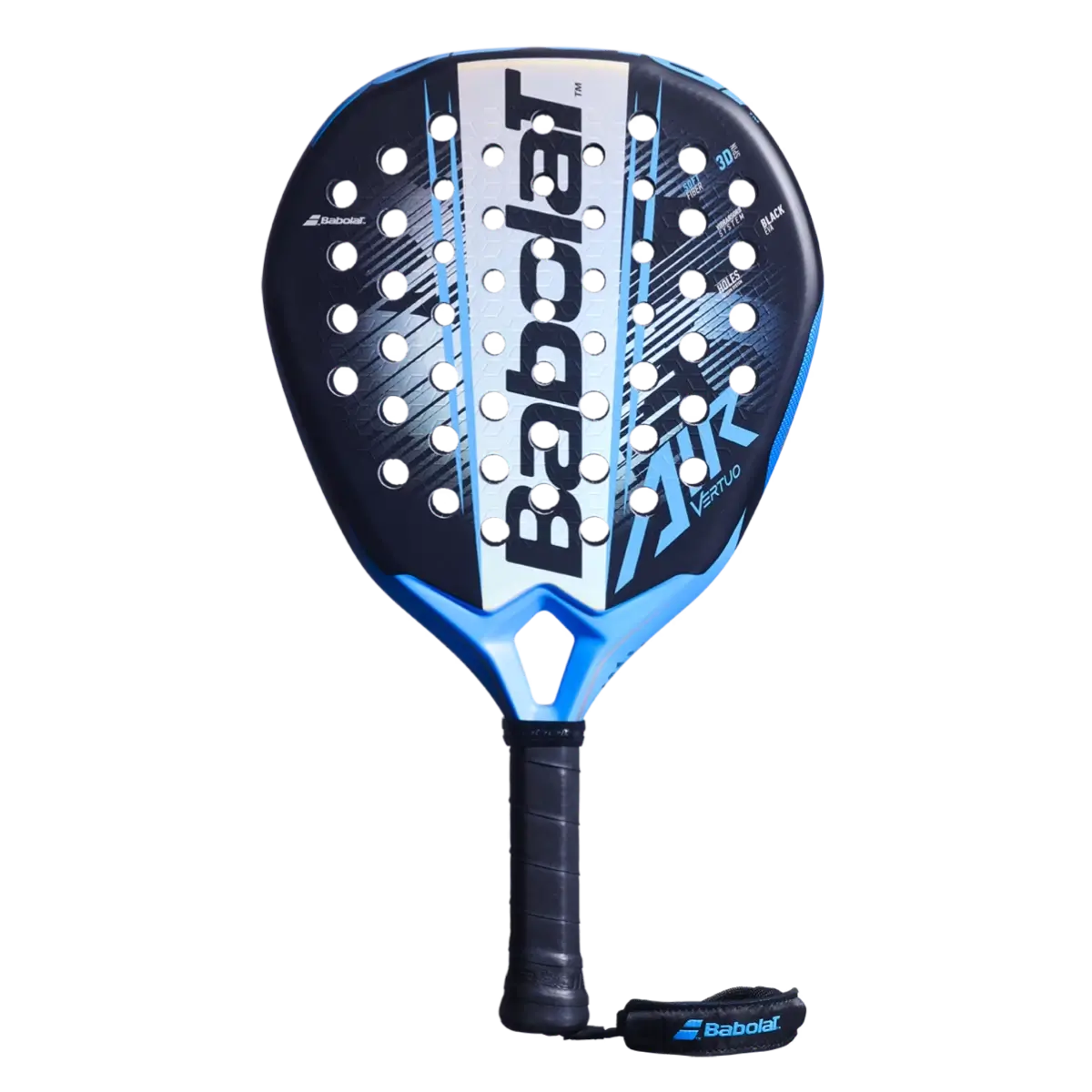 68BabolatBabolat Air Vertuo 2.6TeardropShape335–355 gWeight range26.5 cmBalance
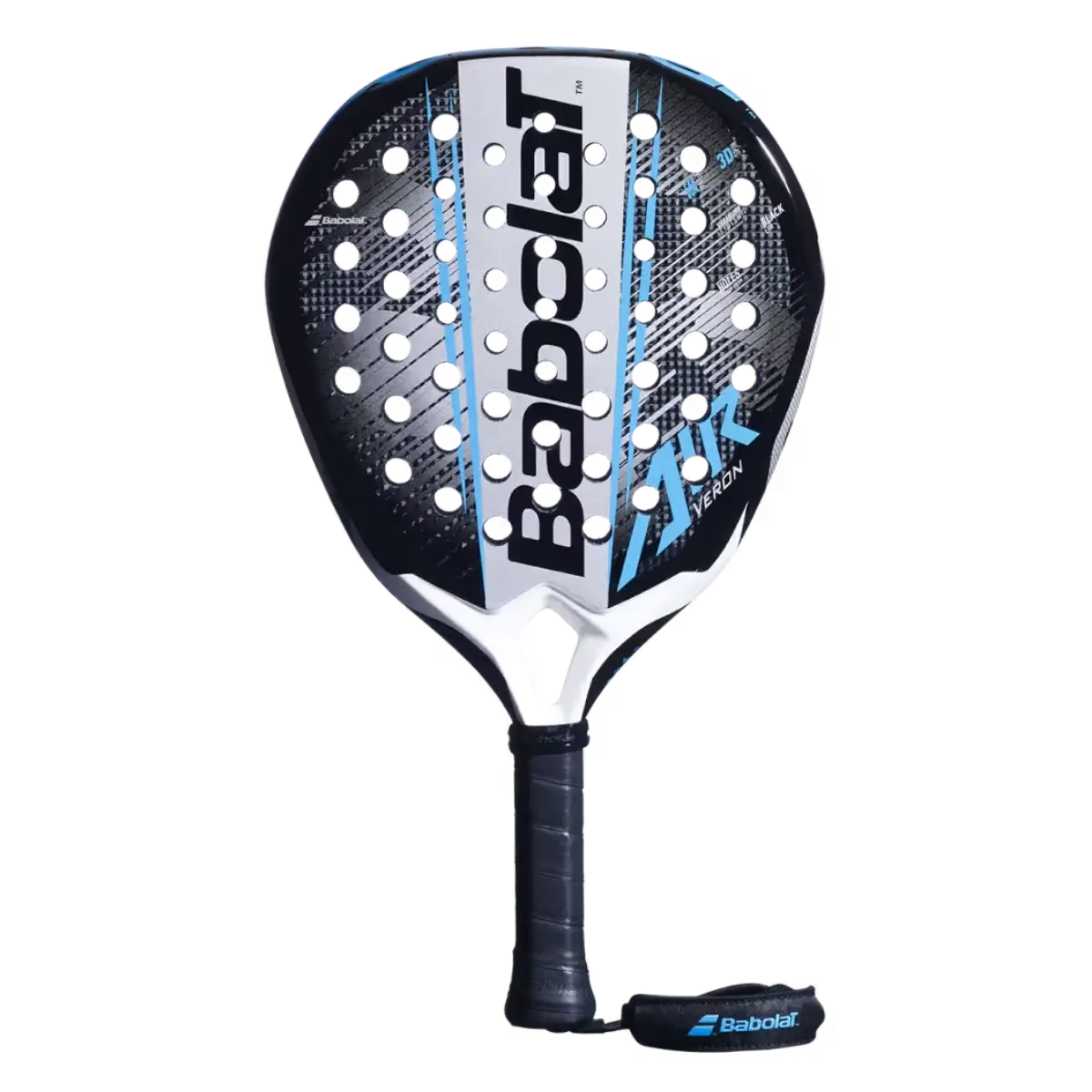 72BabolatBabolat Air Veron 2.6TeardropShape345–365 gWeight range26.5 cmBalance
Technical positioning and fit
Best for: Casual-to-intermediate players who want a conventional adult-weight diamond with easy depth, a comfortable medium-soft impact, useful central stability and a sandy surface for spin. It suits players progressing from a basic fiberglass racket without jumping directly into a hard carbon Pro model.
Choose it if: You can manage 365 g, prefer medium balance to a strongly head-heavy setup, and want the racket to help with lobs, volleys and routine overheads. It is also a good fit when spin assistance matters more than maximum hand speed.
Think twice if: You react late, need a sub-355 g setup, prefer a very crisp face or want a high-balance power specialist. The racket is accessible technically but still carries full adult mass.
Not best for: Advanced power specialists, players requiring a round sweet spot, players wanting RBS balance tuning, or anyone expecting a Composite face to behave like a hard HES-Carbon construction.
The Composite face and Medium foam make ordinary depth easier, while the sandy finish gives controlled overheads and slice a useful role. The 365 g diamond remains a substantial adult racket, so the reservation is late preparation rather than a lack of assistance from the face.
Solid shape = this racket.Dashed outline = average of every racket we have reviewed.
Oxdog Ultimate Court 2026
Specifications
- Weight range
- 365 g
- Balance
- 25.5 cm
- Thickness
- 38 mm
- Shape
- Diamond
- Face material
- Composite
- Core
- Medium foam
Common questions
It best suits casual-to-intermediate players who want a full-weight adult diamond with accessible rebound, medium balance and a sandy surface. It is a logical step beyond a basic entry-level racket when the player can manage a 365 g listed weight.
No. Oxdog lists the balance as Medium. The 365 g model specification still makes it a substantial adult racket, but the balance is not presented as the strongly head-heavy setup of the more attacking Ultimate models. Added grips or other accessories will affect the finished configuration.
The Composite face creates a more elastic and comfortable response than Oxdog's HES-Carbon Pro models. It helps generate depth at low and medium effort, but it is less crisp and less linear when the player compresses the face at maximum speed.
It produces useful pace easily through its 365 g mass, diamond shape and lively Medium/Composite response. Maximum power is good rather than elite. Ultimate Pro, Pro+ and Pro Smash create a firmer or heavier finishing ball for advanced players.
It supplies good rebound for lobs and glass exits, but the 365 g mass requires earlier preparation than NXT-GEN or Tour X. It is accessible for a diamond, not as forgiving as a lighter round or broad hybrid racket on late, low contact.
No removable RBS is listed with the current Ultimate Court package. The racket is supplied with a box, and its balance is intended to remain a fixed Medium setup apart from normal grip and protector customization.
Ultimate Court is 365 g with a Composite face and an easier medium-soft response. Tour X is 355 g with HES-Carbon, Medium foam, a sandy face and an 8 g removable RBS. Court is softer and more assisted; Tour X is faster, more precise and better suited to advanced intermediate play.
Price alert
We check prices when we update our offers. Get one email when a verified price is below your threshold.
Player feedback
Player feedback is separate from our editorial review. Individual votes stay private — only the aggregate is published.
Thank you — your feedback is saved. You can revise it any time with Vote.
No player votes yet.
Questions & answers
No questions yet.