Kuikma Power Metal Review
 Methodology
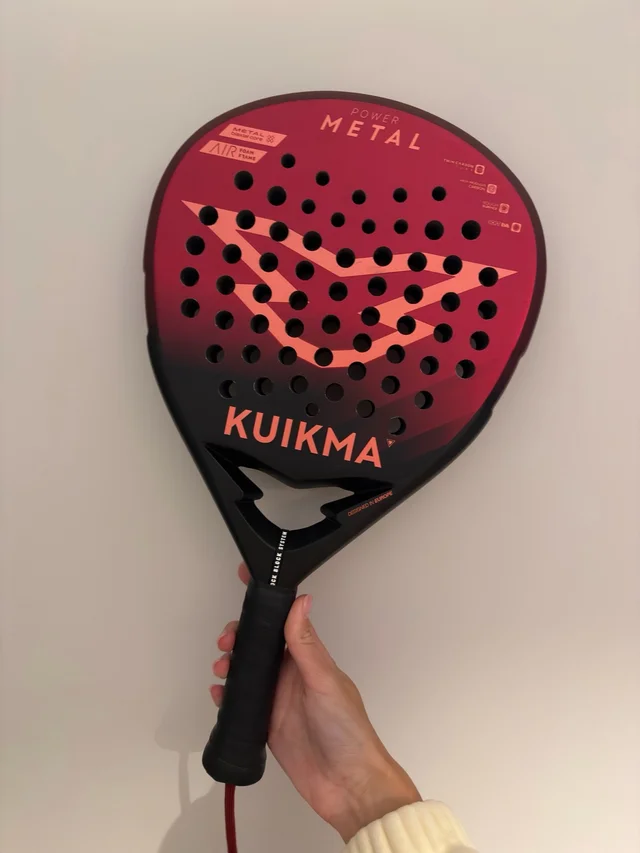
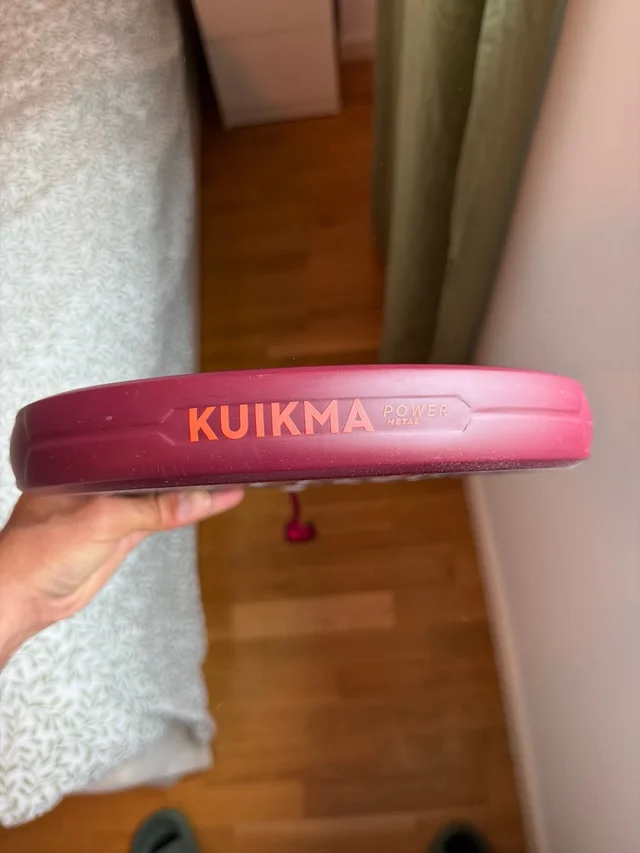
Version and lineup identification
Power Metal is the head-heavy diamond in this Kuikma comparison, aimed at intermediate to advanced players buying primarily for attack. The head-oriented setup gives the layered fiberglass/Metal Biaxial Core face and Soft EVA a clearly attacking role, with the maximum overhead a central attraction.
Useful handling and power accessibility keep the recommendation broader than maximum output alone. Forgiveness and mishit stability are more moderate, however.
Kuikma Power Metal — Technical specifications
Construction and materials
The face uses three fiberglass layers plus one Metal Biaxial Core layer, backed by Soft EVA and a Twin Tube Carbon frame. A rough surface completes the listed construction.
The Metal Biaxial Core name belongs to the face layer, not to a second foam filling. Soft EVA also should not be mistaken for a control-only design: this complete racket remains the power-led diamond in the group.
How heavy the racket feels and where the mass sits.

Balance point is shown from our measurement.
- Balance point27 cm24.5 cmavg 26 cm27.5 cmHead-heavy
- Static weight360–370 g340 gavg 365 g390 g
- Swing weight137.9 kg·cm² estimated110typical 128150
- Twist weight16 kg·cm² estimated11typical 1416
Shape and mould behavior
Power Metal pairs a diamond mould and head-heavy balance with 365 g ±5 g listed weight. The nominal mass is shared with the other Metal formats, but their weight distribution and purpose differ.
The 365 g ±5 g setup remains usefully manageable in this review, despite its head-oriented distribution. That is a reason to judge the whole racket rather than treat head-heavy as a complete description of preparation.
Where this racket sits for stiffness and how easily the face gives power.
Power MetalStiffness, feel, and comfort
Soft EVA and the layered face give the attacking setup reasonably accommodating contact. The feedback stays clear, but comfort is not sacrificed as heavily as in a power-at-any-cost recommendation.
I would still judge this as a complete attacking racket, not assume the Soft EVA name makes every impact equally gentle.
Our scores against every racket we have reviewed.
- Comfort7.5 /100avg 7.3110Near average
- Spin8 /100avg 7.2210Above average
Sweet spot and forgiveness
The diamond face has workable rather than exceptional contact tolerance, so its strongest overhead is not a promise of the same output after a missed centre. I would choose Power Metal for its attacking potential while still treating a repeatable contact point as part of the requirement.
Sweet spot- Core zone 7/10
- Shape Diamond
- Stability 7/10
Approximate high-tolerance zone for this mould and core.
Power and smash behavior
The head-heavy diamond brings a strong ceiling, while the accommodating layered-face/Soft-EVA response also makes useful attacking pace accessible. Its case is therefore broader than one ideal full-power smash.
Smashes, viboras and hard bandejas still reward clean mechanics. The strong accessibility score does not turn passive contact into a full attacking stroke.
Net performance under pace
The head-oriented setup remains manageable enough to organise an attacking volley. I would value that manageable preparation within the attacking game, while keeping the overhead ceiling as the main reason to buy.
It is not necessary to turn a good handling score into a claim of exceptional net dominance.
Off-center stability and torsional resistance
Off-centre support is more modest than clean attacking output or placement, despite the carbon frame. Hard returns, backhand blocks and emergency volleys are the situations to weigh against the appealing ceiling.
The recommendation depends on making good use of the attacking response, not on the racket removing the cost of every mishit.
Practical on-court takeaways
Choose Power Metal for a high attacking ceiling with useful accessibility and handling. Think twice when exceptional forgiveness or unusually strong support on imperfect blocks is the main need: those are not the leading parts of its profile.
Comparison within the Kuikma lineup
Control Metal is the round, handle-balanced choice for defensive control. Hybrid Metal takes a neutral-balance teardrop approach. Both share Power Metal’s 365 g ±5 g listed weight, but not its head-heavy diamond format or maximum-power emphasis.
Control Carbon is a different route to a strong placement-and-power combination, with a lower comfort rating. I would compare the complete response rather than infer the intended game from the names alone.
Lineup comparison
Kuikma Power Metal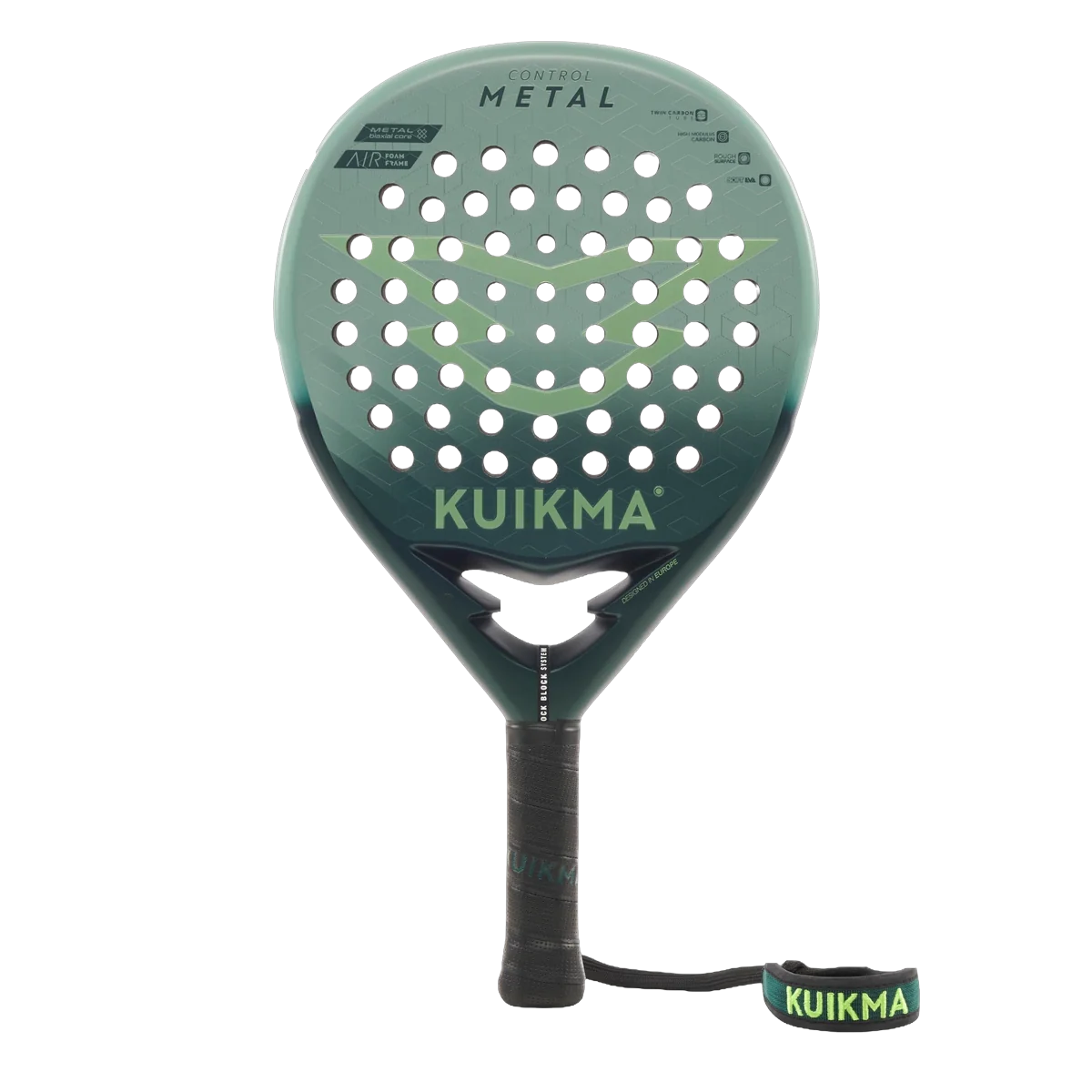 Kuikma Control Metal
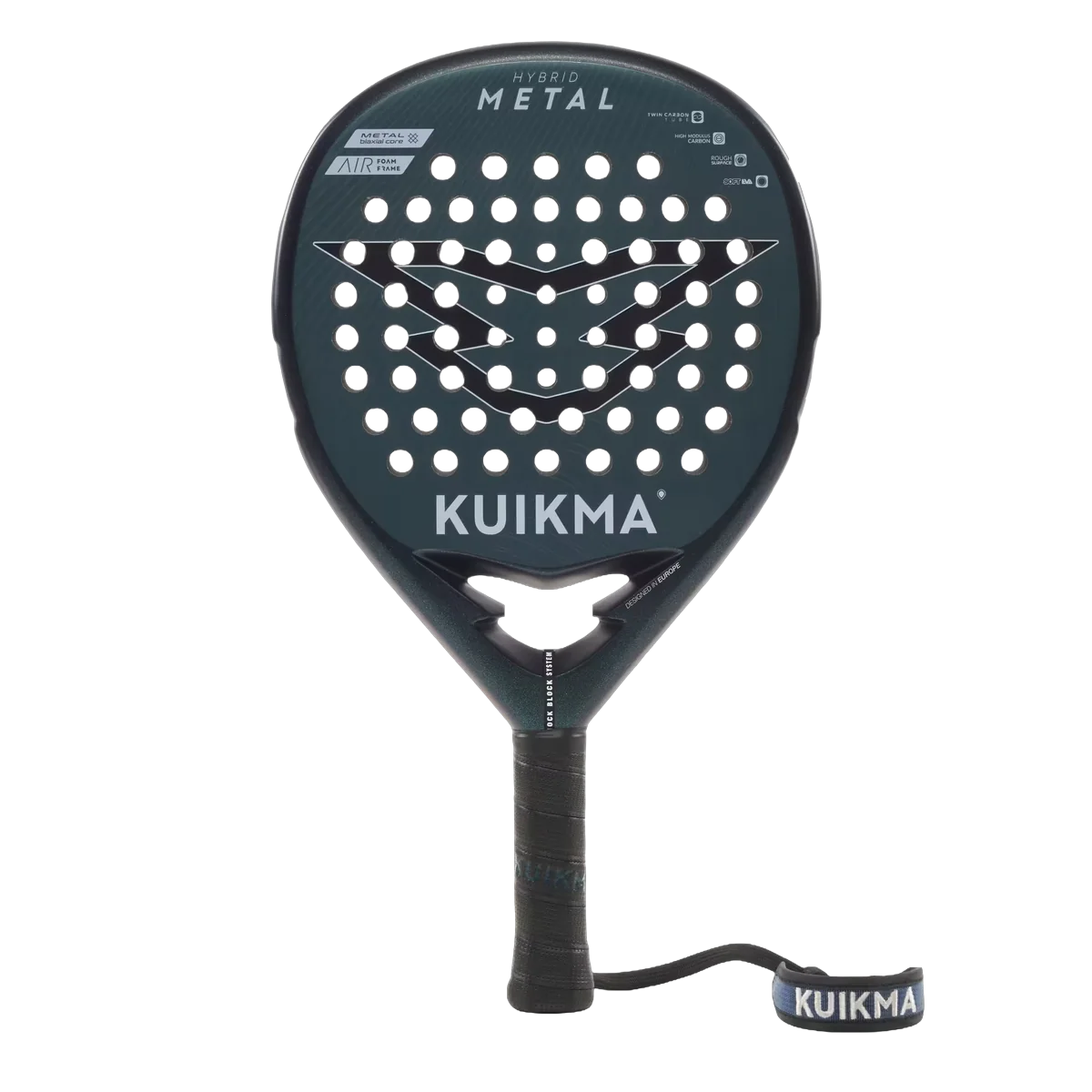 Kuikma Hybrid Metal
Comparison with other brands
Compare Power Metal with similarly weighted, head-heavy attacking diamonds. The question is whether another option offers a more useful balance of comfort and forgiveness, not merely whether it has a higher total score.
Here, the head-oriented diamond and accommodating layered-face/Soft-EVA response give an attacker useful pace with accurate placement. More ordinary support and tolerance on a missed centre remain the limits. The Compare Rackets shortlist provides the corresponding round, teardrop and diamond choices.
Technical positioning
The head-oriented diamond and layered-face/Soft-EVA response make a clear attacking recommendation without giving up useful comfort or defensive depth. The rough face adds spin support, and manageable preparation makes the output usable rather than purely theoretical.
I would choose it when the ceiling matters more than exceptional mishit tolerance. That is the meaningful compromise in this profile.
Solid shape = this racket.Dashed outline = average of every racket we have reviewed.
Kuikma Power Metal
Specifications
- Weight range
- 360–370 g
- Balance
- 27 cm
- Thickness
- 38 mm
- Shape
- Diamond
- Face material
- 3 fiberglass layers + 1 Metal Biaxial Core layer
- Core
- Soft EVA
Common questions
Kuikma Power Metal is best for intermediate to advanced players looking for power performance.
Key listed specs include shape: diamond; weight: 365 g +/-5 g; balance: Head-heavy; face: 3 fiberglass layers + 1 Metal Biaxial Core layer; core: Soft EVA.
Kuikma Power Metal scores 78/100 in the padel.how review model.
Price alert
We check prices when we update our offers. Get one email when a verified price is below your threshold.
Player feedback
Player feedback is separate from our editorial review. Individual votes stay private — only the aggregate is published.
Thank you — your feedback is saved. You can revise it any time with Vote.
No player votes yet.
Questions & answers
No questions yet.