Kuikma Control Metal Review
 Methodology
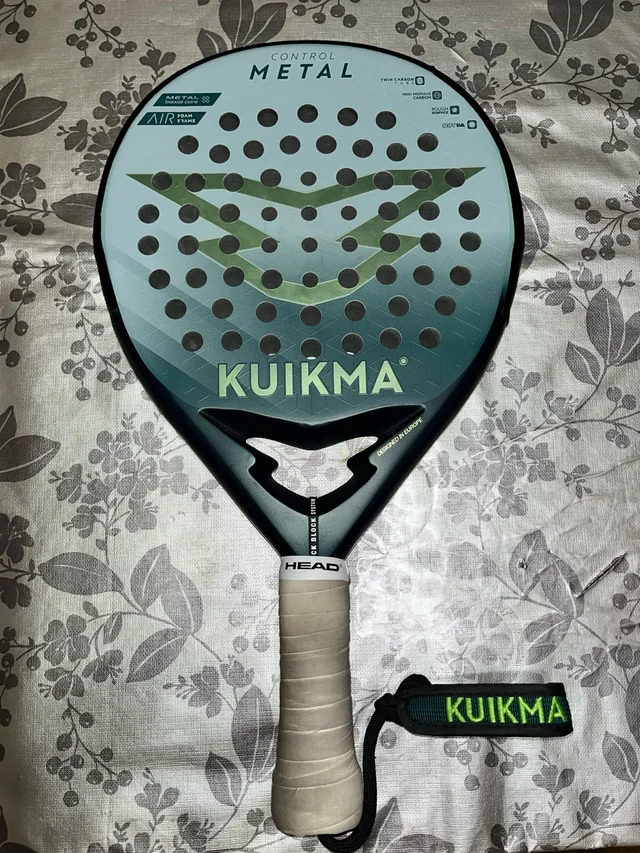
Version and lineup identification
Control Metal is the round, control-led Kuikma for intermediate to advanced players who want placement, defensive depth and comfortable contact. Its round, handle-balanced setup pairs a layered fiberglass/Metal Biaxial Core face with Soft EVA to favour comfortable, repeatable rally contact.
Its appeal is how those qualities work together. It is not the range’s most power-focused choice, and the strong control score should not be read as exceptional forgiveness on every contact.
Kuikma Control Metal — Technical specifications
Construction and materials
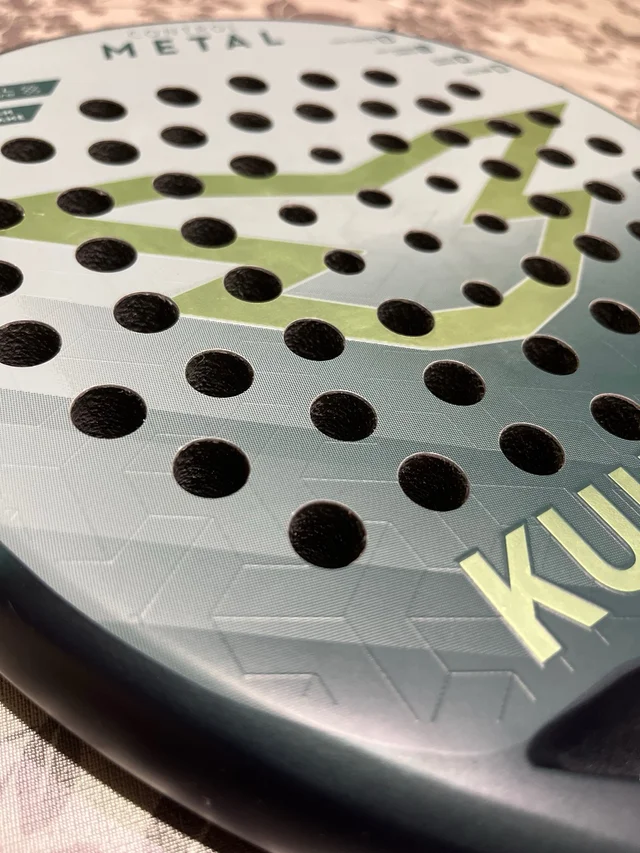
The face uses three fiberglass layers plus one Metal Biaxial Core layer, with Soft EVA behind it and a Twin Tube Carbon frame. The hitting surface is rough.
Metal Biaxial Core is part of the face description here; the foam core is Soft EVA. Keeping those separate makes the construction clearer without attributing the entire comfortable response to one named layer.
How heavy the racket feels and where the mass sits.
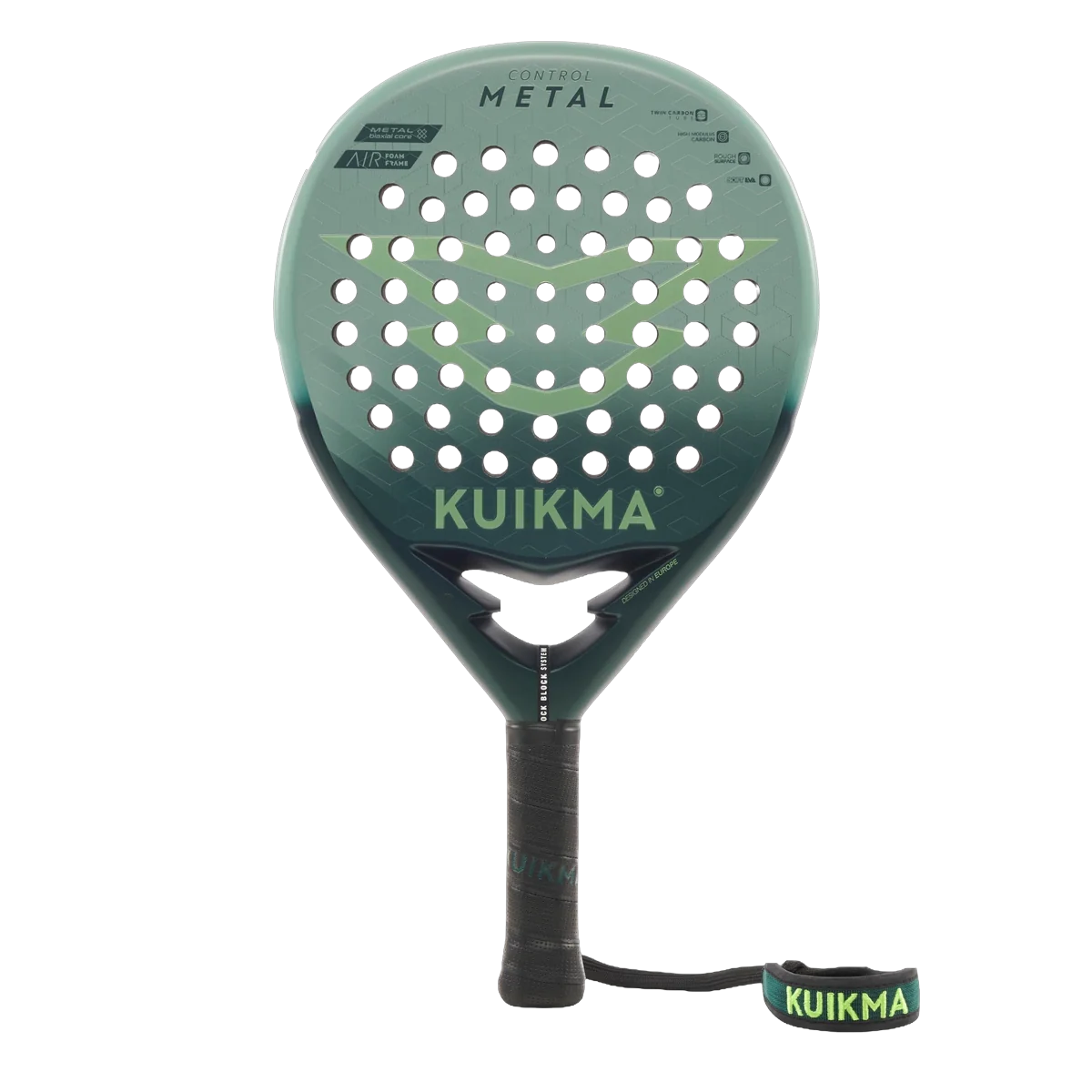
Balance point is shown from our measurement.
- Balance point25.6 cm24.5 cmavg 26 cm27.5 cmNeutral balance
- Static weight360–370 g340 gavg 365 g390 g
- Swing weight124.5 kg·cm² estimated110typical 128150
- Twist weight14.4 kg·cm² estimated11typical 1416
Shape and mould behavior
The round shape, low handle-oriented balance and 365 g ±5 g listed weight describe the intended format. It remains a full-weight racket rather than an ultralight one.
The handle-oriented balance makes the 365 g ±5 g setup usefully manageable to prepare. That matters to the control role: placing the shot starts with getting the face ready, rather than merely producing a precise strike once everything is organised.
Where this racket sits for stiffness and how easily the face gives power.
Control MetalStiffness, feel, and comfort
The Soft EVA and layered fiberglass/Metal Biaxial Core package give comfortable contact a genuine place in the recommendation. The feedback remains clear, but the overall balance is more appealing to a player prioritizing comfortable contact than to one buying purely for maximum output.
Soft EVA describes the core; the recommendation concerns the complete racket’s response.
Our scores against every racket we have reviewed.
- Comfort8 /100avg 7.3110Above average
- Spin8 /100avg 7.2210Above average
Sweet spot and forgiveness
The round face is useful for accurate, repeatable placement, but its hitting margin is not exceptionally generous. The comfortable Soft EVA response should not be confused with preserving the same depth and line after every poorly located contact.
Sweet spot- Core zone 7/10
- Shape Round
- Stability 7/10
Approximate high-tolerance zone for this mould and core.
Power and smash behavior
The accommodating layered-face/Soft-EVA response supplies useful depth without requiring the racket to be a maximum-power specialist. I would value usable depth and well-directed pressure before the largest finish.
For smashes, viboras and hard bandejas, clean mechanics still matter; the Soft EVA label is not a substitute for an organized attacking swing.
Net performance under pace
The handle-oriented setup is more persuasive for getting the face ready than for adding overwhelming weight to the volley. At the net, preparation and placement matter more than forceful authority.
I would choose it for the control game around the exchange rather than expect a quick-feeling setup to make every volley more forceful.
Off-center stability and torsional resistance
The carbon frame does not make the yielding face exceptionally resistant to a hard off-centre strike. Hard returns and hurried blocks remain a meaningful test of contact quality.
That is a separate limitation from its comfortable feel and precise placement on organized strokes.
Practical on-court takeaways
Choose Control Metal when placement, defensive depth and comfort are the priorities. The trade-off is a more moderate attacking ceiling and no standout rating for net performance or mishit stability.
It is a control recommendation with useful handling, not a power racket selected because its total happens to be high.
Comparison within the Kuikma lineup
Hybrid Metal retains the Soft EVA and mixed-face construction but changes to a neutral-balance teardrop. It is the more power-led comparison when you want to move away from Control Metal’s round, handle-balanced format.
Power Metal takes that attacking emphasis to a head-heavy diamond. Control Carbon keeps a round outline but has a markedly lower comfort score and a higher power ceiling. The model names alone do not describe those trade-offs.
Lineup comparison
Kuikma Control Metal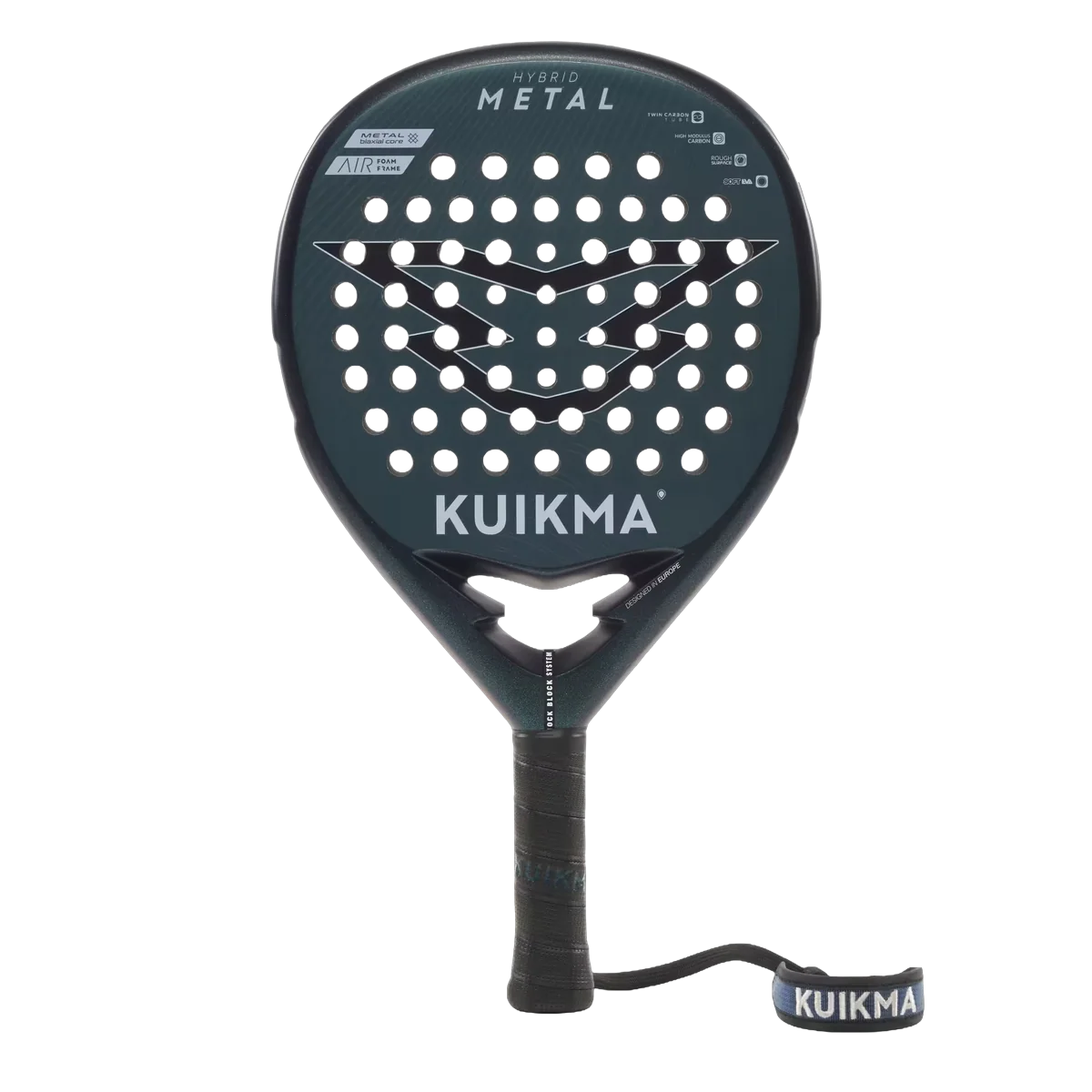 Kuikma Hybrid Metal
 Kuikma Power Metal
Comparison with other brands
Compare Control Metal with similarly balanced round rackets, then separate three priorities: precision, comfort and support for imperfect contact. Its comfortable Soft EVA contact and precise placement do not guarantee the same line from a hard lateral miss.
I would use the Compare Rackets shortlist to decide whether to keep this defensive-control emphasis or exchange some of it for a more attacking format. The comfortable response is worth keeping when it improves ordinary rallies more than a higher attacking ceiling would.
Technical positioning
The round, handle-oriented setup and layered-face/Soft-EVA response favour placement, defensive depth and accommodating contact. Manageable preparation supports those qualities; the limitation is not easy depth but more ordinary net authority and mishit support.
The real limits are more ordinary forgiveness, net performance and stability, plus a lower attacking ceiling than a power specialist. I would keep it on the shortlist when the complete control game matters most.
Solid shape = this racket.Dashed outline = average of every racket we have reviewed.
Kuikma Control Metal
Specifications
- Weight range
- 360–370 g
- Balance
- 25.6 cm
- Thickness
- 38 mm
- Shape
- Round
- Face material
- 3 fiberglass layers + 1 Metal Biaxial Core layer
- Core
- Soft EVA
Common questions
Kuikma Control Metal is best for intermediate to advanced players looking for control performance.
Key listed specs include shape: round; weight: 365 g +/-5 g; balance: Low / handle balance; face: 3 fiberglass layers + 1 Metal Biaxial Core layer; core: Soft EVA.
Kuikma Control Metal scores 78/100 in the padel.how review model.
Price alert
We check prices when we update our offers. Get one email when a verified price is below your threshold.
Player feedback
Player feedback is separate from our editorial review. Individual votes stay private — only the aggregate is published.
Thank you — your feedback is saved. You can revise it any time with Vote.
No player votes yet.
Questions & answers
No questions yet.