How to Choose Padel Shoes
For a deeper fit check, use Shoes: body and court fit after you understand the basic shoe criteria.
If you are building a first setup from zero, the under-$150 starter set guide shows where shoes fit in the budget. Padel starter set under $150.
Choosing padel shoes is not about comfort alone. The right footwear protects your joints, supports lateral movement, and allows you to move confidently on a surface that behaves very differently from a running track or a tennis hard court. Many injuries in padel happen not because of technique, but because players wear the wrong shoes.
Why Padel Shoes Are Different from Regular Sports Shoes
Padel movement is compact, explosive, and repetitive. You rarely sprint in a straight line. Instead, you constantly adjust your position with small side steps, quick recoveries, and short accelerations toward the ball. This puts very specific stress on the feet and joints.
Regular sports shoes are not built for this. Gym shoes focus on cushioning. Running shoes prioritize forward motion. Even casual court shoes often lack the lateral structure needed for padel. On court, this translates into micro-instability: the foot shifts slightly inside the shoe, the sole twists more than it should, and over time your body compensates in unhealthy ways.
Padel shoes are designed to control these movements. Their structure limits unwanted foot rotation while still allowing natural motion, especially during defensive transitions and net play.
Regular sports shoes are not built for this. Gym shoes focus on cushioning. Running shoes prioritize forward motion. Even casual court shoes often lack the lateral structure needed for padel. On court, this translates into micro-instability: the foot shifts slightly inside the shoe, the sole twists more than it should, and over time your body compensates in unhealthy ways.
Padel shoes are designed to control these movements. Their structure limits unwanted foot rotation while still allowing natural motion, especially during defensive transitions and net play.
Weight, Protection, and Stability
Light shoes feel fast. Heavy shoes feel stable. In padel, you need both — but in the right proportion.
A shoe that is too light often sacrifices structure. You might feel quick in the first minutes, but over a full match the lack of support becomes obvious, especially during lateral stops. On the other hand, overly rigid or heavy shoes slow down recovery steps and make quick net adjustments harder.
What you are looking for is controlled lightness. The shoe should feel responsive without collapsing when you push sideways. When you plant your foot to change direction, the upper should hold your foot in place instead of stretching or folding.
A shoe that is too light often sacrifices structure. You might feel quick in the first minutes, but over a full match the lack of support becomes obvious, especially during lateral stops. On the other hand, overly rigid or heavy shoes slow down recovery steps and make quick net adjustments harder.
What you are looking for is controlled lightness. The shoe should feel responsive without collapsing when you push sideways. When you plant your foot to change direction, the upper should hold your foot in place instead of stretching or folding.
The Sole and How It Interacts with the Court
The sole determines how safe and confident your movement feels. Most padel courts use artificial turf with sand, but the amount of sand varies a lot from club to club.
On sand-heavy courts, too much grip can actually be a problem. Your foot sticks when it should slide slightly, increasing stress on knees and ankles. On cleaner courts with less sand, insufficient grip leads to hesitation and late positioning.
Padel soles are designed to find a middle ground. They allow controlled sliding while maintaining push-off traction. This balance is something generic sports shoes simply don’t offer.
On sand-heavy courts, too much grip can actually be a problem. Your foot sticks when it should slide slightly, increasing stress on knees and ankles. On cleaner courts with less sand, insufficient grip leads to hesitation and late positioning.
Padel soles are designed to find a middle ground. They allow controlled sliding while maintaining push-off traction. This balance is something generic sports shoes simply don’t offer.
Ventilation and Heat Management
Padel shoes are often worn for long sessions, sometimes multiple matches in a row. Heat buildup inside the shoe affects comfort, grip, and even foot stability.
Good padel shoes include breathable zones, often in the midfoot or upper areas. This helps manage sweat and prevents the foot from sliding internally — a detail many players underestimate until they experience it.
Poor ventilation doesn’t just feel uncomfortable; it reduces control.
Good padel shoes include breathable zones, often in the midfoot or upper areas. This helps manage sweat and prevents the foot from sliding internally — a detail many players underestimate until they experience it.
Poor ventilation doesn’t just feel uncomfortable; it reduces control.
Why You Should Never Use Running Shoes for Padel
Running shoes are built for one direction: forward. Their soles are curved, their cushioning is soft, and their uppers allow flexibility that works against you in padel.
When you change direction laterally in running shoes, the foot often rolls over the sole edge. This is one of the most common causes of ankle injuries among new padel players. Comfort does not equal safety.
No matter how good they feel off court, running shoes should never be used for padel.
When you change direction laterally in running shoes, the foot often rolls over the sole edge. This is one of the most common causes of ankle injuries among new padel players. Comfort does not equal safety.
No matter how good they feel off court, running shoes should never be used for padel.
Can You Use Tennis Shoes for Padel?
Yes — but with conditions.
Clay court tennis shoes are the closest alternative to padel shoes. They offer lateral stability and a sole pattern that works reasonably well on artificial turf. For beginners or occasional players, this can be a practical temporary solution.
However, tennis shoes are designed for a larger court and different movement patterns. As you play more padel, the differences become noticeable. Dedicated padel shoes simply feel more natural once your movement improves.
Clay court tennis shoes are the closest alternative to padel shoes. They offer lateral stability and a sole pattern that works reasonably well on artificial turf. For beginners or occasional players, this can be a practical temporary solution.
However, tennis shoes are designed for a larger court and different movement patterns. As you play more padel, the differences become noticeable. Dedicated padel shoes simply feel more natural once your movement improves.
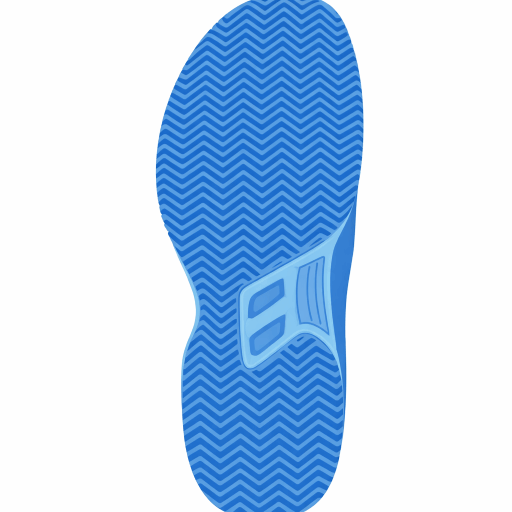
Padel shoe sole with herringbone tread pattern
Fit Matters More Than Size
Many players choose shoes by size alone and ignore fit. This is a mistake.
Padel shoes must fit your foot shape. A shoe that is technically the correct size but too narrow, too shallow, or too loose in the heel will cause discomfort and instability. During lateral movement, even small internal shifts create friction and fatigue.
Some brands offer wide-fit models. If you have a broader foot, this matters more than brand or design. Always test shoes with side steps, not just walking.
Padel shoes must fit your foot shape. A shoe that is technically the correct size but too narrow, too shallow, or too loose in the heel will cause discomfort and instability. During lateral movement, even small internal shifts create friction and fatigue.
Some brands offer wide-fit models. If you have a broader foot, this matters more than brand or design. Always test shoes with side steps, not just walking.
Cushioning and Injury Prevention
Padel involves constant micro-impacts. Jumps, quick stops, and repeated split steps add up over time. Shoes need enough cushioning to absorb this stress without disconnecting you from the court.
Overly soft shoes reduce feedback and control. Extremely firm shoes transmit too much vibration. The goal is a balanced midsole that protects joints while keeping movement precise.
If your knees or lower back start feeling sore without a clear technical reason, footwear is often part of the problem.
Overly soft shoes reduce feedback and control. Extremely firm shoes transmit too much vibration. The goal is a balanced midsole that protects joints while keeping movement precise.
If your knees or lower back start feeling sore without a clear technical reason, footwear is often part of the problem.
When Should You Replace Your Padel Shoes?
Shoes don’t fail dramatically. They slowly lose their effectiveness.
Even if the outsole still looks acceptable, the cushioning and stability degrade. Most players notice this as increased fatigue, heavier landings, or subtle instability — long before visible damage appears.
As a general rule, regular players should expect to replace padel shoes every 9 to 12 months.
Even if the outsole still looks acceptable, the cushioning and stability degrade. Most players notice this as increased fatigue, heavier landings, or subtle instability — long before visible damage appears.
As a general rule, regular players should expect to replace padel shoes every 9 to 12 months.
FAQ
Yes. Padel-specific shoes are designed to support lateral movement, controlled sliding, and joint protection on artificial turf. Using general sports shoes significantly increases injury risk.
Beginners can use clay court tennis shoes temporarily. However, padel shoes provide better stability and comfort as playing frequency increases.
Light shoes improve speed, but only if they maintain structural support. Excessively light shoes often sacrifice stability.
They should feel snug without pressure points. The foot should remain stable inside the shoe during lateral movement, without sliding.
For regular players, most padel shoes last between 9 and 12 months before cushioning and stability noticeably degrade.
If you are building your first full setup, start with the padel equipment checklist and then come back to shoes.