Varlion Maxima Prisma Orquidea 2025/2026 Review
 Methodology
The Varlion Maxima Prisma Orquidea 2025/2026 is the light, hard-response Maxima in the Pro Summum Prisma family. It combines a 335-350 g range, medium balance, a 14.5 cm handle, Carbon 7 Rhombus Alu, a rigid Wings Diffuser and ErgoSlice relief.
Its defining strength is speed without giving up technical precision. The low static mass and Prisma edge let the head arrive early, while the Maxima outline keeps more usable contact area than Bourne. The long handle and raised texture make spin-led overheads, two-handed backhands and compact net acceleration central parts of the design.
The trade-off is that light does not mean soft. Hard Touch EVA and the Carbon 7 Rhombus Alu laminate give a hard, direct strike. The racket rewards centred, organised contact and can feel sharp on lateral misses. It fits an advanced player seeking a quick, connected all-court tool, not a player prioritising plush impact or automatic depth.
Version and lineup identification
This review covers the 2025/2026 Maxima Prisma Orquidea, product reference RACK250017015 and EAN 8401012290076. The exact model uses a 335-350 g range, medium balance, 14.5 cm handle and Carbon 7 Rhombus Alu face.
It is separate from Maxima Prisma Carbon Soft, which is 345-360 g and uses Carrera 20. The extra mass of Carbon Soft favours stability and finishing inertia; Orquidea is the faster option. It is also distinct from Maxima Carbon Rose, whose Medium Touch construction is more progressive and comfort-oriented.
The older 2024/2025 Maxima Orquidea uses different weight, handle, material and core specifications and should be treated as a separate generation.
Varlion Maxima Prisma Orquidea — Technical specifications
Construction and materials
A bidirectional carbon tubular forms the structural base. The angular Prisma perimeter reduces frontal area and accepts the adhesive AB protector, while the rigid Wings Diffuser braces the heart during rapid acceleration and central impact.
The face uses Carbon 7 Rhombus Alu with fiberglass in the laminate over Hard Touch EVA. That combination keeps the strike firm and connected. VAR-FLEX epoxy binds the layers, while SOFTCOLOR integrates the core colour visually; the colour treatment is not the reason the racket feels hard. Its quick repositioning comes from the complete light, medium-balanced setup, not from the Alu label alone.
The 14.5 cm handle is a meaningful performance feature rather than a cosmetic detail. It increases reach, provides practical room for a two-handed backhand and lengthens the lever for viboras and kick smashes.
How heavy the racket feels and where the mass sits.
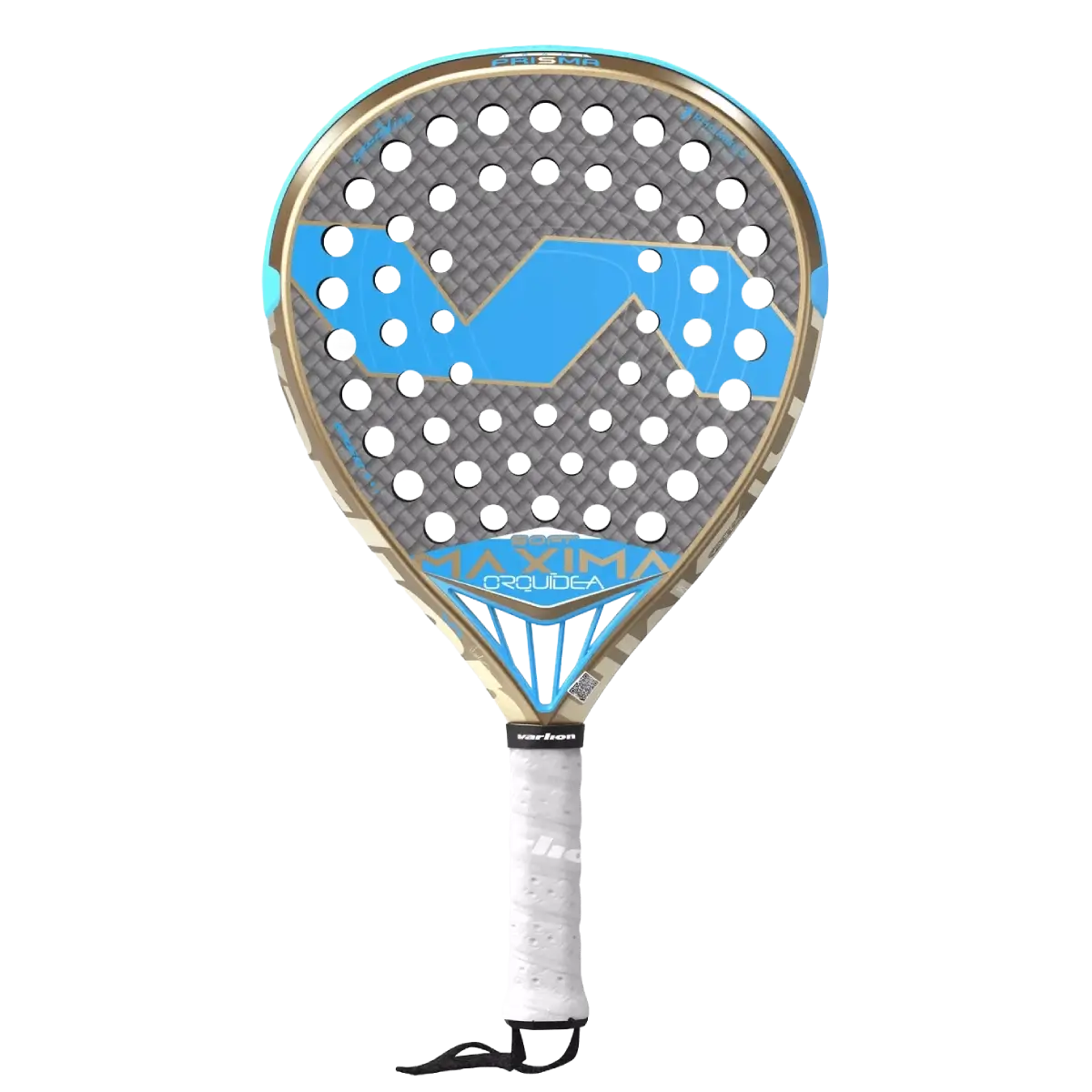
Balance point is shown from the available source evidence.
- Balance point≈26 cm24.5 cmavg 26 cm27.5 cmNeutral balance
- Static weight335–350 g340 gavg 365 g390 g
- Swing weight120.4 kg·cm² estimated110typical 128150
- Twist weight13.9 kg·cm² estimated11typical 1416
Shape and mould behavior
Maxima blends round and teardrop behavior. The shoulders are broader than Bourne, and the preferred contact band runs from the centre into the upper-middle face. Medium balance keeps the racket neutral enough for defense while retaining some head presence through the strike.
At 335-350 g, the mould changes direction quickly. This is useful in body exchanges and when moving from a defensive block into an attacking preparation. The long handle increases the effective pivot, so compact preparation remains more efficient than a wide late swing.
Where this racket sits for stiffness and how easily the face gives power.
Maxima Prisma OrquideaStiffness, feel and comfort
Hard Touch EVA and the reinforced Carbon 7 Rhombus Alu face give crisp, connected impact with short dwell. The racket communicates the centre clearly and keeps directional response clean when the player accelerates through the ball.
Low static mass helps repeated preparation, but it does not remove impact firmness. When contact drifts toward the lateral frame, the face becomes sharper and the lighter head absorbs less incoming pace. A relaxed hand and clean contact matter more than on a medium or soft Maxima.
Players should not select the Orquidea version expecting a comfort model. Its practical advantage is fast handling with hard precision, not a plush strike.
Our scores against every racket we have reviewed.
- Comfort6 /100avg 7.3110Below average
- Spin8.5 /100avg 7.2210Above average
Sweet spot and forgiveness
The sweet spot is medium-sized and centred slightly above the geometric middle. The Maxima shoulders and progressive Ergoholes pattern create more usable vertical margin than a full diamond.
Central and upper-middle contact retain good direction. Very low contact loses depth because the core is hard, while lateral misses lose stability because the head is light. Forgiveness is therefore functional for an advanced player but not broad enough to disguise late technique.
Sweet spot- Core zone 7.5/10
- Shape Teardrop / Maxima hybrid
- Stability 7/10
Approximate high-tolerance zone for this mould and core.
Power and smash behavior
Power comes primarily from acceleration, lever length and clean timing. The 14.5 cm handle and hard face reward a fast swing, especially on viboras and kick smashes where the player can use the outside of the ball.
Flat-smash output is strong for the weight class, but maximum inertia remains below Maxima Prisma Carbon Soft and the Bourne attack models. The racket is better at creating head speed than carrying mass through a slow or imperfect contact.
Net performance under pace
At the net, the light head and Prisma edge recover quickly after the first volley. The rigid diffuser and hard core give punch volleys a direct trajectory, and the Maxima shoulders provide reasonable margin on central-to-upper contact.
Against heavy incoming pace, the player must meet the ball in front. Passive late blocks expose the reduced mass and lose more depth than on a 355-370 g racket. Fast hands are rewarded; passive stability is not the main strength.
Spin generation
ErgoSlice uses raised contour lines to increase practical grip during a brushing action. The effect combines with the long handle and low static weight, which make it easier to create racket-head speed.
Viboras, sliced volleys and kick smashes are the strongest applications. The surface supports technique but does not replace it: the hard face still needs a clean brushing path rather than a slow open-face push.
Defensive output and depth
Defense benefits from the 335-350 g range and medium balance. The racket gets under low balls quickly, and the Maxima outline is more manageable near the glass than a Bourne diamond.
The limitation appears on emergency depth. Hard EVA provides less automatic release at low swing speed, so short lobs and late resets require active leg drive and a positive contact. Players who want the core to supply depth should choose a more progressive Maxima.
Off-center stability and torsional resistance
The carbon tubular, Prisma rib and rigid diffuser keep the central structure controlled. Upper-middle contact also remains productive, which supports the intended all-court role.
The outer lateral zones are less stable. The light head carries limited resistance against twisting, and hard impact makes the loss of centre more noticeable. Stability is adequate for fast advanced play, not a reason to choose this model over heavier Prisma options.
Practical on-court takeaways
- The 335-350 g range makes this one of Varlion's quickest adult performance rackets. • Hard Touch EVA and the carbon laminate remain firm; light weight should not be confused with soft impact. • The 14.5 cm handle materially improves reach, two-handed space and spin leverage. • Central volleys and overhead acceleration are stronger than passive blocking and emergency depth. • Choose it for speed, precision and spin; choose a heavier Maxima for stability or Carbon Rose for comfort.
Comparison within the Varlion lineup
Maxima Prisma Carbon Soft: Carbon Soft uses Carrera 20 and spans 345-360 g, against Orquidea’s 335-350 g. The ranges overlap, so there is no fixed mass difference between all units. Carbon Soft remains the stronger choice here for central stability, punch and finishing substance; Orquidea prioritises repeated transitions and late acceleration.
Maxima Carbon Rose: Carbon Rose uses Medium Touch and a softer heart response. It gives more progressive depth and comfort. Orquidea feels harder, sharper and more technically connected, with the aerodynamic Prisma package.
Maxima CUBE Elbowcare S: Both are classified hard, but CUBE S is a heavier temperature-specific flagship. CUBE offers more resistance and high-speed stability; Orquidea reduces static load and moves faster.
Bourne Prisma Carbon Soft: Bourne shifts the preferred contact point upward and creates more natural smash leverage. Maxima Orquidea offers a broader all-court window and more defensive mobility.
Lineup comparison
Varlion Maxima Prisma Orquidea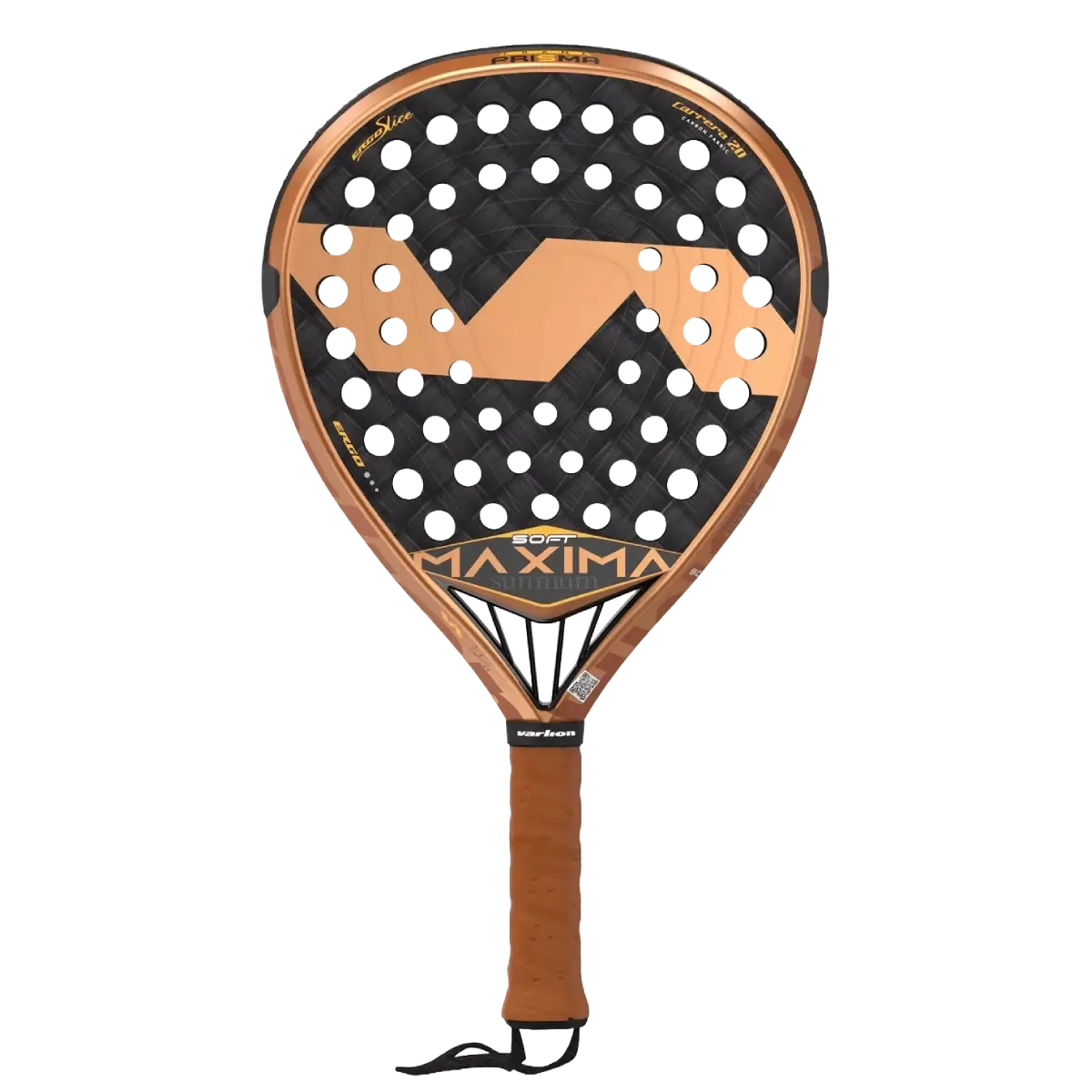 Varlion Maxima Prisma Carbon Soft
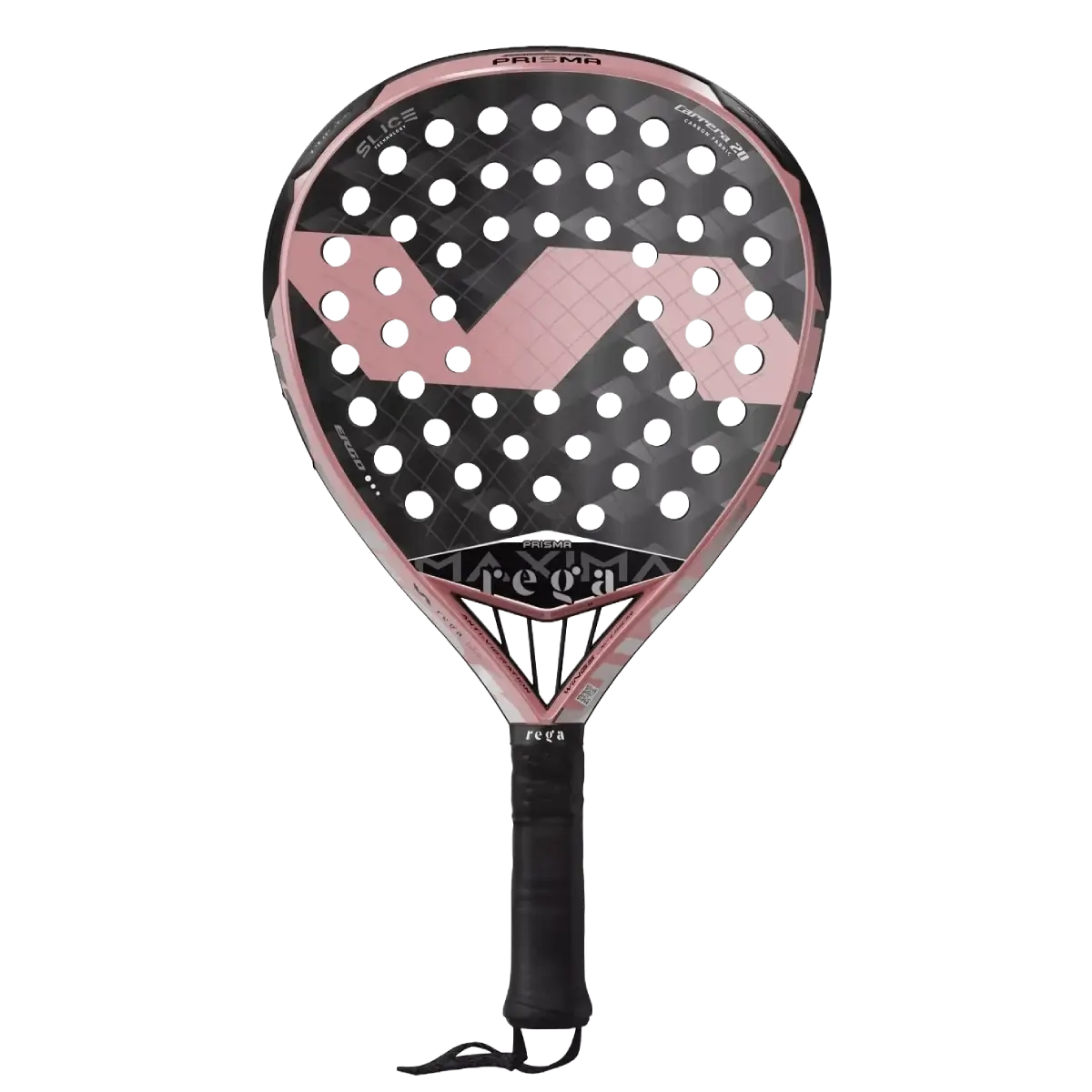 Varlion Maxima Carbon Rose
Comparison with other brands
SIUX Electra STUPA PRO 2026 Shadow Red: Both have a hard, direct response. SIUX carries more mass and head presence, giving stronger high-speed stability and attack. Varlion is quicker, longer-handled and easier to reposition.
NOX AT10 Luxury Genius 12K Alum XTREM 2026: NOX is 360-375 g and hard in response. It offers more mass-based stability and a calmer full-match platform. Orquidea gives faster preparation, a longer handle and a crisper low-mass response.
Oxdog Ultimate Pro Light 2026: Oxdog is a light hard diamond with adjustable head-heavy behavior. It is more attack-led. Varlion's Maxima shape and medium balance create the broader control-power compromise.
76VarlionVarlion Maxima Prisma OrquideaTeardrop / Maxima hybridShape335–350 gWeight range≈26 cmBalance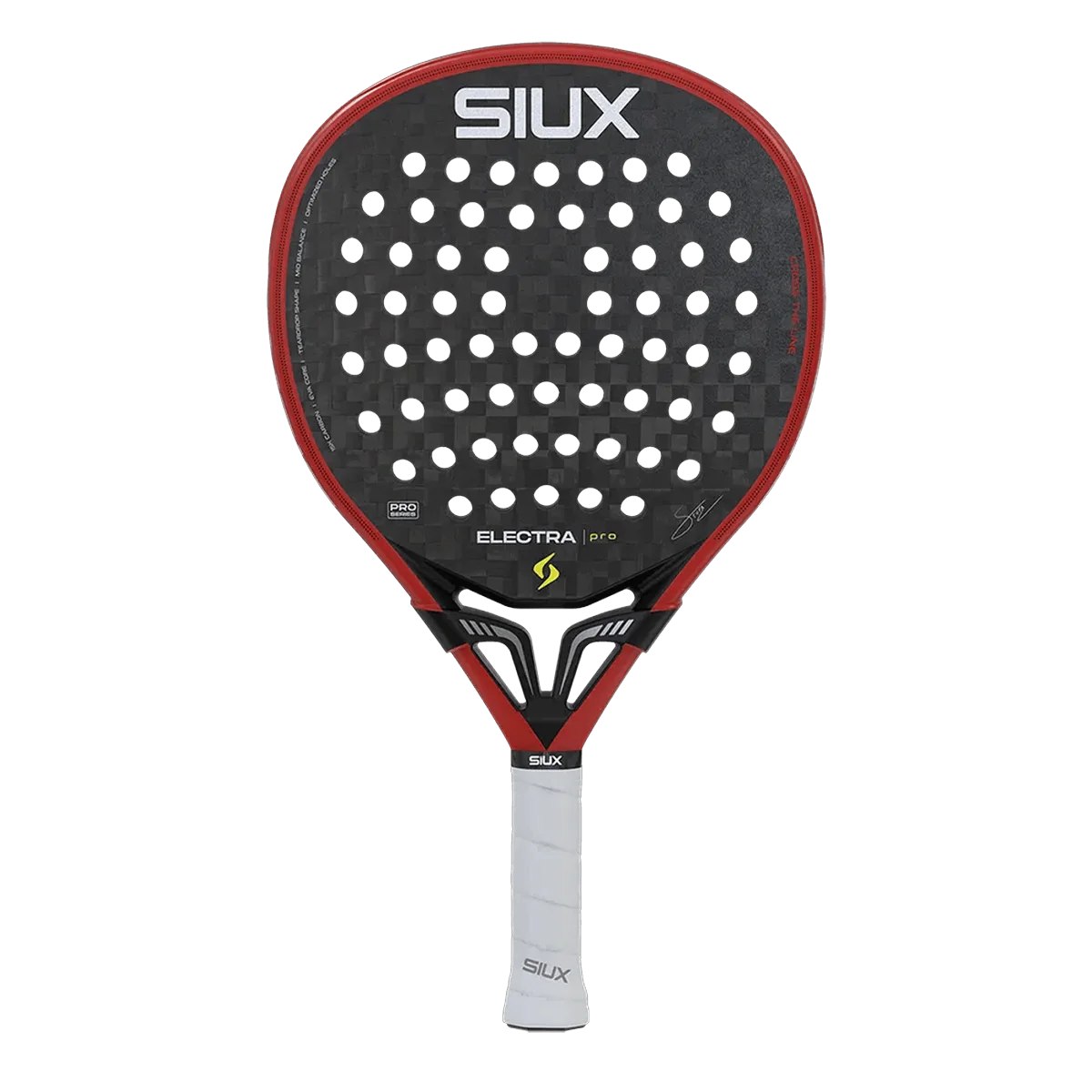 84SiuxSIUX Electra STUPA PRO 2026 Shadow RedTeardropShape355–375 gWeight range26.6–26.7 cmBalance
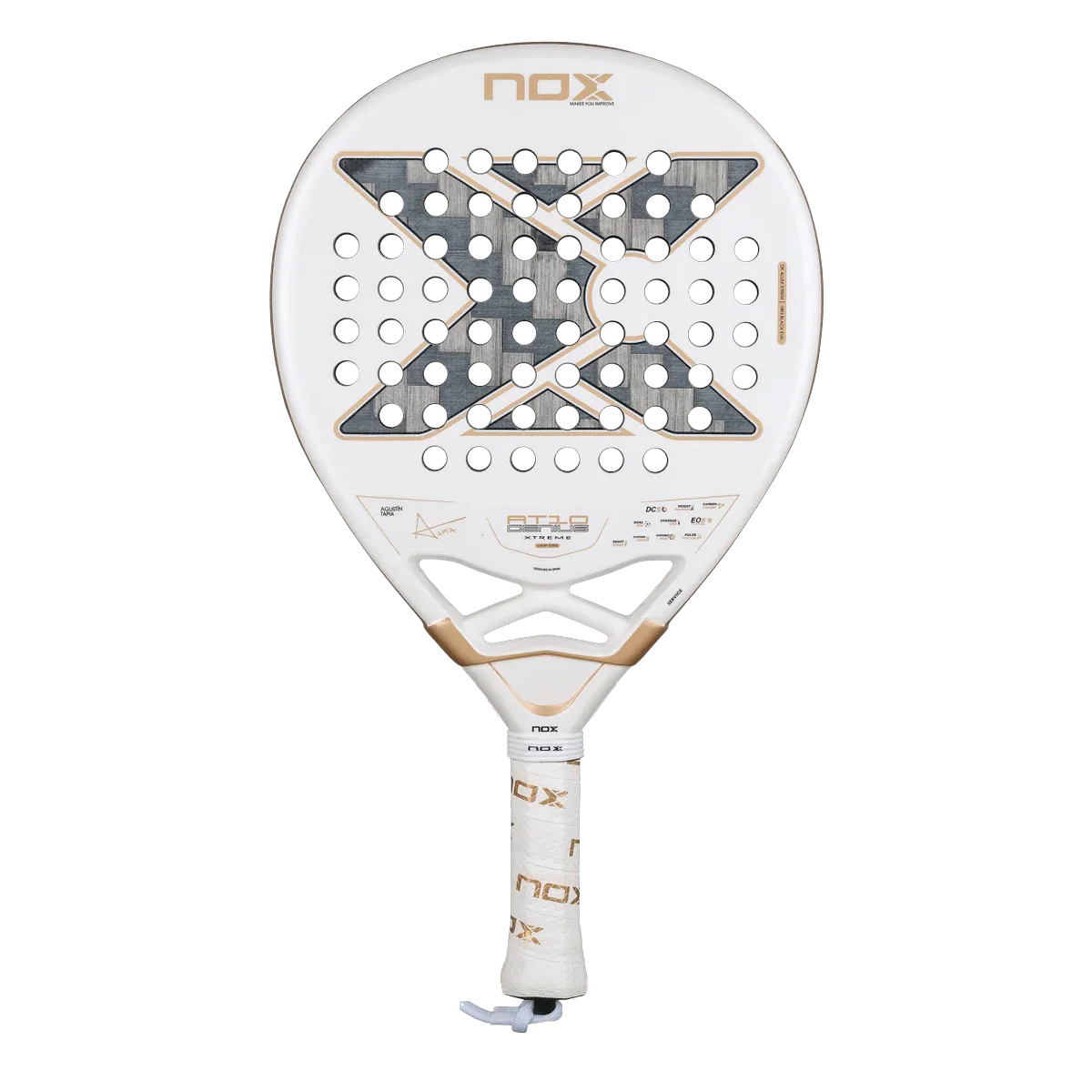 77NoxNOX AT10 Luxury Genius 12K Alum XTREM 2026TeardropShape360–375 gWeight range25.2–25.9 cmBalance
Technical positioning and fit
Best for: advanced all-court players, fast-handed net players, spin-oriented overhead users and players who need 14.5 cm of handle space.
Choose it if: you want low static weight, hard directional response and rapid head acceleration without moving to a full diamond.
Think twice if: you want soft impact, passive defensive depth or high torsional stability from the outer face.
Not best for: beginners, comfort-first players and players who routinely meet the ball late near the lateral frame.
Solid shape = this racket.Dashed outline = average of every racket we have reviewed.
Varlion Maxima Prisma Orquidea
Specifications
- Weight range
- 335–350 g
- Balance
- ≈26 cm
- Thickness
- 38 mm
- Shape
- Teardrop / Maxima hybrid
- Face material
- Carbon 7 Rhombus Alu with fiberglass in the laminate
- Core
- Hard Touch EVA
Common questions
It is a 2025/2026 light Maxima hybrid for advanced and professional all-court players. It uses a 335-350 g range, medium balance, Carbon 7 Rhombus Alu, a 14.5 cm handle, Prisma frame and rigid diffuser.
The balance class is Medium. No exact balance point in centimetres is available for this model.
It feels hard. Hard Touch EVA and the Carbon 7 Rhombus Alu laminate produce crisp, direct contact with less dwell and cushioning than a Medium Touch Maxima.
Yes for an adult performance racket. The 335-350 g range and Prisma edge make it fast through transitions, although the 14.5 cm handle still rewards compact preparation.
It creates good acceleration-based power through the hard face and long handle. Its maximum inertia is lower than heavier Maxima Prisma Carbon Soft and Bourne models.
Orquidea is specified at 335-350 g and Carbon Soft at 345-360 g. The ranges overlap, but their roles remain distinct: Orquidea favours quicker handling, while the Carrera 20 Carbon Soft has more central stability and finishing substance. Orquidea is not the softer option; its Hard Touch construction remains firm.
Choose it if you are an advanced player seeking a fast, long-handled racket with hard precision and strong spin. Avoid it if plush impact, automatic depth or maximum edge stability is the priority.
Price alert
We check prices when we update our offers. Get one email when a verified price is below your threshold.
Player feedback
Player feedback is separate from our editorial review. Individual votes stay private — only the aggregate is published.
Thank you — your feedback is saved. You can revise it any time with Vote.
No player votes yet.
Questions & answers
No questions yet.