Royal Padel Whip Light 2026 Review
 Methodology
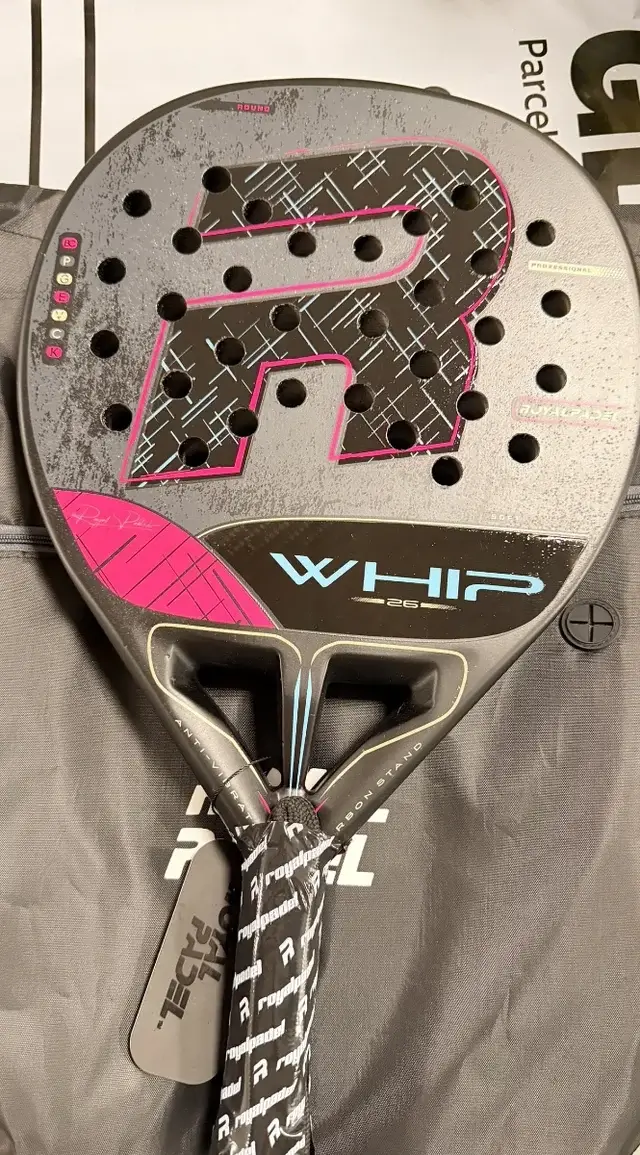
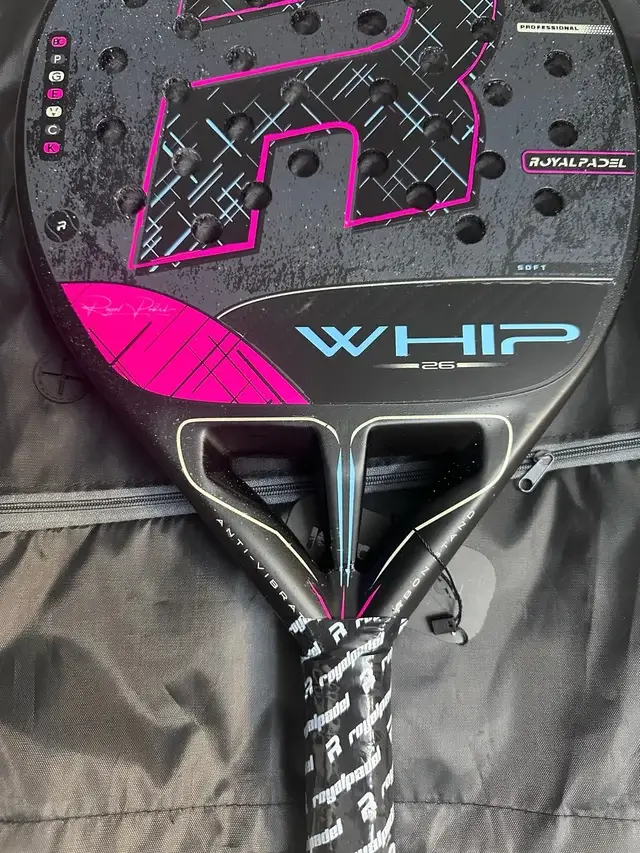
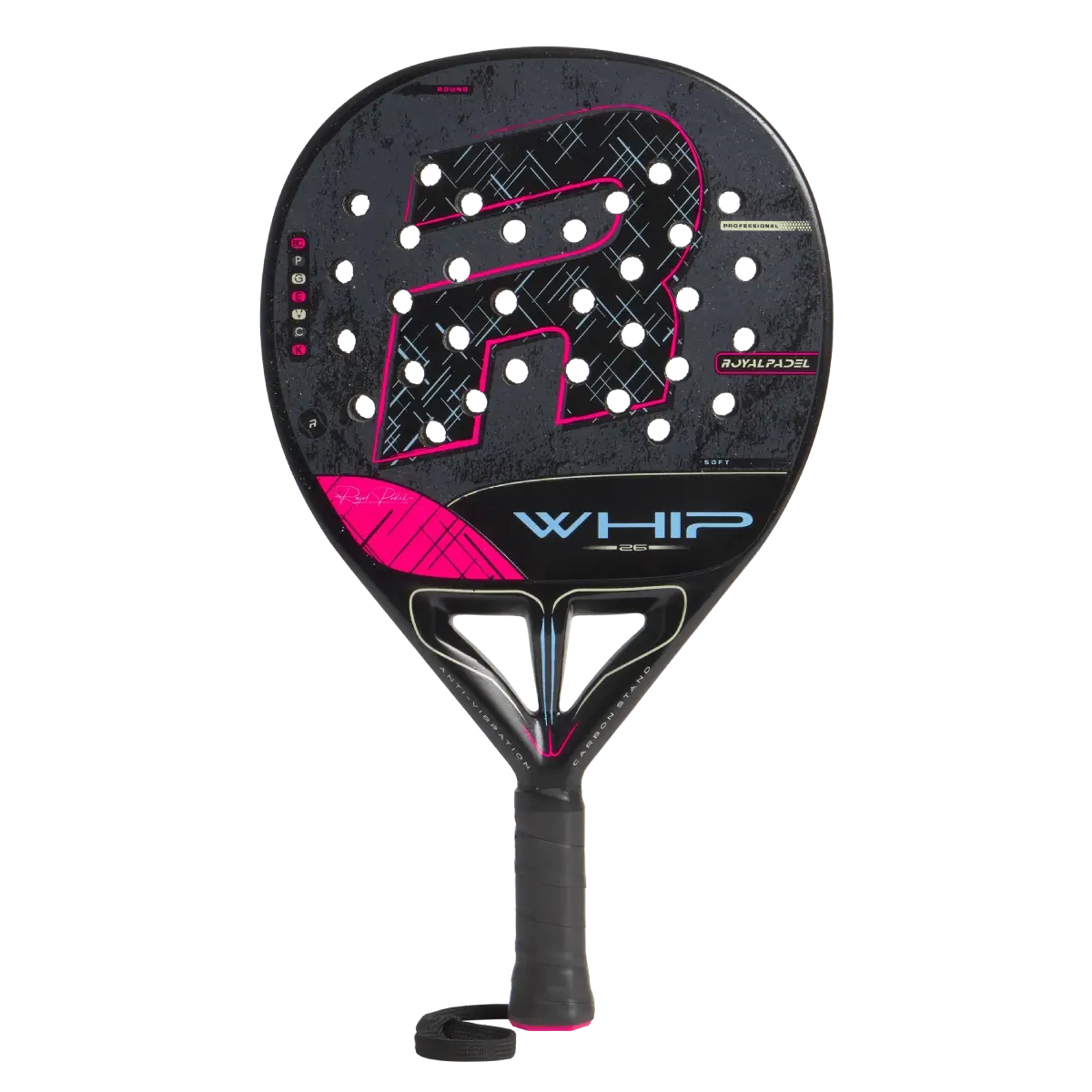
The Royal Padel Whip Light 2026 is a 345-365 g, low-balance Round racket designed for control, fast preparation and very soft contact. Its Fiber Tech fiberglass face, soft high-recovery polyethylene core and Shock Absorption system create a muted response that is easy to manage in defense and during long exchanges.
Its strongest qualities are maneuverability, control, sweet-spot usability and comfort. The 355 g midpoint changes direction quickly, and the broad central window gives the player time to block, reset or lift the ball without a long swing.
The trade-off is structural weight. Against heavy incoming pace, the Light moves more than the full-weight Polietileno, and it cannot load a punch volley or flat smash with the same mass. It is a highly accessible control specialist rather than an attacking all-rounder.
Version and lineup identification
This review covers the Royal Padel Whip Light 2026, reference RPWHLIGHT26 and EAN 8436614013570. The exact model is Round, Low-balanced, 345-365 g and 38 mm, with Fiber Tech fiberglass and soft high-recovery polyethylene.
Its 2026 updates include an optimized hole distribution designed to preserve a broad sweet spot and DMND Spin Rough, a raised diamond-pattern texture. These changes support the existing lightweight comfort-control role rather than turning the racket into an attacking model.
Whip Polietileno 2026 is the separate full-weight version at 360-380 g. Whip Woman 2025 and earlier Woman models belong to the lightweight lineage but remain previous-year identities; they are not the same technical version as RPWHLIGHT26.
Royal Padel Whip Light 2026 — Technical specifications
Construction and materials
Two layers of aluminized Fiber Tech fiberglass form the face. The flexible layup bends more readily than a rigid carbon face, increasing dwell time and reducing the sharpness of the first rebound.
The core uses soft high-recovery polyethylene. It compresses deeply, absorbs part of the incoming pace and returns the ball progressively. At compact swing speed, that provides easy depth and a calm launch. At full speed, part of the player's acceleration is absorbed rather than converted into maximum output.
A bidirectional fiberglass tubular frame with carbon reinforcements supplies structure around the light platform. Shock Absorption is integrated in the open heart, while DMND Spin Rough and the optimized hole distribution support grip and a broad contact zone. The complete system remains extremely soft despite the carbon reinforcement.
How heavy the racket feels and where the mass sits.
Balance point is shown from the available source evidence.
- Balance point≈25.2 cm24.5 cmavg 26 cm27.5 cmHead-light
- Static weight345–365 g340 gavg 365 g390 g
- Swing weight117.3 kg·cm² estimated110typical 128150
- Twist weight13.6 kg·cm² estimated11typical 1416
Shape and mould behavior
The Round mould places the preferred contact zone centrally and keeps the upper face from dominating the swing. Low balance further reduces head presence, so the racket comes through late defensive contacts and fast net exchanges with little effort.
At a 355 g midpoint, the Light is materially quicker than the full-weight Polietileno. It is easy to stop, restart and change direction after the glass or during repeated volleys.
The same qualities reduce leverage. The head does not carry enough momentum to create a heavy ball by itself, and the player must generate speed through technique when trying to finish overhead.
Where this racket sits for stiffness and how easily the face gives power.
Whip Light 2026Stiffness, feel and comfort
The very soft character is a property of the complete racket: flexible Fiber Tech face, compressible polyethylene and a damped throat. Carbon reinforcement supports the frame without changing that comfort-led response.
Contact feels muted, long and forgiving. The ball does not jump immediately from the face, which helps with pace reduction and direction changes.
Low mass further reduces fatigue, but softness does not create passive stability. The racket is exceptionally comfortable in normal play; against very heavy pace, the player must stabilise the face rather than expect the frame to absorb everything without movement.
Our scores against every racket we have reviewed.
- Comfort9.5 /100avg 7.3110Above average
- Spin7 /100avg 7.2210Near average
Sweet spot and forgiveness
The sweet spot is broad and centred. The Round outline and optimized hole distribution keep useful response across a large area rather than concentrating it near the tip.
Contact slightly above, below or beside the centre still produces enough depth for lobs and neutral balls. The soft core reduces the abrupt dead sensation that can appear on firmer light rackets.
Forgiveness decreases when a fast ball strikes near the outer edge. The light frame twists more than the full-weight Polietileno, so the usable window is excellent while torsional stability remains only good.
Sweet spot- Core zone 9.0/10
- Shape Round
- Stability 7/10
Approximate high-tolerance zone for this mould and core.
Power and smash behavior
The Whip Light produces easy depth at low and medium effort because the polyethylene core rebounds progressively. It is effective for controlled overheads, high volleys and defensive balls that need height rather than raw speed.
Maximum power is limited. The 345–365 g range, Low balance and very soft construction do not load a smash like a heavier, more head-led and firmer attacking racket. The face remains compliant when the player accelerates hard.
Flat smashes require clean timing and a fast arm, but even then the racket does not produce the concentrated exit of a firm carbon model. Slice placement and repeatable overhead depth are more natural than point-ending force.
Net performance under pace
Fast handling is the main advantage at the net. The racket reaches late balls quickly and recovers well between consecutive volleys, while the round sweet spot makes compact redirection reliable.
Blocks feel controlled because the soft face takes speed out of the ball. The player can absorb and place rather than being forced into a punch response.
Passive stability is the limitation. Heavy incoming pace can push the light head backwards, and hard off-centre contact loses more depth than it does with Whip Polietileno or M27 Light.
Spin generation
### Spin generation
DMND Spin Rough adds a raised diamond texture that helps the face grip the ball. Easy racket-head speed also supports sliced volleys, bandejas and controlled kick.
The soft contact complements a controlled brushing path. Spin is accessible without requiring every shaped shot to be struck at maximum acceleration.
The result is useful and repeatable rather than explosive. Players who want the hardest, fastest kick response may prefer a firmer textured carbon racket with more structural rebound.
Defensive output and depth
Defense is the Whip Light's defining environment. Low balance and low static mass make the face easy to position after the glass, and the round window remains available when preparation is short.
Soft high-recovery polyethylene helps lift low balls and produce lobs without a large swing. Resets leave with a calm trajectory, and pace can be reduced without the ball dying immediately on the face.
The racket is especially effective for players who rely on continuity and recovery. On emergency blocks against the hardest pace, the lack of mass becomes visible, but normal defensive work is exceptionally accessible.
Off-center stability and torsional resistance
The large round contact zone makes moderate misses forgiving. The ball remains playable when contact drifts from the centre, and the optimized holes help preserve a consistent response across the face.
Torsional resistance is lower than on the full-weight Polietileno and M27 Light. The combination of low mass, flexible fiberglass and soft polyethylene allows more movement on hard lateral impact.
This is not a contradiction: the racket has a very large usable sweet spot, but it is not highly rigid. Players who frequently block heavy pace at the outer edge should prioritise a more planted model.
Practical on-court takeaways
The Whip Light 2026 is at its best in defense, controlled transitions and fast reaction exchanges. It rewards compact swings and makes it easy to change pace or direction.
The 345-365 g range is broad enough to matter. A 345-350 g example maximises speed; a 360-365 g example adds some stability without becoming a full-weight Whip Poly.
Choose it for soft contact, low fatigue, lobs, resets and a broad sweet spot. Avoid it when heavy volley weight, high-balance leverage or maximum smash power is essential.
Comparison within the Royal Padel lineup
Royal Padel Whip Polietileno 2026: both are Round, Low-balanced and very soft. Light weighs 345-365 g and is faster. Polietileno weighs 360-380 g and provides more passive stability, heavier blocks and a slightly higher power ceiling.
Royal Padel 36 Aniversario Light 2026: both are Low-balanced, lightweight and very soft. Aniversario uses a Teardrop shape and 3D HEX; Whip uses Round geometry and DMND Spin Rough. Whip favours a central control window, while Aniversario is slightly more all-court in contact position.
Royal Padel M27 Light 2026: M27 Light is Round but uses 3K carbon for a more defined response. It has clearer structure and better pace resistance. Whip Light is softer, more muted and easier for players who prioritise comfort and dwell.
Lineup comparison
Royal Padel Whip Light 2026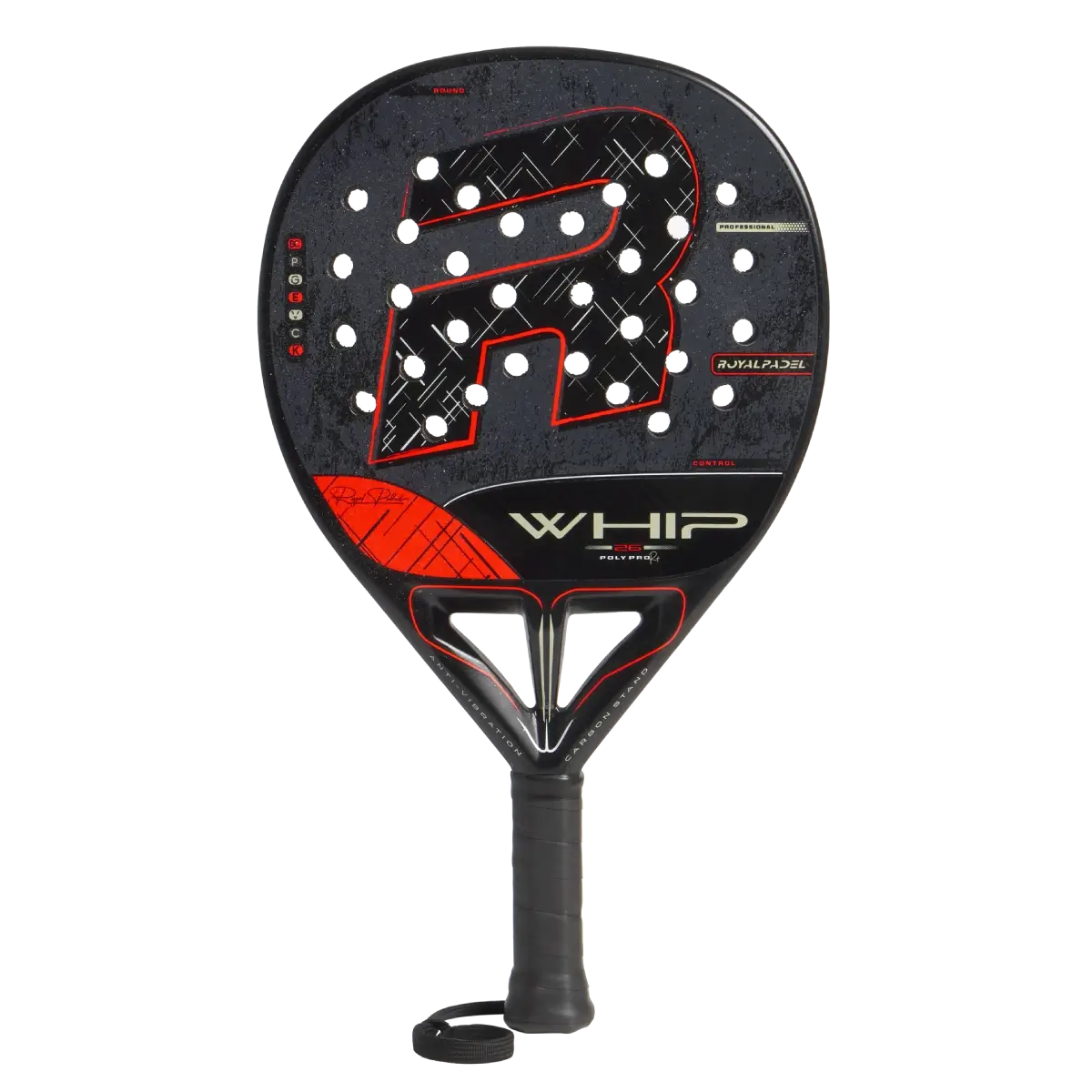 Royal Padel Whip Polietileno 2026
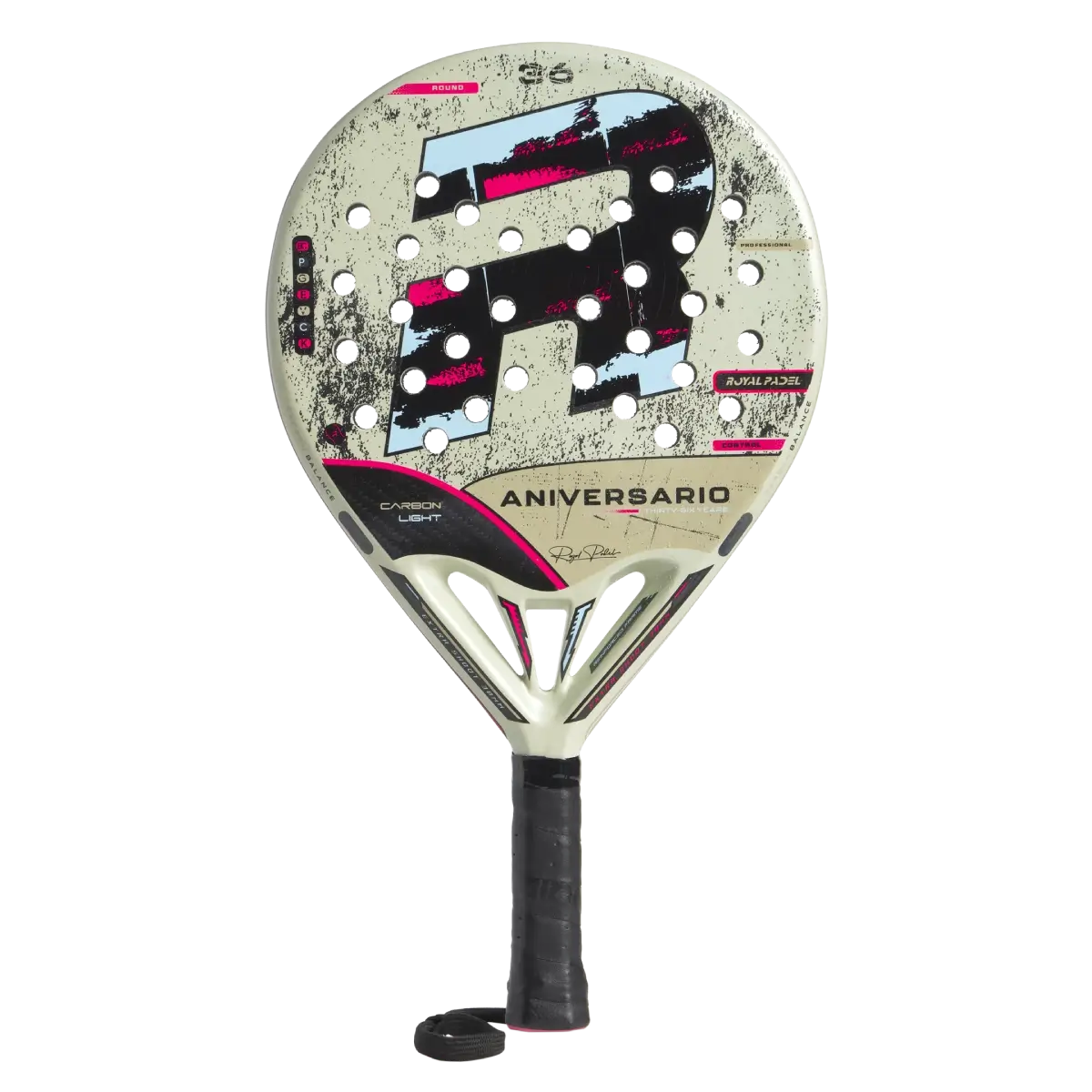 Royal Padel 36 Aniversario Light 2026
Comparison with other brands
Babolat Counter Vertuo 2.6: both are Round fiberglass comfort rackets. Babolat is 340-360 g and soft, producing a somewhat clearer EVA response. Whip Light is 345-365 g and very soft, with deeper damping.
Wilson Endure LS V1 2026: Wilson is Round, 355 g and medium in feel with Control Foam and a Comfort Flex face. It is more structured at the net. Royal Padel is softer and gives easier defensive rebound.
Babolat Dyna Spirit: Dyna Spirit is a 320-340 g Teardrop with a soft response. It is substantially lighter. Whip Light carries more mass, uses Round geometry and offers a broader central control window.
79Royal PadelRoyal Padel Whip Light 2026RoundShape345–365 gWeight range≈25.2 cmBalance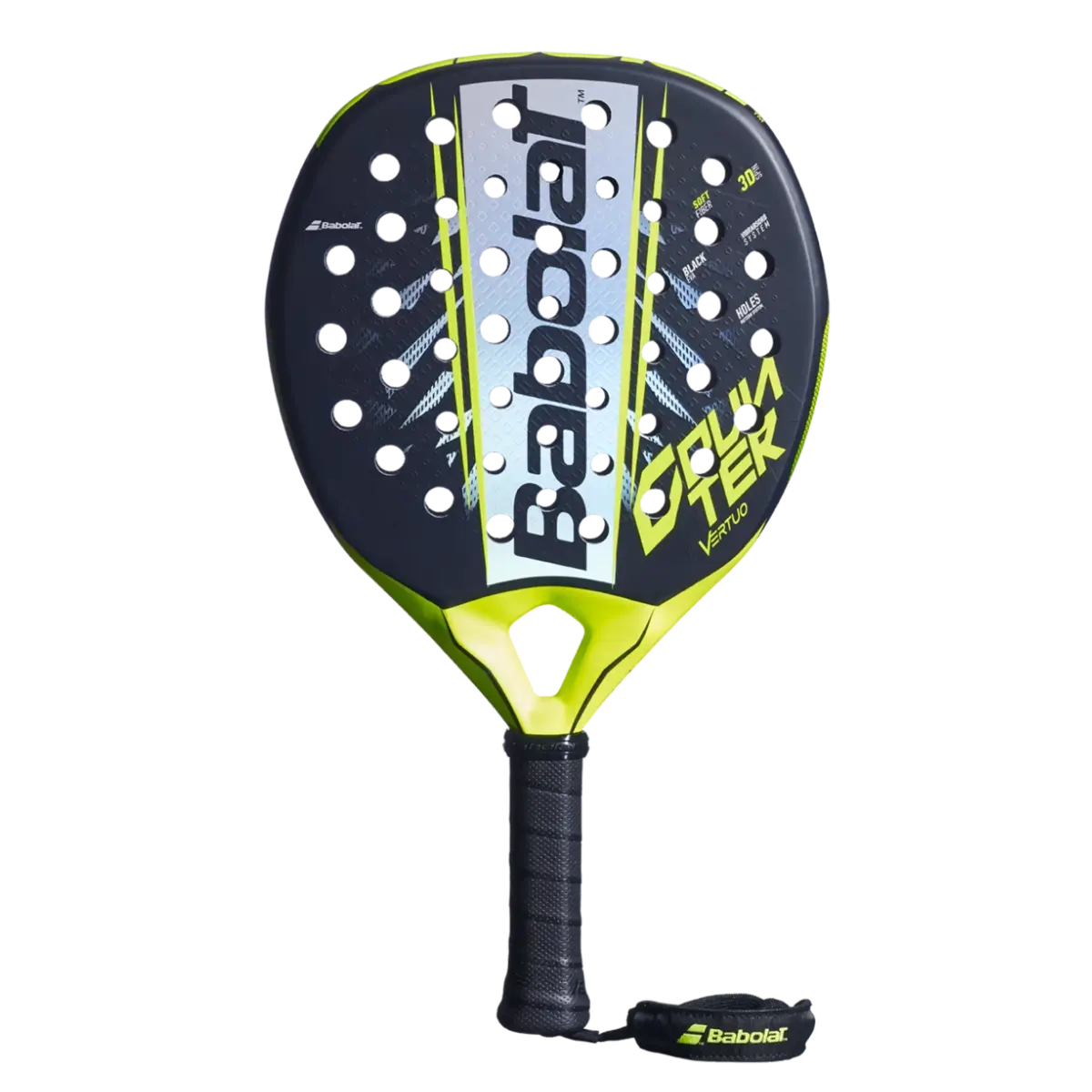 69BabolatBabolat Counter Vertuo 2.6RoundShape340–360 gWeight range26.5 cmBalance
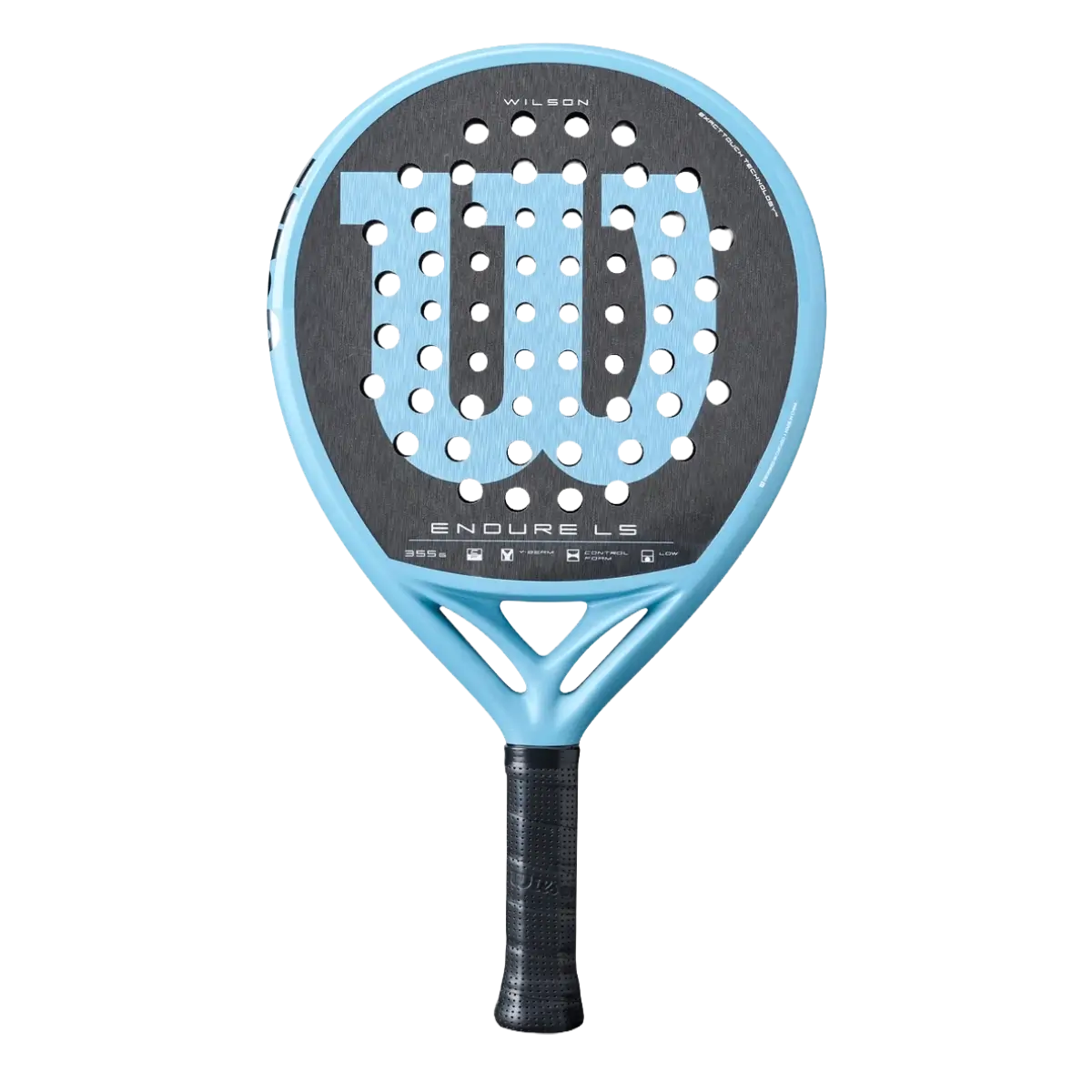 72WilsonWilson Endure LS V1Round / Control GeometryShape355 gWeight range25.5 cmBalance
Technical positioning and fit
Best for: intermediate and advanced control-first players, defenders, right-side players and anyone who values very soft contact and fast preparation.
Choose it if: you want a 345-365 g Round racket with Low balance, a broad sweet spot, easy defensive depth and minimal structural harshness.
Think twice if: you regularly absorb very heavy pace, want a planted punch volley or expect the racket to add mass to a flat smash.
Not best for: power specialists, players who prefer firm carbon feedback and anyone seeking maximum torsional resistance.
Solid shape = this racket.Dashed outline = average of every racket we have reviewed.
Royal Padel Whip Light 2026
Specifications
- Weight range
- 345–365 g
- Balance
- ≈25.2 cm
- Thickness
- 38 mm
- Shape
- Round
- Face material
- Two layers of aluminized Fiber Tech fiberglass
- Core
- Soft high-recovery polyethylene
Common questions
It is a low-balance Round racket weighing 345-365 g, with Fiber Tech fiberglass, a soft high-recovery polyethylene core and DMND Spin Rough. Its priorities are fast handling, control, comfort and defense.
The confirmed weight range is 345-365 g, with a 355 g midpoint. Lower-weight examples maximise speed and ease of preparation, while examples near 365 g add some stability against incoming pace.
The official balance class is Low. An exact balance point in centimetres from the butt is not confirmed.
Its padel.how stiffness index is 0.0/10, classed as soft. This is an editorial classification, not a laboratory measurement. The Fiber Tech and polyethylene construction creates a very soft response.
Yes. Low balance, a 355 g midpoint, Round geometry and soft rebound make lobs, resets, blocks and glass recoveries easy to execute with compact preparation.
It gives easy depth at low and medium effort, but its maximum smash power is limited. Low mass, Low balance and a very soft platform favour control and speed over heavy finishing.
Choose it if you are a control-first player who values exceptional handling, comfort and a broad central sweet spot. Avoid it if heavy-ball stability, firm feedback or maximum smash output is the priority.
Price alert
We check prices when we update our offers. Get one email when a verified price is below your threshold.
Current verified price: €208.00 at Padel Market.
Player feedback
Player feedback is separate from our editorial review. Individual votes stay private — only the aggregate is published.
Thank you — your feedback is saved. You can revise it any time with Vote.
No player votes yet.
Questions & answers
No questions yet.