Joma TOURNAMENT PRO black red Review
 Methodology
Version and lineup identification
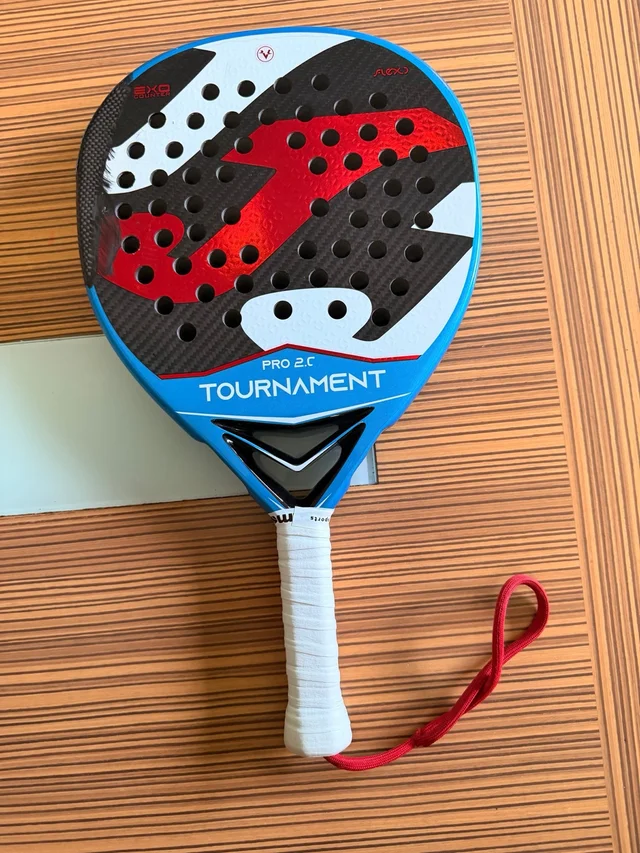
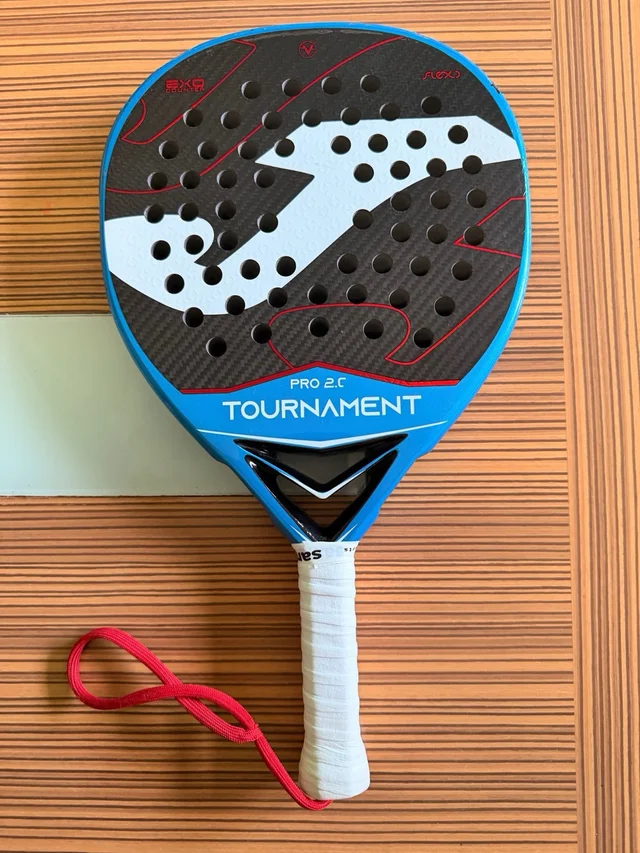
Tournament Pro black red is the control-led Joma for advanced players who want placement, defensive depth and accessible pace. Its carbon-faced, high-density BlackEVA construction is judged here by controlled, repeatable rally output rather than the hardest overhead.
The high-balance description should not be mistaken for a maximum-power recommendation. Its strengths support point construction rather than the attacking ceiling of the Blast models.
Joma TOURNAMENT PRO black red — Technical specifications
Construction and materials
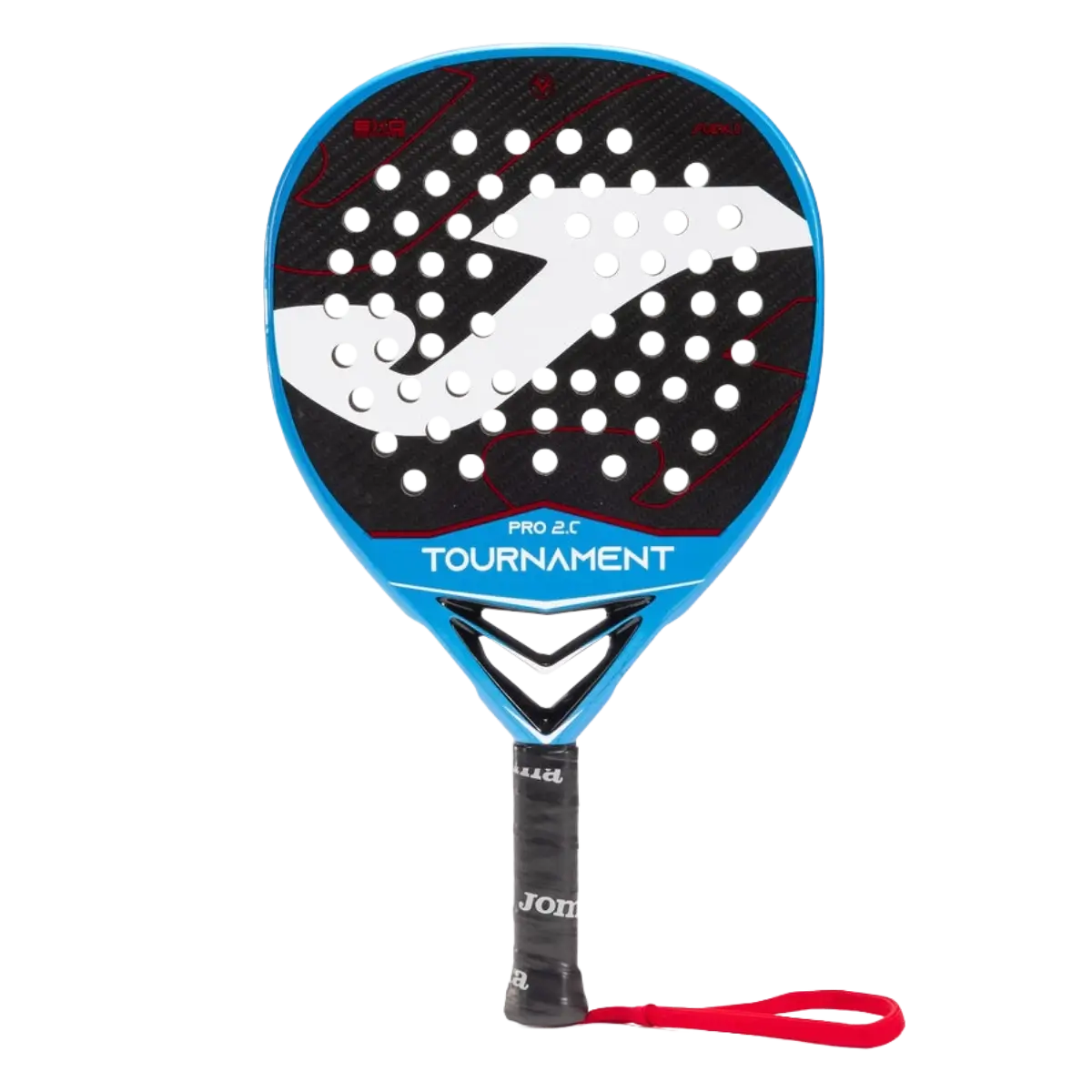
The hitting surface is 3K carbon fibre / Flexshield 3K Carbon, with a listed 100% 3K-carbon face and a separate 100% carbon tubular frame. The core is BLACK EVA / high-density FLEXO BlackEVA. ROTATION gives the face an embossed 3D relief finish.
This construction should be read alongside the controlled playing role. A carbon face and high-density core do not by themselves make the racket a power specialist, and the textured finish does not change its moderate spin score.
How heavy the racket feels and where the mass sits.
Balance point is shown from our measurement.
- Balance point26 cm24.5 cmavg 26 cm27.5 cmNeutral balance
- Static weight350–360 g340 gavg 365 g390 g
- Swing weight124.8 kg·cm² estimated110typical 128150
- Twist weight14.4 kg·cm² estimated11typical 1416
Shape and mould behavior
The hybrid mould comes with a listed 350–360 g weight range and a high-balance description. That does not make it a neutral, handle-led control racket, but it also does not override the control-first assessment.
The head-oriented setup is manageable rather than exceptionally quick. I would choose a manageable sample for repeatable preparation, rather than assume the control label promises particularly light or fast hands.
Where this racket sits for stiffness and how easily the face gives power.
TOURNAMENT PRO black redStiffness, feel, and comfort
The contact is reasonably accommodating but still direct, rather than deeply cushioned. It is a supporting part of the profile, not the leading reason to choose Tournament Pro.
Placement and defensive depth are stronger arguments. The core’s high-density description should not be used on its own to decide whether the complete feel suits you.
Our scores against every racket we have reviewed.
- Comfort7 /100avg 7.3110Below average
- Spin6.5 /100avg 7.2210Below average
Sweet spot and forgiveness
The broad useful contact area is a meaningful part of Tournament Pro’s control role. It helps keep ordinary rally contact productive, but that tolerance is not the same as exceptional resistance to a hard ball caught near the edge.
Those qualities are different: a usable hitting area helps keep the point manageable, but it does not mean the face has exceptional resistance to a hard wide impact.
Sweet spot- Core zone 8/10
- Shape Hybrid
- Stability 7/10
Approximate high-tolerance zone for this mould and core.
Power and smash behavior
Useful depth is easier to access than exceptional finishing pace. The carbon/high-density-core construction does not change that established character: Tournament Pro is more persuasive for a placed, repeatable ball than for turning a harder swing into the strongest overhead.
Smashes, viboras and hard bandejas still reward clean mechanics. I would choose the racket to place and repeat them within a control game, not because the high-balance label promises Blast-level output.
Net performance under pace
The manageable but head-oriented setup supports a deliberate net game rather than exceptionally fast hands or overwhelming volley weight. They support the control package without making Tournament Pro an especially quick-hands or heavy-volley specialist.
The stronger case is placement and the ability to keep constructing the point. A player who wants the net exchange itself to be the racket’s dominant strength has a different priority.
Off-center stability and torsional resistance
The carbon frame and useful central hitting area do not make every wide strike equally stable. Hard returns, backhand blocks and emergency volleys are where that distinction matters.
I would value the usable contact margin without expecting every wide impact to preserve the same direction as a clean strike.
Practical on-court takeaways
Choose Tournament Pro when placement, defensive depth and accessible pace matter more than finishing power. Its broad useful contact profile supports that control-led advanced role.
Think twice if the main reason to change rackets is a higher smash ceiling or more aggressive spin. Those are more limited parts of the package, despite the carbon construction and embossed face.
Comparison within the Joma lineup
Hyper 3.0 Vero Virseda and St-Blast Juanlu Esbri are power-led alternatives in the same listed 350–360 g range. Similar static weight does not make them equivalent control choices.
Blast Pro HRD black gray adds a 360–370 g range and a stronger maximum-power emphasis. I would compare those models when finishing is the missing quality; Tournament Pro remains the placement-and-depth option.
Lineup comparison
Joma TOURNAMENT PRO black red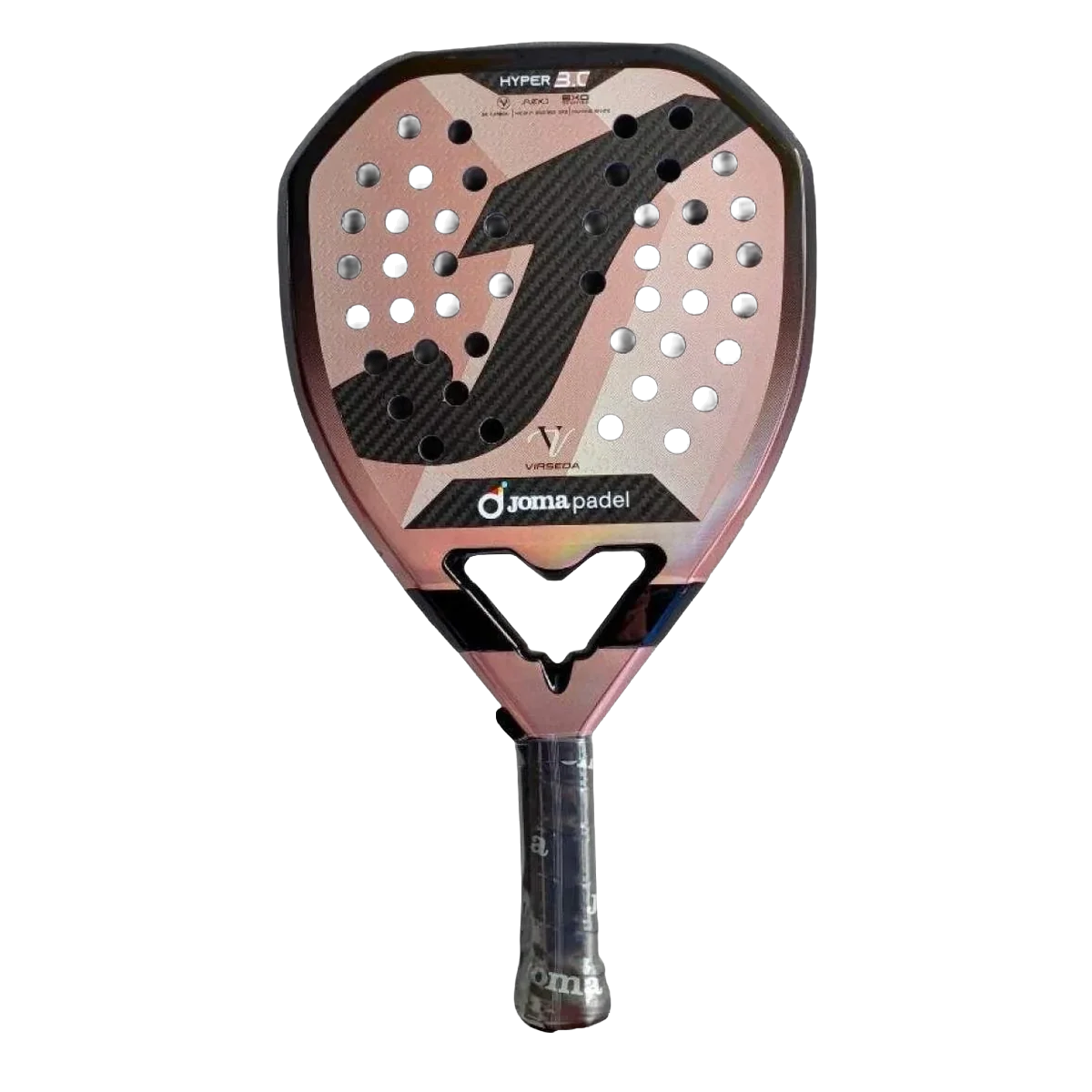 Joma Hyper 3.0 Vero Virseda
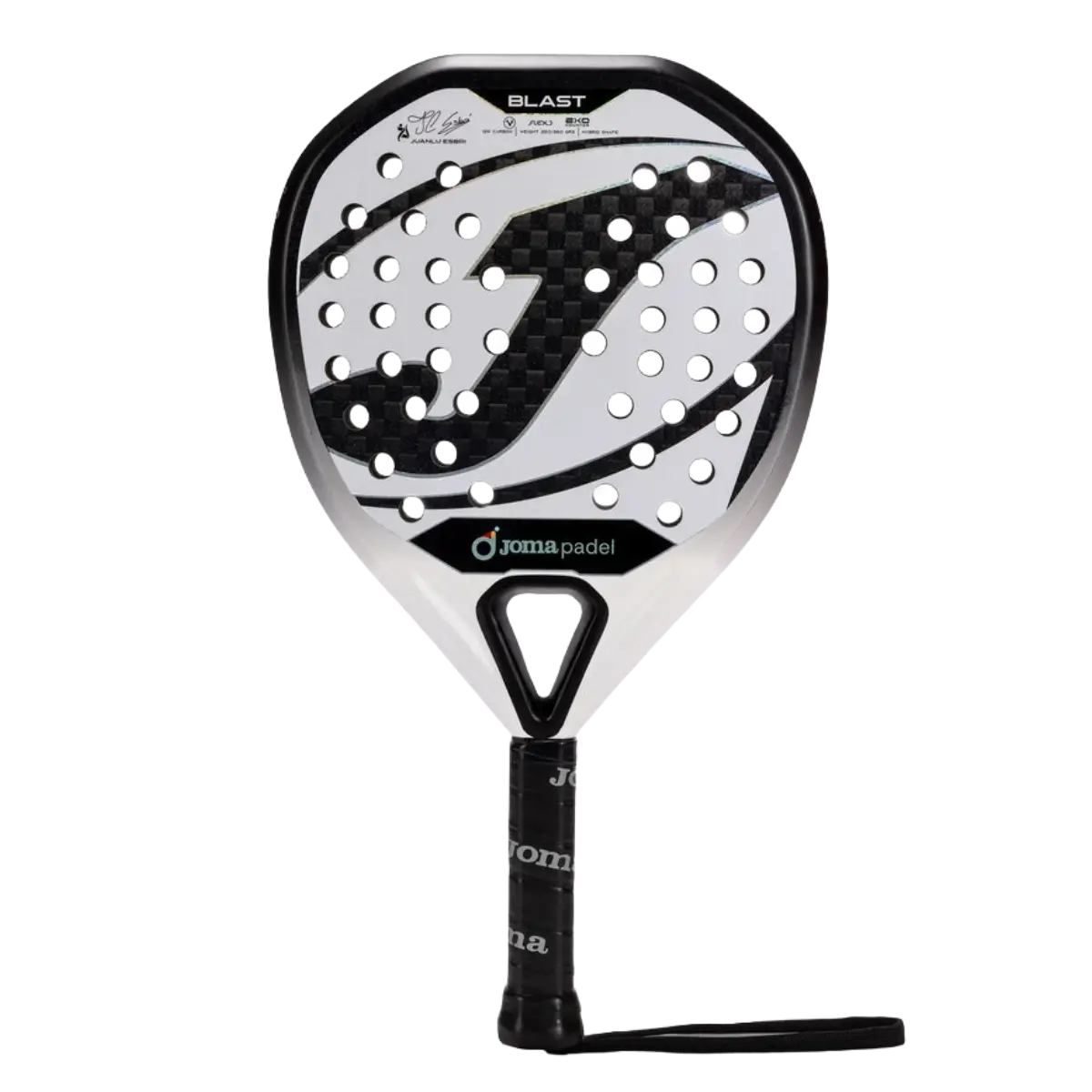 Joma St-Blast Juanlu Esbri silver black
Comparison with other brands
The meaningful cross-brand comparison is with another control-led hybrid, not every high-balance racket. Tournament Pro’s carbon/BlackEVA package is most useful for placement and accessible depth, with a broad central contact area helping rally consistency. The high-balance description and embossed finish do not make maximum power or aggressive spin its main advantages.
A softer control alternative is useful when feel matters most. A power-led alternative is useful when the missing shot is the overhead finish. The existing Compare Rackets shortlist keeps that specification comparison available.
Technical positioning
Tournament Pro’s carbon construction and high-density core sit in a control-led hybrid package. Its useful contact margin and readily accessible depth are more convincing than the maximum overhead, and the embossed face does not make spin a defining strength.
I would not reject it merely because easy lift is important—that is part of its appeal. The stronger reasons to choose another racket are a need for higher finishing output, stronger spin assistance or exceptional hand speed.
Solid shape = this racket.Dashed outline = average of every racket we have reviewed.
Joma TOURNAMENT PRO black red
Specifications
- Weight range
- 350–360 g
- Balance
- 26 cm
- Thickness
- 38 mm
- Shape
- Hybrid
- Face material
- 3K carbon fibre / Flexshield 3K Carbon
- Core
- BLACK EVA / high-density FLEXO BlackEVA
Common questions
Joma TOURNAMENT PRO black red is best for advanced players looking for control performance.
Key listed specs include shape: hybrid; weight: 350-360 g; balance: High; face: 3K carbon fibre / Flexshield 3K Carbon; core: BLACK EVA / high-density FLEXO BlackEVA.
Joma TOURNAMENT PRO black red scores 75/100 in the padel.how review model.
Price alert
We check prices when we update our offers. Get one email when a verified price is below your threshold.
Player feedback
Player feedback is separate from our editorial review. Individual votes stay private — only the aggregate is published.
Thank you — your feedback is saved. You can revise it any time with Vote.
No player votes yet.
Questions & answers
No questions yet.