Hirostar Andromeda 26 Review
 Methodology
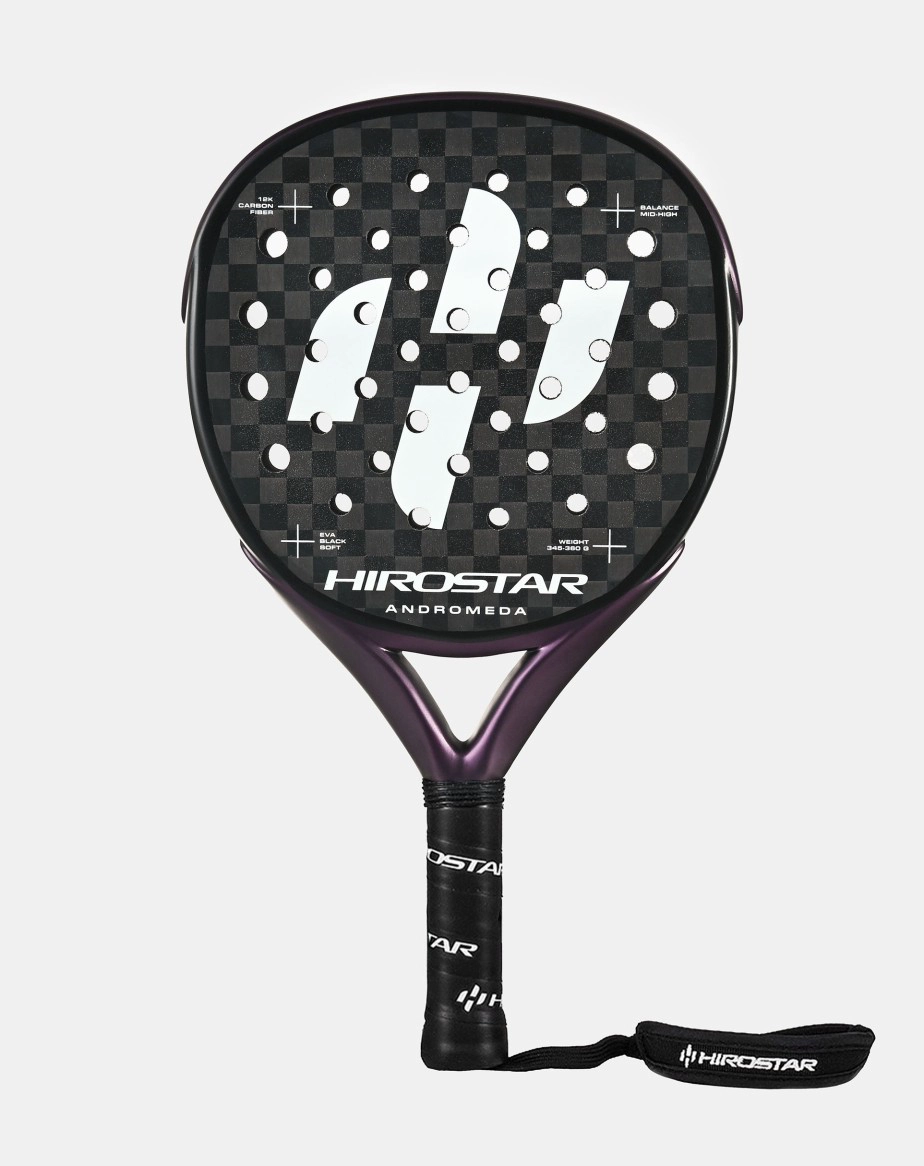
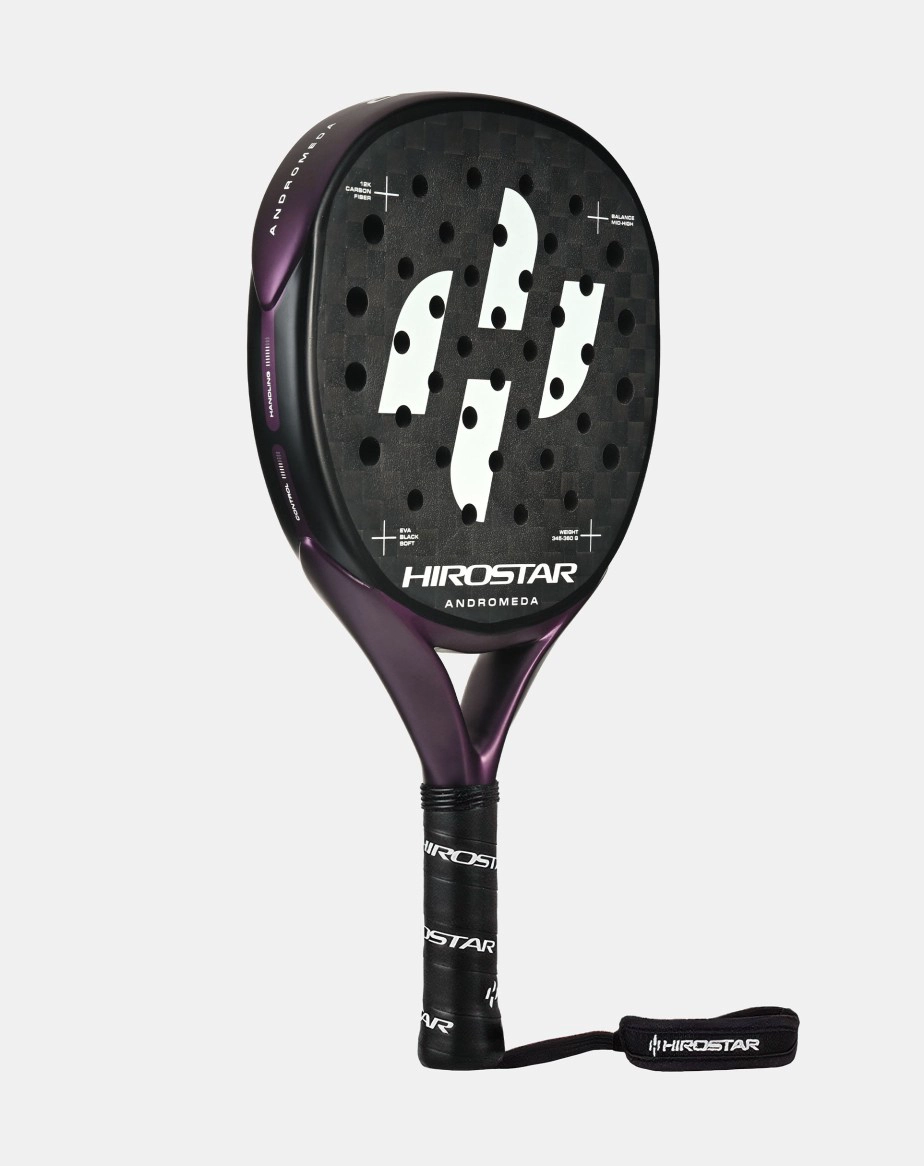
Version and lineup identification
Andromeda 26 is the control-led Hirostar for intermediate to advanced players who value placement, defensive depth and manageable movement. At a listed 352.5 g and 26.5 cm balance, it puts its textured carbon face into a more manageable setup rather than a specialist power configuration.
It has useful attacking capacity, but I would choose it to construct and repeat points rather than to maximize flat-smash output.
Hirostar Andromeda 26 — Technical specifications
Construction and materials
The face is 12K Carbon with a sandblasted rough texture. The core type is not specified, so the carbon count should not be used to infer a particular foam or an exact hardness.
The decision is better grounded in the complete profile: strong placement, defense and spin, with moderate rather than standout comfort. It is a technical control choice, not automatically a soft one.
How heavy the racket feels and where the mass sits.

Balance point is shown from the available source evidence.
- Balance point26.5 cm24.5 cmavg 26 cm27.5 cmNeutral balance
- Static weight352.5 g340 gavg 365 g390 g
- Swing weight128.6 kg·cm² estimated110typical 128150
- Twist weight14.9 kg·cm² estimated11typical 1416
Shape and mould behavior
The teardrop mould is paired with a listed 352.5 g weight and 26.5 cm balance. That relatively manageable setup is central to its placement-led game: it is easier to organise the next stroke rather than simply carry more mass into it.
I would distinguish that from passive authority. Low listed mass does not turn the racket into the strongest option for simply presenting the face to a hard incoming ball.
Where this racket sits for stiffness and how easily the face gives power.
Andromeda 26Stiffness, feel, and comfort
The response is reasonably accommodating, but the 12K-carbon label does not establish a very soft contact, and the core formulation is not specified. Placement, defense and handling are stronger parts of the profile.
That makes it suitable to consider when the priority is a manageable control racket, while leaving room for a softer alternative when impact feel is the main problem. The unspecified core does not justify a stronger hardness claim.
Our scores against every racket we have reviewed.
- Comfort7 /100avg 7.3110Below average
- Spin8 /100avg 7.2210Above average
Sweet spot and forgiveness
The teardrop face gives useful hitting margin without exceptional forgiveness. Andromeda’s strength in placement and defence still relies on repeatable contact; manageable preparation does not make the response identical across the whole face.
The practical aim is repeatable contact supported by manageable handling, not a large soft hitting area that masks every error.
Sweet spot- Core zone 7/10
- Shape Teardrop
- Stability 7/10
Approximate high-tolerance zone for this mould and core.
Power and smash behavior
Pace is readily usable within the controlled stroke, while a harder swing does not turn the relatively light setup into a heavy finishing specialist. There is enough attacking capacity to keep a control game from becoming passive, without making overhead finishing the main purpose.
Clean mechanics still matter on smashes, viboras and firm bandejas. I would value the ability to build pace within a placed shot rather than choose it solely for the hardest possible finish.
Net performance under pace
The listed 352.5 g setup is more convincing for getting the face ready than for adding overwhelming mass to a volley. Quick organization is therefore a more convincing reason to bring Andromeda forward than an expectation of overpowering volley authority.
For a placement-led player, that balance is useful. A net specialist seeking maximum contact weight should not equate easy preparation with dominant blocking support.
Off-center stability and torsional resistance
The lighter carbon-faced setup offers usable off-centre support without becoming a passive-block specialist. Hard returns, backhand blocks and emergency volleys deserve more attention than the strong control score alone might suggest.
I would choose Andromeda for accurate, organized play with manageable movement, not for exceptional resistance to every wide contact.
Practical on-court takeaways
Choose Andromeda for a control-led game that needs defensive depth, useful spin and easier handling without surrendering all attacking capacity. The relatively manageable setup and sandblasted face make those everyday control shots more persuasive than a comparison based only on the hardest smash.
Think twice if the missing ingredient is a very soft feel, a very large sweet spot or heavy passive support. None is the defining advantage here.
Comparison within the Hirostar lineup
Alien Pro 26 is the high-ceiling attacking alternative, while Alien Pro 25 gives another power-led reference. They are relevant when overhead finishing, rather than point construction, is the reason to change.
Alien Core 26 keeps the control emphasis but uses a diamond outline and a higher listed weight. I would compare that change in shape and mass directly instead of assuming that two control labels mean the same fit.
Lineup comparison
Hirostar Andromeda 26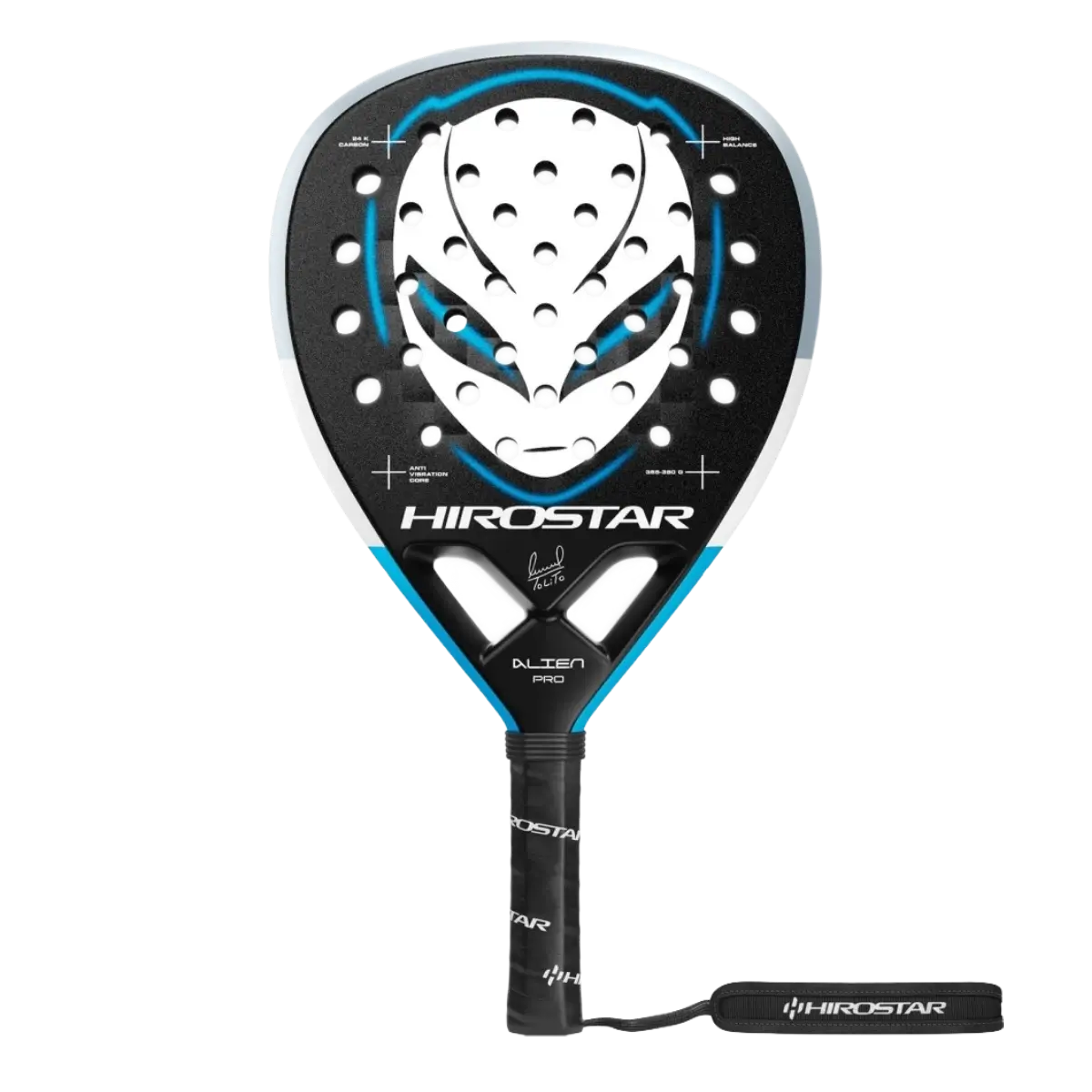 Hirostar Alien Pro 26 - Tolito Aguirre
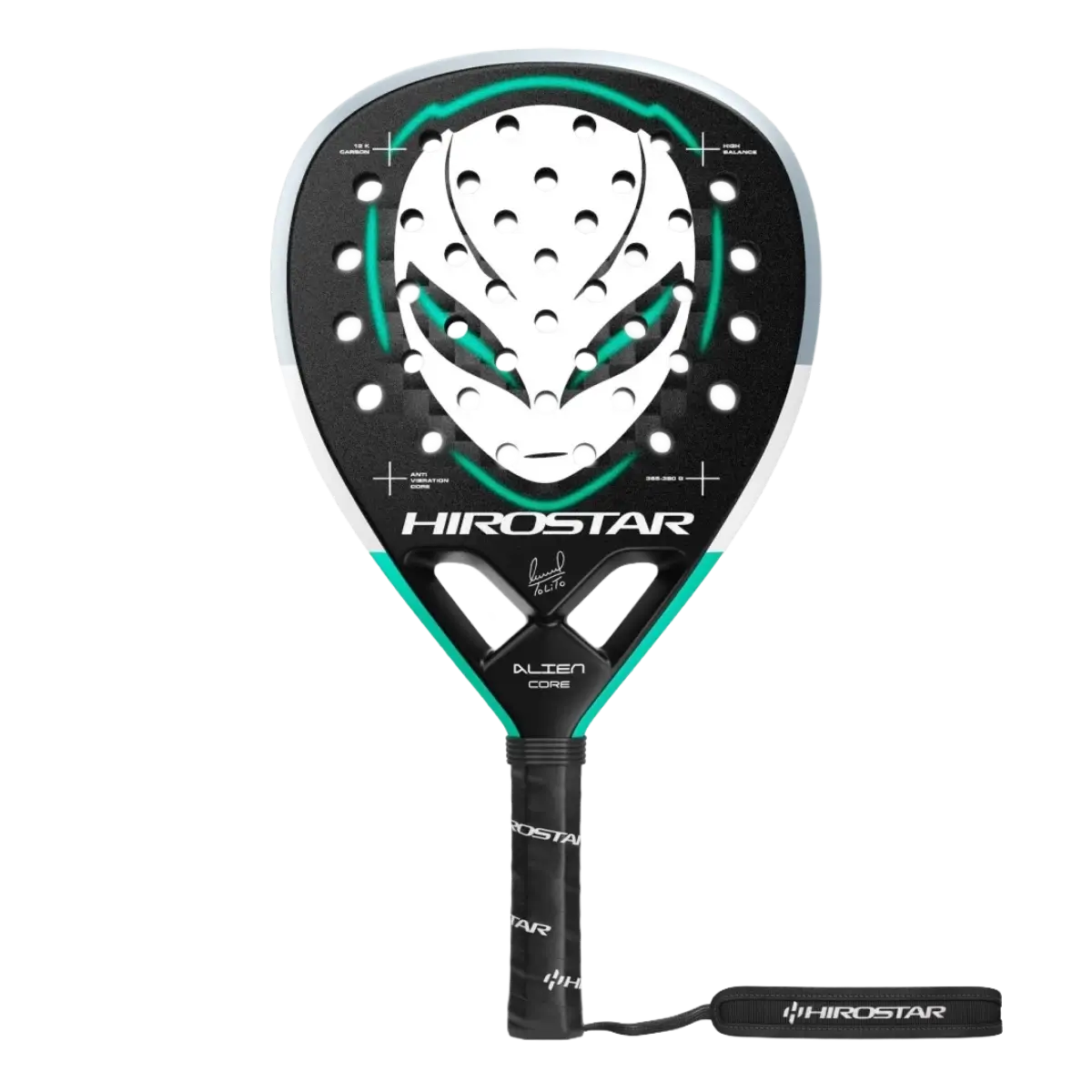 Hirostar Alien Core 26 - Tolito Aguirre
Comparison with other brands
Among other brands, compare Andromeda with control-led teardrops of manageable weight. Its relatively light setup and textured carbon face favour preparation, placement and defensive depth. A more cushioned contact or heavier passive block would address different needs, neither of which is Andromeda’s defining strength.
A softer control option is relevant for feel, and a more aggressive racket is relevant for finishing. The existing Compare Rackets shortlist provides the specification context without changing Andromeda’s purpose.
Technical positioning
Andromeda’s listed 352.5 g, 26.5 cm setup supports a placement-led game, with the sandblasted carbon face adding texture for spin and manageable movement helping defensive preparation. Its power is sufficient for an active control game, but not the reason to choose it over a specialist attacker.
This is the Hirostar profile to consider when you want to move and construct points more easily, while accepting ordinary rather than exceptional comfort and off-centre support.
Solid shape = this racket.Dashed outline = average of every racket we have reviewed.
Hirostar Andromeda 26
Specifications
- Weight range
- 352.5 g
- Balance
- 26.5 cm
- Thickness
- 38 mm
- Shape
- Teardrop
- Face material
- 12K Carbon
Common questions
Hirostar Andromeda 26 is best for intermediate to advanced players looking for control performance.
Key listed specs include shape: Teardrop / drop; face: 12K Carbon.
Hirostar Andromeda 26 scores 77/100 in the padel.how review model.
Price alert
We check prices when we update our offers. Get one email when a verified price is below your threshold.
Player feedback
Player feedback is separate from our editorial review. Individual votes stay private — only the aggregate is published.
Thank you — your feedback is saved. You can revise it any time with Vote.
No player votes yet.
Questions & answers
No questions yet.